
Oil Prices Move Wildly Like a Roller Coaster
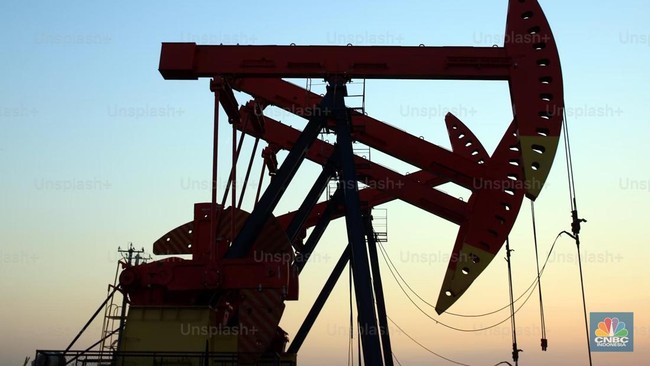
Jakarta, 17 March 2026 — Global oil prices moved wildly during trading on Tuesday.
After surging significantly during the morning, prices have since pulled back slightly, though they remain at relatively elevated levels. This movement demonstrates that the global energy market is currently in a phase of high volatility.
According to Refinitiv data, at 09:10 WIB, Brent crude oil was trading at US$103.05 per barrel, whilst West Texas Intermediate (WTI) reached US$95.96 per barrel. However, by 10:50 WIB, prices began to correct moderately.
Brent crude fell to US$102.75 per barrel, whilst WTI was at US$95.83 per barrel. Despite the weakness, prices remain significantly higher than they were at the beginning of March.
For context, on 4 March 2026, Brent crude was trading around US$81.40 per barrel and WTI at US$74.66 per barrel. In less than two weeks, oil prices surged sharply before moving up and down like a roller coaster over recent days.
This volatility is driven by market concerns over global oil supplies amid the Middle Eastern conflict involving the United States, Israel, and Iran. The conflict has disrupted energy distribution routes in the Gulf region, particularly the Strait of Hormuz, which is one of the world’s most vital oil trading corridors.
According to Reuters, the conflict’s impact has even made Middle Eastern oil the most expensive in the world currently. The regional oil benchmark has surged sharply due to increasingly serious supply disruptions.
Dubai crude, one of the primary Middle Eastern oil benchmarks for the Asian market, reached US$153.25 per barrel. This figure even exceeds the historic record for Brent crude prices, which touched US$147.50 per barrel in 2008.
The price surge is closely related to disruptions in oil export flows from the Gulf region. Data from analytics firm Kpler shows Middle Eastern oil exports to Asia in March plummeted drastically to approximately 11.665 million barrels per day, far lower than nearly 19 million barrels per day in February.
This decline means Asian supplies have contracted approximately 32% compared to the same period last year, when energy trade routes were operating normally.
This situation has prompted several Asian refineries to lower operational levels due to difficulties in obtaining supplies from the Middle East. Simultaneously, buyers are seeking alternative supplies from other regions such as Africa and the Americas.
With geopolitical tensions remaining elevated and energy distribution routes not yet fully recovered, the oil market is expected to remain volatile in the near term. Prices could surge whenever supply risks increase, but may also correct sharply when hopes for global supply stability emerge.