
Oil Prices Jump 35%, at 40-Year High! Global Supply Strained
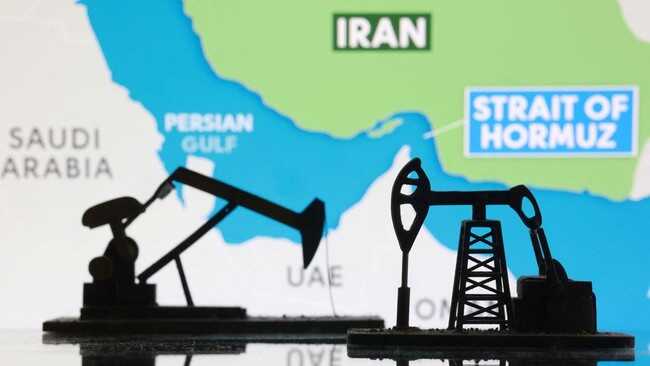
Oil prices jumped in the final trading session of the week on Friday (6 March 2026) as buyers chased scarce supplies amid limited Middle East supply following the effective closure of the Strait of Hormuz in the context of the expanding US–Israel war against Iran. Brent crude closed at US$93.34 a barrel, up 9.3%, while West Texas Intermediate (WTI) finished at US$90.90 a barrel, up 12.21% on Friday. The advance was the largest since 15 May 2020, more than five years ago. The closing prices were also the highest since September 2023, or the last 2½ years.
Price movements also show an anomaly whereby this is the second consecutive day that US oil (WTI) rose more than Brent.
WTI closed the week up 35.6%, the largest weekly rise since crude futures trading began in 1983 (43 years ago). Investors weighed the impact of the US–Iran conflict on global energy supply.
Brent rose 28.7% over the week.
According to Giovanni Staunovo, an UBS analyst, market participants are actively looking for alternative oil sources. “Refineries and trading houses are seeking alternative supplies, and the United States is the largest producer,” Staunovo told Reuters. “To prevent inventories in the US from falling too fast due to excessive exports, the price differentials are once again reflecting transport costs,” he added.
Janiv Shah, Vice President of Oil Analytics at Rystad Energy, cited several factors behind the divergence between WTI and Brent. He said that stronger refinery activity on the US Gulf Coast, attractive refining margins, and opportunities for export arbitrage to Europe are helping push WTI higher.
Crude oil also sits on track for the biggest weekly gain since the extreme volatility of the Covid-19 pandemic in spring 2020, as the Middle East conflict disrupted shipments and energy exports via the Strait of Hormuz, one of the world’s most vital energy routes.
Could oil prices break US$100?
Qatar’s Energy Minister Saad al-Kaabi told the Financial Times that he expects energy producers in the Gulf to potentially halt exports within a few weeks, which could push oil prices as high as US$150 per barrel, according to an interview published on Friday.
John Kilduff, a partner at Again Capital, said the worst is starting to emerge. “The worst-case scenario is unfolding before our eyes,” Kilduff said. “I think the projection of oil at US$100 per barrel is likely to come true,” he told CNBC International.
The rapid run-up in oil prices began after the US and Israel launched strikes against Iran last Saturday, which Iran retaliated against by interrupting movement of tanker ships through the Strait of Hormuz.
Normally, the supply of oil accounts for about 20% of global demand passing through this sea route daily. With the Strait closed for seven days, around 140 million barrels of oil or the equivalent of 1.4 days of global consumption could not reach markets.
The conflict has also spread to major energy-producing regions in the Middle East, disrupting production and forcing the closure of refineries and LNG facilities.
“Every day the Strait of Hormuz remains closed, prices will keep rising,” Staunovo said. He added that previously the market believed President Donald Trump might back away from the conflict because he did not want high oil prices. But the longer the conflict lasts, the greater the risk to global energy supplies.
President Donald Trump told Reuters on Thursday that he was not worried about rising gasoline prices in the US as a result of the conflict. “If it goes up, it goes up,” he said.
Speculation that the US Treasury Department might take steps to curb price rises briefly knocked oil down more than 1% on Friday morning. But the decline narrowed after Bloomberg reported that the Trump administration would not use the Treasury to trade oil futures.
On Thursday, the Treasury Department also granted waivers to companies to buy sanctioned Russian oil. The first waivers were given to Indian refineries, which have since purchased millions of barrels of Russian crude.
Qatar’s Energy Minister Saad al-Kaabi told the Financial Times that Gulf energy producers may need to invoke force majeure in coming days, which would halt production. He warned that the conflict in the Middle East could weigh on the global economy.
Wharton emeritus professor Jeremy Siegel told CNBC that he was very cautious. If there is no breakthrough over the weekend, oil could touch US$100 per barrel next week.
Jed Ellerbroek, portfolio manager at Argent Capital Management, said the range of oil price forecasts has widened significantly. Even if the projection of US$150 per barrel is trimmed by about 20%, prices remain at a level that is very concerning.
Sudden and acute disruptions to Middle East oil supplies due to the US–Israel war against Iran are forcing buyers to utilise every available barrel, while quickly unwinding projections of a global oil surplus for this year.
In February, the IEA projected that global oil supply would exceed demand by about 3.7 million barrels per day (bpd) in 2026, with the surplus continuing into the next year. But only a month later, that projection no longer seemed relevant.
Nearly 15 million bpd of oil production m