
Oil Prices Cool After Surge, But World Shadowed by US-Iran Threat
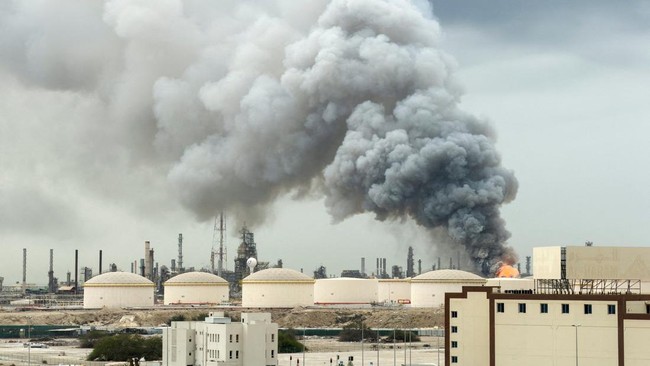
Oil prices remained relatively stable today after soaring last week. Prices stabilised as investors weighed threats from the United States (US) and Iran to target energy facilities, which could widen the war. This news was offset by the release of millions of barrels of Iranian oil to the global market after Washington lifted sanctions. On Monday (23/3/2023) at 08:16 WIB, Brent crude weakened 0.9% to $111.17 per barrel, while WTI fell 0.04% to $98.36 per barrel. The price gap between Brent and WTI has now widened to more than $13 per barrel, the highest level in several years. Oil prices had surged last week. Brent crude closed last Friday (20/3/2026) at $112.19 per barrel, up 3.3%, while WTI jumped 2.27% to $98.32 per barrel. Yesterday’s Brent closing price was the highest since 4 July 2022, nearly four years ago. Over the past week, Brent oil surged 8.77%, one of the largest weekly gains in the last 10 years. Year-to-date, Brent oil has risen 84%. Michael McCarthy, CEO of the online trading platform Moomoo Australia, said the current oil price decline is temporary due to low liquidity and short-term profit-taking by traders. “The momentum clearly still supports further increases, and testing the recent high around $120 is a realistic scenario this week,” he said, quoted from Reuters. US President Donald Trump threatened on Saturday to “destroy” Iran’s power plants if Tehran does not fully open the Strait of Hormuz within 48 hours. This is a significant escalation just one day after he discussed the possibility of de-escalating the war, which is now in its fourth week. Iran’s Parliament Speaker Mohammad Baqer Qalibaf wrote on X that critical infrastructure and energy facilities in the Middle East could be permanently destroyed if Iran’s power plants are attacked. “This clearly means further escalation, which means higher oil prices. However, some people mistakenly think that Iran will surrender,” said Amrita Sen, founder of Energy Aspects. “Trump is trying to show that he can escalate, and this path could lead to the total destruction of Gulf infrastructure,” she added. The war has damaged major energy facilities in the Gulf region and nearly halted shipments through the Strait of Hormuz. Analysts estimate oil production losses in the Middle East at 7 to 10 million barrels per day. Iraq has declared force majeure on all oil fields developed by foreign companies, according to three energy officials. Iraq’s Oil Minister Hayan Abdel-Ghani said crude oil production at Basra Oil Company has been cut to 900,000 barrels per day, from 3.3 million barrels per day previously. To ease the supply crisis, Washington temporarily lifted sanctions on Iranian oil at sea. Indian oil refineries plan to resume buying Iranian oil, while refineries in other Asian regions are also considering similar steps, according to traders on Saturday.