
Oil Prices Break Through $119, Global Financial Markets Experience Sharp Fluctuations
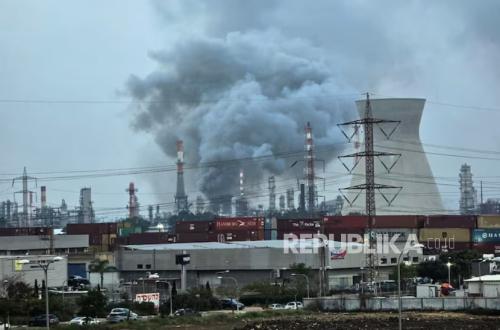
Sharp movements in oil prices demonstrate how this commodity now determines the direction of financial markets, even potentially influencing the global economy. Stock exchanges in Europe and Asia fell as oil prices surged at the start of trading on Thursday (19/3/2026). However, shares in the United States pared their losses as time passed and oil prices retreated.
The morning began with a spike in Brent crude oil prices, the international benchmark, which briefly broke through $119 per barrel, up from around $70 before the war with Iran began.
This increase came after Iran’s attacks on oil and gas facilities around the Persian Gulf intensified in response to Israel’s strikes on key Iranian gas fields. This situation has worsened concerns that the war could disrupt oil and gas production in the Middle East in the long term. As a result, high prices could persist for a long time and drive up global inflation.
Stock indices fell 3.4 percent in Japan, 2.8 percent in Germany, and 2.7 percent in South Korea. However, oil prices then trimmed their gains, continuing the volatile movements since the war began.
Brent crude closed at $108.65, up only 1.2 percent from the previous day, before weakening further in after-hours trading. Meanwhile, the US benchmark crude briefly exceeded $101 per barrel before closing at $96.14 and then dropping towards $94.
This situation helped Wall Street shares reduce their losses, which were not as deep as the declines in Europe and Asia from the start because US companies rely less on Middle Eastern oil.
The S&P 500 closed down 0.3 percent after weakening 1 percent at the open. In fact, the index even strengthened in the final hour of trading. The Dow Jones Industrial Average fell 203 points or 0.4 percent, while the Nasdaq Composite weakened 0.3 percent.
US President Donald Trump, along with several countries, has taken steps to contain the oil price surge. However, these measures are seen as only short-term. The market is still awaiting certainty regarding the security of oil and gas fields in the Gulf region and the smooth passage of shipping routes in the Strait of Hormuz off Iran’s coast, through which about one-fifth of the world’s oil supply passes.
On Thursday evening, Israeli Prime Minister Benjamin Netanyahu stated that his country would hold off on further attacks on Iranian gas fields at Trump’s request.
Uncertainty over the war’s direction has triggered volatile movements in oil and stock markets since the conflict began nearly three weeks ago. Similar movements have occurred in the bond market, where US government bond yields rose in the morning amid the oil price spike before falling back.
The two-year US government bond yield briefly reached 3.96 percent before dropping to 3.79 percent, a significant movement in the bond market. These yields typically follow expectations for US central bank interest rate policy, the Federal Reserve.
The oil price surge has led market participants to lower expectations for Federal Reserve interest rate cuts this year. Previously, before the war, the market had anticipated several rate cuts.