
Oil Prices Break 4-Year High, World Disbelieves Trump
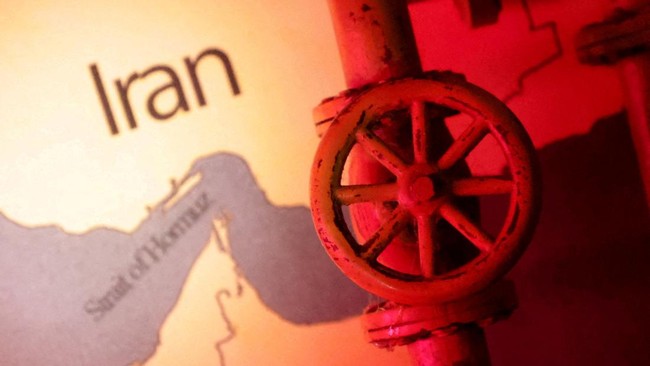
Jakarta, CNBC Indonesia - Global crude oil prices have soared to their highest level in three years. The world remains concerned about supply disruptions from the Middle East, despite US President Donald Trump shifting to a negotiation track with Iran.
According to Refinitiv, the global benchmark Brent crude price rose 4.2% to $112.57 per barrel during trading on Friday (27/3/2026). This is the highest price since 4 July 2022 ($113.5 per barrel), or nearly four years ago.
Over the week, it increased by 0.38%. WTI crude oil has strengthened for six consecutive weeks. Since the war erupted on 28 February 2026, or over the past month, prices have skyrocketed 55.3%.
Throughout March, prices have also surged 55.31%. The monthly Brent price is likely to end March with a gain of more than 50%, the highest since the 1990s.
The largest monthly gain previously recorded was in September 1990 (46.2%) when the Gulf War broke out.
Meanwhile, WTI crude closed at $99.64 per barrel on Friday, up 5.5%.
This price is also the highest since July 2022.
Over the week, it rose 1.34% this week after weakening 0.40% last week.
Oil prices closed at their highest level in more than three years on Friday, as Trump’s move to negotiate with Iran failed to ease market concerns over major supply disruptions in the Middle East.
Oil prices rose because Trump’s 10-day extension to Iran to reopen the strategic Strait of Hormuz route failed to calm supply worries.
Trump stated on social media that talks with Iran were going very well, despite misleading statements from fake news media and others.
As part of the announcement, Trump said he would temporarily halt attacks on Iran’s energy infrastructure until 6 April. Iran has not yet commented on this latest statement.
Meanwhile, two container ships owned by China Ocean Shipping Company attempted to cross the strait but were forced to turn back, according to ship tracker MarineTraffic. China is an ally of Iran, and Iran had previously stated that friendly ships could pass.
This is the first attempt by a major shipping company to cross the sea route since the war began. COSCO is the world’s fourth-largest shipping company by capacity.
This latest development shows that the situation in the Strait of Hormuz remains highly unstable.
In a cabinet meeting on Thursday, Trump also stated that Iran had allowed 10 oil tankers to pass this week as a “gift” to the US.
The market continues to monitor developments in the Strait of Hormuz for signs of disruption or de-escalation, as tensions between Washington and Tehran continue to fuel energy price volatility.
Trump’s statements indicate that at least some oil shipments can still pass, which could potentially ease short-term supply concerns.
However, analysts warn that the global oil market remains fragile, even if some shipments resume.
“The oil market is not underestimating disruptions in the Strait of Hormuz; the market is absorbing them,” said Paola Rodriguez-Masiu, head of oil analysis at Rystad Energy, to CNBC International.
“For nearly four weeks, the market has shown extraordinary resilience… supported by pre-war surpluses, oil already at sea, and policy reserves acting as a temporary buffer. But that phase is now ending,” she added.
According to Rystad, the global system has shifted from protected to fragile after weeks of supply losses and inventory declines, leaving less room to absorb shocks.
It is estimated that around 17.8 million barrels per day of oil and fuel flows through the Strait of Hormuz have been disrupted, with total losses of nearly 500 million barrels to date.
Market players (traders) are cautious about President Trump’s statements on talks with Iran. An Iranian official told Reuters that the US proposal delivered to Tehran via Pakistan was “one-sided and unfair”.
“Investors remain focused on the duration of the war, not just headlines. Any prolonged closure of the Strait of Hormuz or damage to infrastructure will sustain a significant risk premium in prices,” said StoneX analyst Alex Hodes.
Even as Trump extended the deadline for Iran to reopen the Strait of Hormuz or face destruction of its energy infrastructure, the US has also sent thousands of troops to the Middle East. Trump is even considering using ground forces to seize Iran’s strategic oil centre on Kharg Island.
“We see the oil market becoming immune to Trump’s soothing comments and optimistic tone on deals, especially given plans to send an additional 10,000 troops to Iran,” wrote Ritterbusch & Associates in a note to clients.
The Iran war has removed about 11 million barrels per day from global oil supply, with the International Energy Agency calling this crisis worse than the two 1970s oil crises combined.
“Every day flows through the Strait of Hormuz remain limited, more than 10 million barrels of oil are lost… making the oil market increasingly tight,” said UBS analyst Giovanni Staunovo.
Macquarie Group analysts said oil prices could fall quickly if the war ends soon, but would still be above pre-conflict levels. Conversely, prices could surge to $200 per barrel if the war continues until the end of June.
On the other hand, Russian oil producers have warned buyers that they may declare force majeure on supplies from major ports in the Baltic Sea, following Ukrainian attacks on Russian energy infrastructure.