
Oil Prices at Risk of Breaching 130 USD, Indonesia's State Budget Faces Collapse Risk
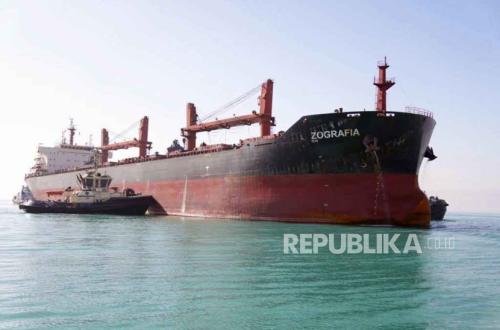
The head of the Center of Food, Energy, and Sustainable Development at the Institute for Development of Economics and Finance (INDEF), Abra Talattov, believes that global crude oil prices could surge if Yemen’s Houthi group truly closes the Bab al-Mandeb Strait, following disruptions to the Strait of Hormuz by Iran. This spike in global crude oil prices would inevitably affect Indonesia’s economy, particularly pressuring fiscal conditions. Abra explained that even with disruptions in the Strait of Hormuz alone, current crude oil prices have already breached 115 USD per barrel. If the Houthis implement their plan to close the Bab al-Mandeb Strait, global oil prices would rise even higher. “If the Bab al-Mandeb Strait is also closed, there is certainly a risk that oil prices will surge above 130 USD per barrel. If the Strait of Hormuz disrupts 20 per cent of the world’s oil supply, the Bab al-Mandeb Strait could have an even greater impact, around 30–44 per cent of global oil,” Abra stated when contacted by Republika on Monday (30/3/2026). Along with the potential for further surges in global crude oil prices, the greatest risk to Indonesia’s economy is from the fiscal side. The burden of energy subsidy and compensation budgets could swell. “The greatest risk to our economy is from the fiscal side, particularly due to the burden of subsidies and energy compensation. This must be anticipated to surge,” he said. To date, the government is still striving to ensure that subsidised fuel oil (BBM) prices do not rise, with funds prepared amounting to Rp 881 trillion. Reflecting on the 2023 experience, the government increased the energy subsidy and compensation budget by 150 per cent to around Rp 520 trillion. Compared to this year’s Rp 881 trillion, it may seem larger at first glance, but Abra reminds of the other side, namely the weakening rupiah exchange rate, which could become an additional burden. “Rp 881 trillion does indeed seem sufficient if it can be allocated extensively for subsidies and compensation. However, the factors are not only from the oil price surge but also pressure on the rupiah exchange rate,” he said. It is known that the current rupiah exchange rate is at around Rp 16,900 per USD. The Garuda currency could breach Rp 17,000 per USD amid various pressures. The rupiah exchange rate is also predicted to face further pressure if crude oil prices, even other import goods prices, surge. “So the main impact is on our fiscal. The subsidy and compensation budget will certainly surge, and there will definitely be limitations on the ICP price level that can keep our deficit on the government’s track,” he emphasised. Abra explained that the government itself has three deficit scenarios. The government’s worst-case condition is when the average crude oil price this year is 115 USD per barrel and the rupiah exchange rate is Rp 17,500 per USD. “Well, today alone the crude oil price is already 115 USD per barrel, meaning it is already at the heaviest level. Therefore, if the Bab al-Mandeb Strait is closed and crude oil prices become even more volatile, BBM and LPG subsidies could potentially be insufficient, especially if the rupiah is also pressured above Rp 17,000 per USD,” he clarified.