
Oil Price Surges, Energy Stocks Soar as Jakarta Stock Index Plummets
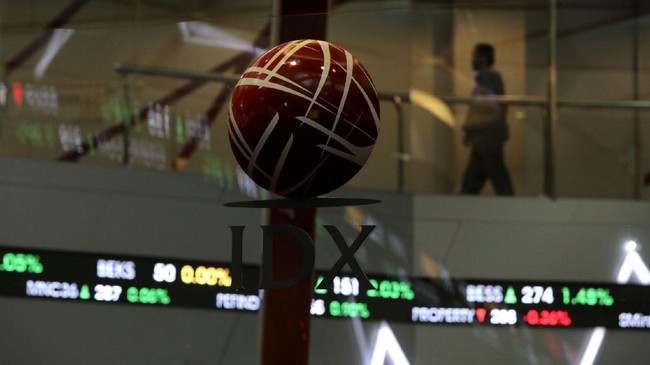
Jakarta — Energy stocks, particularly in the oil and gas sector, surged in positive territory amid a correction in the Jakarta Stock Exchange (JSX) on Monday, 9 March 2026.
As of 09:20 WIB, the majority of oil and gas emitters were in the green. Energi Mega Persada ENRG led the gains with an increase of 3.6% to 1,890. This was followed by Elnusa (ELSA), which rose 3.5% to 880, and Apexindo Pratama Duta (APEX), an onshore and offshore drilling services company for oil and gas, which climbed 3.4% to 240.
Additionally, Medco Energi (MEDC), the oil company owned by the Panigoro family, was heavily bought by investors. MEDC recorded total transactions of Rp 687.3 billion and became the third emitter with the largest transactions this morning. MEDC rose 2.8% to 1,815.
Meanwhile, the JSX fell more than 4% and even weakened to as much as 5%.
The increase in oil and gas stock prices was driven by sharp surges in global oil prices. As of 09:20 WIB, Brent crude was recorded at US$113.68 per barrel, whilst West Texas Intermediate (WTI) stood at US$113.25 per barrel. This surge extends the extreme rally that has been ongoing since the end of February.
The price movement shows very rapid acceleration over the past two weeks. Brent, which stood at US$70.85 per barrel on 25 February, rose slightly to US$72.48 (27 February) before jumping to US$77.74 (2 March) and US$81.40 (3–4 March). After that, the rally became sharper, with prices touching US$85.41 (5 March), jumping to US$92.69 (6 March), and finally breaking through to US$113.68 this morning. WTI moved similarly, from US$65.42 on 25 February to US$113.25 today.
This surge extends the oil rally after last week, when American crude oil rose approximately 35% in one week, described as the largest weekly increase in the history of futures trading since 1983.
Geopolitical tensions have become the primary trigger for the price surge. Conflict between Israel, the United States, and Iran has sparked serious concerns about global energy supply, particularly because of its impact on the Strait of Hormuz, a vital route for world oil shipments. Approximately 20% of global oil consumption typically passes through this narrow strait.
Several Middle Eastern producers have begun reducing production. Kuwait, the fifth-largest oil producer in OPEC, announced production cuts and refinery output as a preventive measure after Iran threatened the security of vessels passing through the Strait of Hormuz.
Supply disruptions have also come from Iraq. Three industry officials told Reuters that production from three major oil fields in southern Iraq has fallen by approximately 70% to just 1.3 million barrels per day. Before the conflict intensified, these fields produced approximately 4.3 million barrels per day.
Meanwhile, the United Arab Emirates stated it is carefully managing offshore oil production. Abu Dhabi National Oil Company (ADNOC), the national oil company, said onshore production operations continue normally, but storage capacity has become a concern due to distribution disruptions.
From a technical perspective, market analysts see the oil rally has potential to continue. In Reuters analysis, Brent crude has potential to move in the range of US$120 to US$128 per barrel, whilst WTI could approach the 2022 peak level of around US$130.50 per barrel, should the current geopolitical crisis persist.
Despite this, the US government remains optimistic that conditions in the Strait of Hormuz could improve soon. US Energy Secretary Chris Wright said tanker traffic is expected to return to normal within the coming weeks after Iran’s ability to threaten vessels has been successfully weakened. However, he cautioned that current energy market conditions remain far from stable.