
Oil Price Surge Could Drive Budget Deficit Close to 4 Per Cent
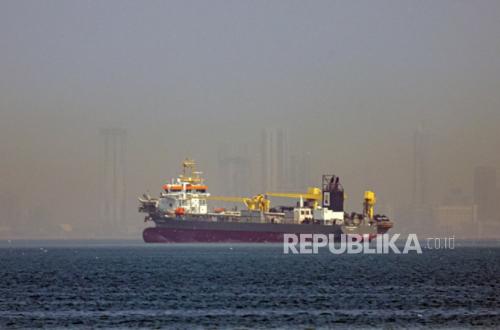
An economist from the Institute for Development of Economics and Finance (Indef), Abdul Hakam Naja, has warned that the closure of the Strait of Hormuz—a strategic chokepoint in the Persian Gulf—could heighten tensions and escalate conflicts with widespread consequences for the global economy. Approximately 20 per cent of global oil supplies pass through this waterway.
“Indonesia must be vigilant regarding oil prices that continue to surge, reaching $92 per barrel, the highest level since 2020,” Hakam stated in a written statement in Jakarta on Monday, 9 March 2026.
Hakam noted that the oil price assumption in the 2026 state budget macro framework was set at $70 per barrel. According to him, every $1 increase in oil prices per barrel could potentially add approximately Rp 6.8 trillion to the budget deficit.
“An increase in oil prices approaching $100 per barrel could push the budget deficit to GDP ratio close to 4 per cent. This figure exceeds the 3 per cent threshold established in Law Number 17 of 2003 on State Finance,” he said.
He believes that several measures must be taken if the conflict between Israel and the United States against Iran continues and oil prices exceed $100 per barrel.
First, the government must conduct significant state budget efficiency so that spending is focused on needs directly related to public welfare. “Spending should be directed towards basic services such as education, health, social protection, food, energy, poverty alleviation, basic infrastructure, and public services,” Hakam stated.
Second, the government must reduce oil consumption by accelerating energy conversion programmes from petroleum to renewable and new energy sources. For example, through solar energy development via solar power plants (PLTS), hydroelectric energy via hydroelectric power plants (PLTA), and wind energy via wind power plants (PLTB) as replacements for diesel power plants (PLTD).
Additionally, the use of electric vehicles, including motorcycles and cars as well as public transportation, must be expanded with support from incentives and supporting facilities such as tax concessions and the provision of public electric vehicle charging stations (SPKLU).
Third, economic stimulus must be intensified to prevent economic downturn. This can be accomplished through deregulation by eliminating rules that hinder economic activities and through debureaucratisation to simplify complicated licensing processes.
“This step could also serve as a momentum for economic revival, particularly for small and medium enterprises. With appropriate incentives, this sector can revive amid global uncertainty. We must strengthen the domestic economy because in every crisis there is always an opportunity to rise and develop,” Hakam stated.
Fourth, Hakam has called for the cancellation of the Indonesia–United States trade agreement, namely the Agreement on Reciprocal Trade (ART), through a formal submission by the Indonesian government to the United States. He believes that the legal basis of the agreement is related to tariff policies implemented by United States President Donald Trump.
According to him, the tariff policy was annulled by the United States Supreme Court on 20 February 2020, so the ART agreement needs to be reviewed. “The implementation of ART will be very burdensome to Indonesia’s fiscal position, which must also face the surge in global oil prices,” he said.
Hakam believes that negotiations with the United States should recommence from the outset with a new negotiating team that is stronger and capable of advancing national interests equitably.
He also reminded Indonesia’s negotiating team that they must have a strong mandate to protect national sovereignty as well as prioritise the principles of equality and mutually beneficial solutions.
In addition to the government route, cancellation can also be pursued through parliament by rejecting the ratification of the agreement in the House of Representatives. “Rejection of ratification by the House of Representatives can occur if widespread public protest emerges against the ART,” Hakam stated.