
Oil Price Reaches US$100/Barrel, Economist Warns of Rp208 Trillion Budget Deficit
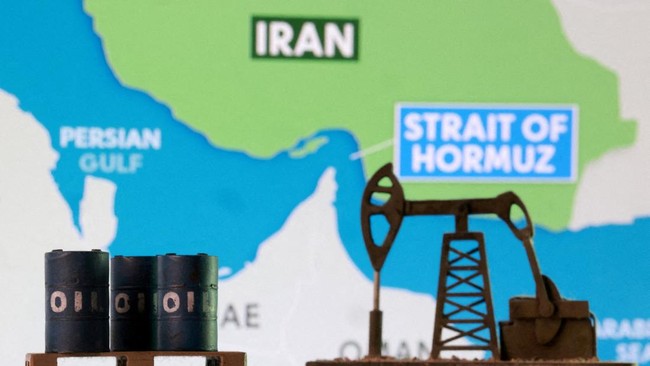
Jakarta — Global oil prices surged sharply on Monday morning (9 March 2026), with Brent crude trading at US$113.68 per barrel, whilst West Texas Intermediate (WTI) reached US$113.25 per barrel. This marked an extension of the extreme rally that has persisted since late February.
However, these conditions pose a significant threat to Indonesia’s State Budget (APBN). Chief Economist at Permata Bank Josua Pardede stated that with global oil prices now breaching the US$100 per barrel mark, pressure on the Indonesian budget has become substantially greater than the threshold that the government previously considered manageable. This price level sits well above Indonesia’s fiscal safety floor.
“In our simulation, if oil prices are at US$100 per barrel and the rupiah trades at Rp17,000 per dollar, the additional budget pressure reaches approximately Rp208 trillion,” Josua told CNBC Indonesia on Monday (9 March 2026).
Previously, Deputy Finance Minister Juda Agung stated that the budget could still withstand oil prices in the US$80-90 per barrel range whilst maintaining a deficit below 3% of GDP. The 2026 budget was set with a deficit target of Rp689.1 trillion, or 2.68% of GDP.
Based on Josua’s calculations, the 2026 budget deficit would rise to approximately Rp897.1 trillion. The deficit could widen significantly if oil prices remain at US$100 per barrel and the rupiah remains weak. Even at Josua’s scenario of US$80 per barrel with the rupiah at Rp17,000, the deficit would increase to Rp761.1 trillion, or approximately Rp72 trillion above the original target.
“Therefore, at the US$100 per barrel level, I believe fiscal resilience can still be maintained in the short term, but it is no longer comfortable and certainly not as safe as the US$80-90 per barrel scenario,” he emphasised.
The primary pressure stems from energy subsidies and compensation that surge if domestic retail prices remain fixed.
However, he explained that the economic impact is clear: at US$100 per barrel with the rupiah at Rp17,000, the economic value of Pertalite is estimated to rise to Rp17,600 per litre and Pertamax to Rp17,800 per litre. This differential is substantial compared to current retail prices, meaning that if domestic prices are not adjusted, subsidies and compensation will balloon; conversely, if prices are adjusted, inflation and consumer purchasing power will be pressured.
Historically, according to Josua, fuel price adjustments tend to occur when the gap between oil prices and APBN assumptions reaches approximately US$20 to US$40 per barrel. The likelihood of an adjustment in 2026 increases significantly if Brent crude exceeds US$90 per barrel.