
Oil Price Pressures Persist, Impacts Beginning to Be Felt Domestically
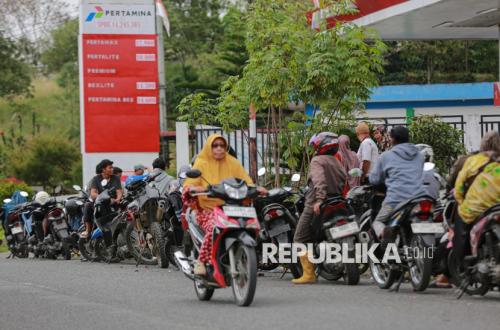
REPUBLIKA.CO.ID, JAKARTA – The persistent high pressure on global oil prices is beginning to have an impact domestically. This situation is seen as potentially spilling over into inflation, alongside rising production and distribution costs.
The rise in global energy prices is triggered by supply disruptions due to conflicts in the Middle East. Reuters reports that global oil prices have continued to strengthen in recent days, with Brent crude hovering around 115 US dollars per barrel.
Economist and public policy expert from UPN Veteran Jakarta, Achmad Nur Hidayat, stated that the rise in energy prices does not stop at the global market but directly affects daily life.
“The rise in energy prices will cascade into production costs, distribution, and the prices of basic necessities,” he said in a brief message to reporters, quoted on Tuesday (31/3/2026).
According to him, in an interconnected economy, turmoil in the Middle East region can impact the domestic economy, particularly through energy price pressures.
On the other hand, economist Yanuar Rizky views the current issue as not only related to prices but also to oil supply availability.
“The problem is not with the price assumptions in the state budget, but whether Indonesia will get the goods,” said Yanuar.
He explained that the global oil market conditions show uncertainty. Transaction positions on commodity exchanges dominated by sell positions reflect pressure on supply.
“The game changer is being played by Iran, not in price, but in who is allowed through Hormuz,” he said.
In line with that, Reuters also notes that the Strait of Hormuz is a crucial point for global energy distribution. This route handles around 20 percent of global oil supply, so disruptions in the region increase concerns about supply availability.
In addition to global pressures, the heavy energy burden is also reflected in the state budget. Economist from Bright Institute, Awalil Rizky, previously stated that in recent years, much of the state expenditure has been absorbed for energy compensation.
“Most of the BLL (other expenditures) is indeed absorbed for energy compensation,” said Awalil.