
Oil Price Falls Sharply, Jakarta Stock Exchange Strengthens in Line with Global Markets
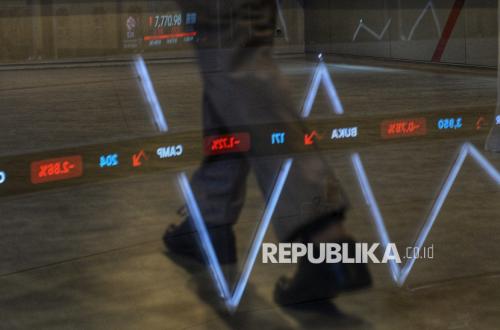
Jakarta — The Composite Stock Price Index (IHSG) on the Indonesia Stock Exchange (BEI) on Tuesday (10 March 2026) rebounded and strengthened following movements in global markets. The surge was triggered by signals from US President Donald Trump, who stated that the conflict was nearly complete.
The IHSG opened stronger by 105.68 points or 1.44 per cent to 7,443.05 points. Meanwhile, the leading group of 45 stocks, or the LQ45 index, rose 9.98 points or 1.33 per cent to 760.56.
“The statement reduced geopolitical risk premium and triggered short covering and dip-buying action in the stock market,” said Liza Camelia Suryanata, Head of Research at Kiwoom Sekuritas Indonesia, in her analysis in Jakarta on Tuesday.
President Trump stated that military operations against Iran were “very complete”, and the conflict lasted far more quickly than initial estimates of four to five weeks. Additionally, the market’s strengthening intensified when oil prices reversed sharply downward from nearly USD 120 per barrel to around USD 90 per barrel.
The decline in oil prices occurred following reports that G7 nations are discussing the release of strategic petroleum reserves to increase global supply.
WTI crude oil was recorded down 9.99 per cent to USD 85.30 per barrel, whilst Brent crude fell 10.40 per cent to USD 88.67 per barrel in morning trading at 09:20 WIB.
The United States granted a temporary 30-day exemption to allow sales of stranded Russian oil at sea to India. Additionally, the US government is also considering releasing oil from the Strategic Petroleum Reserve, which currently holds approximately 415 million barrels of oil.
Despite improved market sentiment, Liza estimated that volatility would remain high because the market is still monitoring two major risks: the potential disruption of energy supplies from the Strait of Hormuz, which carries approximately 20 per cent of global oil trade, and stagflation risk following last week’s US employment data showing weakness in the labour market.
“The market now estimates the likelihood of The Fed cutting interest rates in July at approximately 77 per cent according to Fed Funds Futures, with full interest rate reduction expected in September,” said Liza.