
Oil Price Breaches US$100 per Barrel: Time for Indonesia's B50 Biodiesel Push?
Jakarta — Rising global oil prices present an opportunity for Indonesia to advance its biodiesel programme. The B50 scheme is expected to become a solution for domestic energy security as Middle Eastern conflict continues.
Oil prices surged past US$100 per barrel on Monday, 9 March 2026, owing to escalating tensions in the Middle East. This surge inevitably burdens Indonesia, which remains dependent on oil imports.
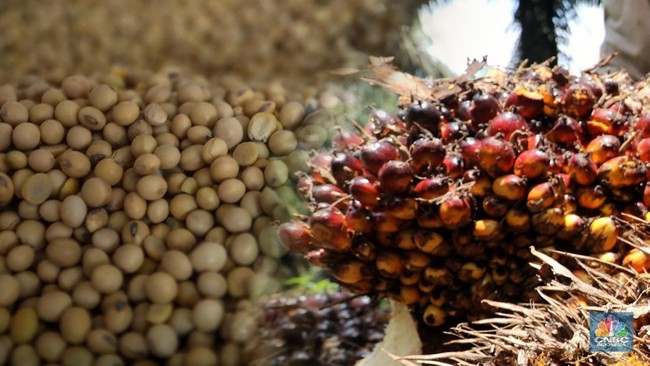
Indonesia, the world’s largest producer of crude palm oil (CPO), is expected to leverage palm oil-based biofuel as an energy source, particularly with the forthcoming B50 programme.
For context, B50 is a mandatory government policy requiring 50% biodiesel from palm oil to be blended with 50% diesel fuel, scheduled for full implementation in the second half of 2026. The measure aims to reduce diesel imports, boost energy independence, and maximise value-added benefits for the domestic palm oil industry.
Indonesia has successfully implemented the B40 programme since 2025, a policy that continues through 2026.
The push towards B50 is also shaped by global geopolitical circumstances. Conflict involving Iran, Israel, and the United States in the Middle East risks further driving up global oil prices.
Several analysts predict crude oil prices could reach US$100 per barrel, with potential to reach around US$108 per barrel if conflict persists.
For Indonesia, which remains a net oil importer, rising oil prices will increase energy import costs. Therefore, enhanced use of palm oil-based biodiesel is considered a viable way to reduce dependence on fossil fuels.
Data from the Malaysian Futures Exchange through Friday, 6 March 2026, showed crude palm oil rising to MYR4,250 per ton, compared to MYR4,092 per ton on 20 February 2026.
Converted to dollars, CPO prices equated to approximately US$900 per ton, or roughly US$123 per barrel when measured in oil energy equivalent. Compared with current Brent crude at US$92 per barrel, a gap of US$31 per barrel remains.
Regarding feedstock requirements, B50 implementation will significantly increase domestic biodiesel consumption.
The current B40 programme absorbs approximately 15.6 million kilolitres of biodiesel, equivalent to about 13-14 million tons of CPO. Upgrading to B50 would require approximately 20 million kilolitres of biodiesel, potentially raising domestic CPO consumption to around 17-18 million tons. This represents an additional 2-3 million tons of CPO compared with current B40 levels.
Indonesia possesses sufficient supply capacity to meet this demand. National CPO production is estimated at around 50 million tons annually.
After deducting domestic needs for food and oleochemical industries (approximately 8-9 million tons) and biodiesel requirements (17-18 million tons under B50), Indonesia retains substantial surplus production for export. Raw material availability thus permits B50 implementation.
The primary challenge to B50 implementation, however, lies not in palm supply but in pricing and industry readiness.
With CPO prices relatively elevated compared with crude oil, biodiesel programmes require continued incentive support to remain economically viable.
Additionally, current national biodiesel production capacity stands at approximately 19-20 million kilolitres, so full B50 implementation would require high capacity utilisation rates or additional facility investment.
According to the Journalist Workshop on Palm Biodiesel Programme 2026, held in Depok on 5 February 2026, IPB University Professor Gusti Astara noted that biodiesel programmes represent a critical strategy for Indonesia amid uncertain global market conditions. According to him, the programme offers significant opportunity to strengthen domestic markets, as Indonesia ranks as both the world’s largest palm oil producer and consumer, whilst export markets frequently face trade barriers and geopolitical uncertainty.
Ernest Gunawan, Secretary-General of the Indonesian Biofuel Producers Association (Aprobi), explained that whilst B50 plans have been discussed, testing continues. B50 road trials commenced in December 2025, involving approximately nine vehicles, including passenger cars, commercial vehicles, and agricultural equipment.
The B40 programme itself has delivered substantial economic impact. In 2025, the policy was estimated to conserve approximately IDR133.3 trillion in foreign exchange, increase CPO industry value-added by around IDR20.9 trillion, and create employment for approximately 1.8 million people. The biodiesel programme also contributed to reducing greenhouse gas emissions by approximately 39.66 million tons of CO₂e.
Going forward, full B50 implementation will likely depend heavily on global energy price developments. Should world oil prices genuinely approach or exceed US$100 per barrel, palm oil-based biodiesel will become increasingly attractive for Indonesia as an alternative to curtail energy imports whilst strengthening the domestic palm oil industry.