
Oil Price Breaches $100 per Barrel; China Assessed as More Resilient to Shocks
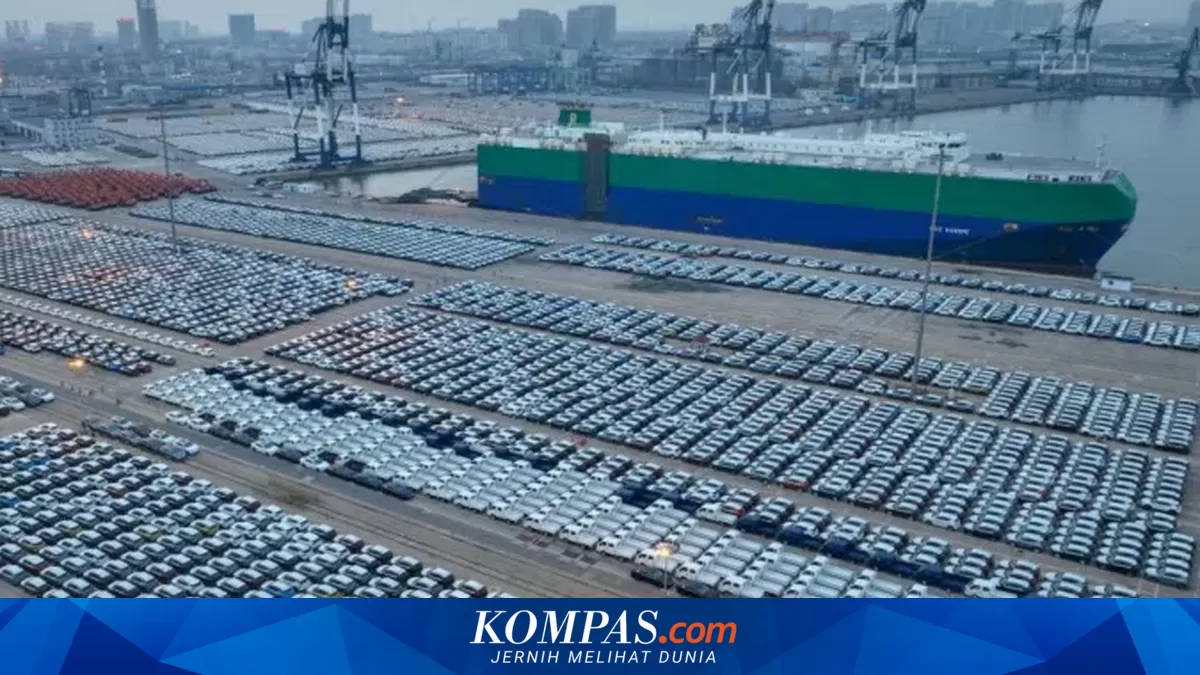
The surge in global oil prices breaking through $100 per barrel due to the Iran conflict is estimated not to significantly shake China’s economy compared to other nations.
Several analysts assess that China’s position is relatively stronger because the country has accumulated large quantities of crude oil reserves whilst simultaneously accelerating energy source diversification, including renewable energy and electric vehicles.
According to CNBC, Monday (9 March 2026), OCBC analysts believe China is likely more resilient to a potential closure of the Strait of Hormuz compared to many other Asian nations.
The analysts note that China has accumulated one of the world’s largest strategic and commercial oil reserves. Furthermore, accelerated adoption of electric vehicles and renewable energy serves as a structural buffer against oil price volatility.
Rush Doshi, Director of the China Strategy Initiative at the Council on Foreign Relations, stated that the volume is equivalent to approximately three to four months of supply, thereby able to delay the economic impact of oil price surges.
According to Doshi, over the past two decades China has also sought to reduce its dependence on maritime oil distribution routes.
China has constructed new onshore oil pipelines and increased the share of renewable energy, so dependency on the Strait of Hormuz is now estimated at only approximately 40–50 per cent of imported oil transported by sea.
The narrow waterway lies between Iran to the north and Oman and the United Arab Emirates to the south.
Kpler data shows approximately 31 per cent of global maritime oil flows passed through the Strait of Hormuz last year, or roughly 13 million barrels per day.
However, for China, oil shipped through this route accounts for only approximately 6.6 per cent of the country’s total energy consumption, according to Ting Lu, chief economist at Nomura China.
Meanwhile, liquefied natural gas imports through the same route account for only approximately 0.6 per cent of China’s energy consumption.
However, China is the world’s largest crude oil importer, with purchase volumes nearly double those of the United States. India ranks third.