
Oil Price Breaches 100 Dollars per Barrel Following Middle Eastern Production Cuts
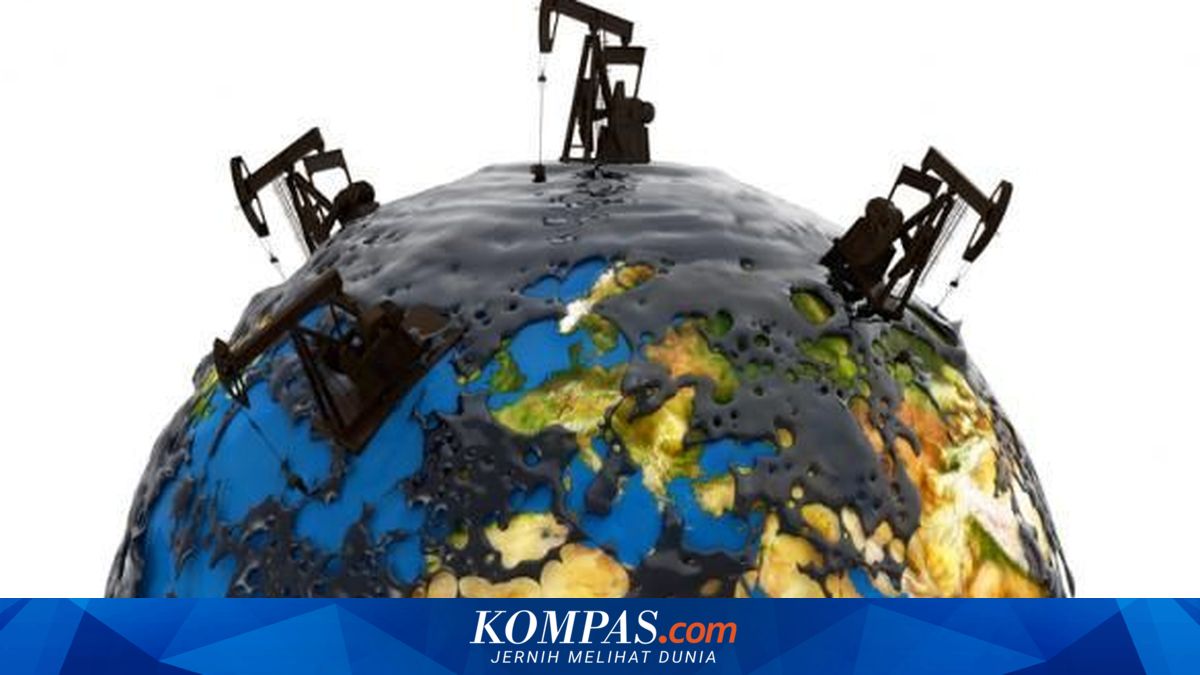
Global crude oil prices have surged past 100 US dollars per barrel during Sunday trading after major Middle Eastern producers cut production.
The production cuts occurred as the Strait of Hormuz remained closed due to conflict with Iran.
Price increases are proceeding rapidly in the global energy market.
According to CNBC reporting, West Texas Intermediate (WTI) crude oil, which serves as the United States benchmark, rose 17 per cent or 15.32 US dollars to 106.22 US dollars per barrel. Using an exchange rate of approximately Rp16,940 per US dollar, this price is equivalent to roughly Rp1,799,280 per barrel.
Throughout the previous week, US crude oil prices surged approximately 35 per cent, marking the largest increase in the history of futures contract trading since 1983.
Oil prices last breached 100 US dollars per barrel in 2022 following Russia’s invasion of Ukraine.
The surge in energy prices immediately triggered a political response in the United States. President Donald Trump assessed that the price increase represented a necessary consequence to be accepted.
Shortly after oil prices breached 100 US dollars per barrel at Sunday evening market opening, Trump posted on Truth Social platform:
“The short-term oil price is a very small price to pay for destroying the Iranian nuclear threat. Only a fool would think differently,” Trump wrote.
Kuwait, the fifth largest oil producer in the Organisation of the Petroleum Exporting Countries (OPEC), announced a careful reduction in oil production and refinery output on Saturday.
Kuwait’s state-owned Kuwait Oil Company cited the reduction as a response to Iranian threats against shipping routes through the Strait of Hormuz.
A more serious situation has developed in Iraq, the second largest oil producer in OPEC.
Production from three major oil fields in the southern part of the country reportedly fell approximately 70 per cent to 1.3 million barrels per day, down from approximately 4.3 million barrels per day previously.