
Oil and gas production surge opens up business opportunities for the insurance industry
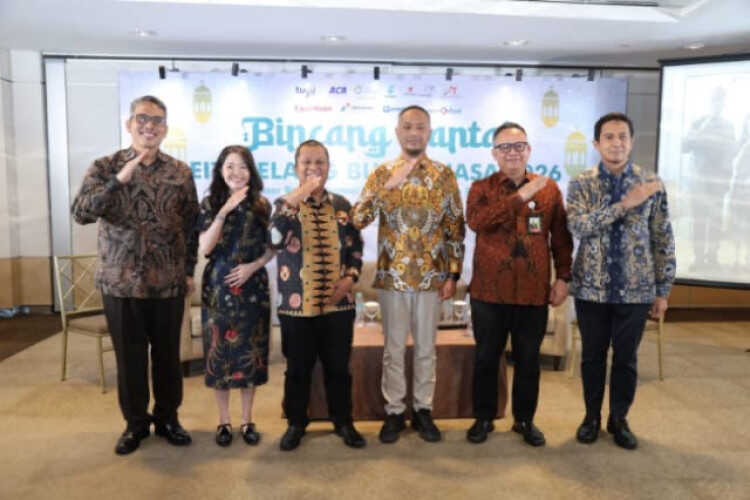
Oil and gas production surge opens up a new field of business for the insurance industry
Indonesia’s ambition to raise oil and gas production is not only impacting the energy sector but also opening space for the expansion of the insurance industry. The growing activity in exploration and development of oil and gas fields is increasing the need for protection against a range of high-value operational risks. This opportunity emerged at the EITS Casual Talk session titled The Large Potential of Insurance Business Behind Increased Oil and Gas Production.
Director of Planning and Development of Oil and Gas Infrastructure at the Ministry of Energy and Mineral Resources (ESDM), Agung Kuswandono, emphasised that the government continues to push for higher oil and gas production to strengthen energy security while reducing import dependence. This is done through enhanced exploration and exploitation, the improvement of joint venture contract schemes, accelerated field development, and optimising domestic gas as a transition energy.
‘The government also encourages the utilisation of technologies such as enhanced oil recovery (EOR), horizontal drilling, reactivation of thousands of idle wells, and the preparation of around 110 potentially productive oil and gas working areas to be offered to investors,’ Agung said in a press release received by SWA.co.id on Friday 6 March 2026.
President Director of PT Asuransi Tugu Pratama Indonesia Tbk (Tugu Insurance), Adi Pramana, assessed that rising upstream activity in oil and gas will drive demand for insurance protection. ‘This sector is characterised by large investments, complex operations, and significant safety and environmental risks. Therefore, insurance becomes an important part of risk management for this industry,’ he noted.
Head of Taxation, Insurance, and Treasury at SKK Migas, Achmad Rezki Isfadjar, stressed that managing insurance is a vital part of the governance of the national upstream oil and gas industry. The mechanism refers to the Working Guidelines for SKK Migas (PTK-044 Rev.02), which regulate procurement, declarations, surveys, and claims handling.
He added that insurance for industrial assets and construction projects is managed through a consortium of national insurance companies to increase domestic retention and prevent monopolies. Meanwhile, the purchase of asset and well insurance policies is done in bulk to strengthen the bargaining position in setting premiums and coverage terms.
VP Financing & Treasury of PT Pertamina Hulu Energi (PHE), Villia Sim, said that higher oil and gas production up to 2030 will be accompanied by a surge in investment and operational risk. PHE currently manages around 27% of operator working areas in Indonesia, contributing about 65% of domestic oil lifting and 35% of national gas lifting in 2025.
As exploration and field development activity increases, PHE’s capital expenditure is projected to grow by about 13% annually through 2026, further expanding exposure to risk. ‘Therefore, insurance is an important part of maintaining operational continuity,’ she said.
Deputy Chair for Technical Affairs, AAUI, Dr. Diwe Novara, described the rise in oil and gas production as a strategic momentum for the development of energy insurance. The upstream oil and gas industry, characterised by high risk, high capital, high amount, and high technology, requires strong insurance protection, while of the roughly 80 AAUI members only around 10 companies have portfolios in this sector—signifying substantial remaining opportunities.
Novara added that the production target of 1 million barrels of oil per day and 12 BSCFD of gas by 2030, along with the offer of dozens of new working areas, will significantly spur industry activity. ‘Collaboration between the government, oil and gas players, and the insurance industry is the key to strengthening national capacity while maintaining stability in the upstream oil and gas sector,’ he concluded.