
OIC, the Middle Path, and Geopolitical Ijtihad of the Islamic World
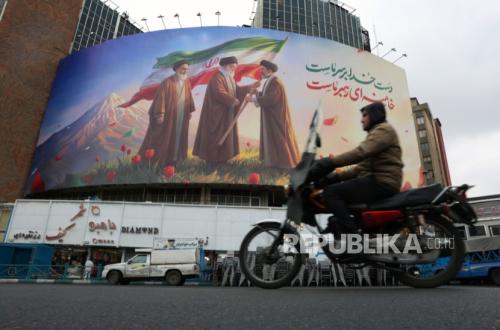
The open confrontation between the US-Israel axis and Iran is not merely a routine military escalation. It marks the cracking of the old security architecture in the Middle East. The stability that has long depended on external powers has proven fragile, easily crumbling, and failing to deliver justice, which is the primary prerequisite for sustainable peace.
For decades, the region has lived under a semblance of order. Conflicts have not been genuinely resolved but merely managed. Tensions have been maintained at a certain level, while the root problems—particularly the injustice towards Palestine—have been left festering. As a result, every outbreak of conflict only reaffirms one thing: a regional order built without justice will ultimately collapse under its own contradictions.
Amid this turbulence, the Islamic world faces a profound historical question: Will it continue to be an arena for the influence struggles of great powers, or will it begin to build itself as an independent, civilised, and sovereign geopolitical subject? In this context, the revitalisation of the Organisation of Islamic Cooperation (OKI) becomes an imperative.
However, the rise of the Islamic world cannot be built solely on calculations of interests and power balances. It requires a moral compass. Without an ethical direction, any rise will only give birth to new forms of dominance struggles.
The Qur’an has laid the fundamental foundation for international relations. Allah SWT states: “O mankind! Truly, We created you from a man and a woman, then We made you into nations and tribes so that you may get to know one another…” (QS. Al-Hujurat: 13).
This verse teaches that diversity of tribes and civilisations is not a reason for mutual negation, but a call to build a civilised life together. International politics built on domination, colonialism, and double moral standards fundamentally contradicts the basic spirit of humanity. The Islamic world must not merely be a victim of global injustice; it must dare to present a moral alternative to a world that is losing its way.
The Qur’an also affirms the historic mandate of the Muslim ummah: “And thus We have made you a just community that you will be witnesses over the people…” (QS. Al-Baqarah: 143).
The concept of ummatan wasathan carries broad meaning. It is not merely moderate in a passive sense, but an active role as a guardian of balance, defender of justice, and moral witness. The Islamic world is not called to be a marginal ummah in history, but a middle ummah: not absorbed in the extremities of power, nor drowned in dependency.
It is here that the revitalisation of the OKI becomes crucial. So far, the OKI has too often been perceived as a forum for symbolic solidarity, present in resolutions and rhetorical condemnations, but has not yet transformed into an institutional force that tangibly influences the region’s direction.
The revitalisation of the OKI must be understood as a transformation from moral solidarity to strategic capacity. This must not be built on the logic of exclusion. The OKI must stand on the principle of strategic inclusivity, involving major actors such as Indonesia, Saudi Arabia, Turkey, Egypt, Pakistan, and Iran as integral parts of the regional stability architecture.
Ignoring Iran means building a security house while leaving one of its main pillars outside. Involving Iran does not mean endorsing all its political choices, but acknowledging the geopolitical reality that Islamic world stability cannot be built by sidelining one of its key actors. Only with an inclusive framework can the Islamic world move from politics of mutual suspicion to politics of balance and shared responsibility.
This idea needs to be translated into concrete agendas. First, the Islamic world needs to build independent regional security mechanisms to avoid continued dependence on external interests. Second, a non-aggression commitment among Muslim countries to limit conflict escalation and proxy wars.
Third, sovereignty in regional reconstruction financing so that post-war development does not lead to new dependencies on donors with hidden political agendas. Fourth, repositioning the Palestinian issue as the core problem, not merely an emotional symbol. Fifth, strengthening state legitimacy and civilian protection to reduce reliance on non-state actors.
The revitalisation of the OKI is an effort to bring back the “Middle Path” in a world increasingly divided between the domination of great powers and harsh counter-reactions. This middle path does not mean neutrality without principles. It demands the courage to reject aggression, colonialism, sectarianism, and politics of hatred.
The US-Israel attacks on Iran should be read as a moment of geopolitical reflection for the Islamic world. This ummah cannot continue living in reactive and divided patterns. Solidarity must be elevated to strategy, and strategy must be guided by morality.
If this moment is missed, the Islamic world will remain large in numbers but small in influence. But if read with clarity of mind and maturity of faith, from the ruins of this hegemony, a new order that is more just, balanced, and humane can be born. That is the civilisational endeavour to prove that Islam still has an ethical and political offering for the world’s future.
Wallahu a’lam bishawab.