
Officials Explain Why Waste Appears Mixed Again Despite Residents Sorting It at Home
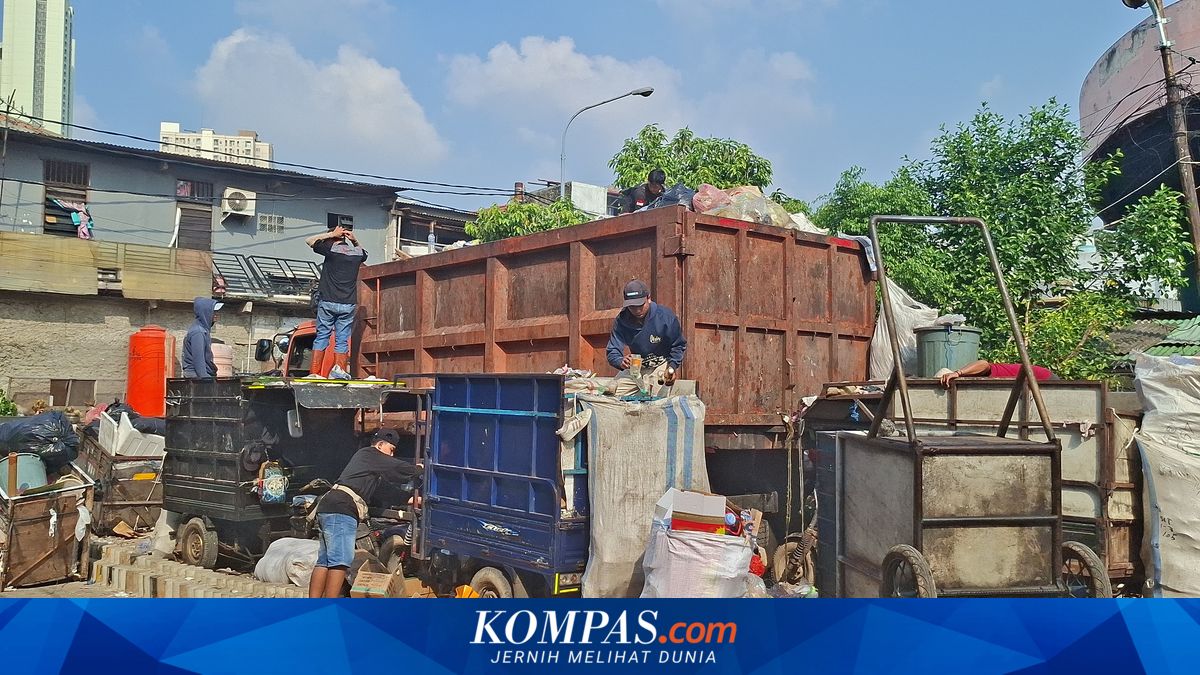
The Jakarta Provincial Government’s policy mandating residents to sort waste at home has sparked debate among the public. Some residents feel that efforts to separate organic and inorganic waste from home are futile because the waste is ultimately perceived to be mixed again by collection officials. However, field workers deny this assumption. According to him, the situation occurs because specialised carts for sorted waste are not yet available. Additionally, most residents still dispose of waste in a mixed condition. “It’s still mixed, all positions of the waste haven’t been sorted yet. So we just pick it up because each household has its own bin. Sometimes some don’t even have a bin and join their neighbour’s. So it ends up mixed,” said Ridho to Kompas.com at the location on Wednesday (13/5/2026). “When it arrives here at the LPS (Temporary Collection Site), that’s when we sort it. For example, plastic bottles and such, we sort and separate them, then cardboard boxes and the like that can still be sorted, we do sort,” Ridho explained. Meanwhile, for easily rotting organic waste, Ridho and his colleagues immediately transfer it to a large truck to avoid odours in the collection area. According to Ardi, it is impossible for officials to leave waste mixed at the temporary disposal site (TPS), as this would contradict waste management regulations. Moreover, he said, inorganic waste has economic value and can be recycled. “When it’s disposed at the TPS, we then take the plastic waste, bottles, then cardboard or whatever, we separate them. We even have a waste bank at our office,” Ardi clarified. Meanwhile, kitchen organic waste is usually processed using maggots to decompose it more quickly. On the other hand, the officials admit that sorting organic waste, especially wet and smelly kitchen waste, is not an easy task. Therefore, Ridho supports the government’s policy mandating residents to sort waste from home. According to him, this step can actually lighten the burden on field workers. “Waste management requires everyone to learn, not just the officials who should sort, but residents should also be able to sort themselves, making our city more beautiful,” Ridho stated. Ridho and Ardi also urge the DKI Provincial Government to quickly prepare supporting facilities so that this policy runs effectively. They propose colour-coded three-bin systems for residents, specialised or partitioned carts for officials, and clearer sorting area layouts at TPS and LPS. “The hope is that Jakarta can be cleaner, with waste matters more organised like in foreign countries, not messy, with waste more neatly managed and hygiene better maintained, that’s all,” Ridho concluded.