
Official! US Lifts Sanctions on Iranian Oil, But...
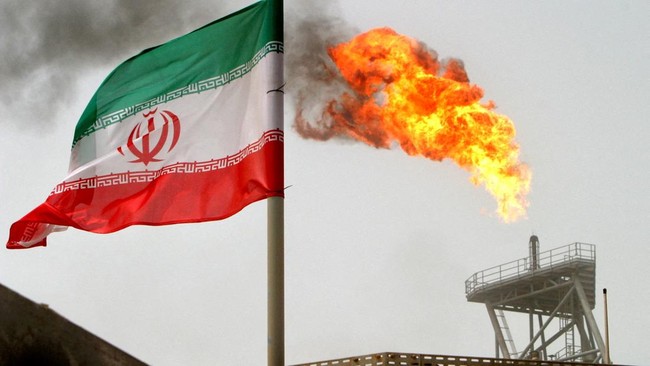
Jakarta, CNBC Indonesia - Amid a surge in global energy prices due to the war in the Middle East, the United States has taken a surprising step by opening the tap on oil supplies previously restricted by sanctions against Iran.
The US Department of the Treasury on Friday (20/3/2026) local time decided to temporarily lift sanctions on Iranian oil that has already been loaded onto tankers. This policy is seen as Washington’s latest effort to curb the worsening global energy supply crisis.
In its official statement, the authority explained that this permission applies to the shipment and sale of Iranian crude oil and other petroleum products that were loaded onto ships before 20 March. The policy is temporary and will remain in effect until 19 April.
This step was taken by the Office of Foreign Assets Control (OFAC), an agency under the US Department of the Treasury, after Treasury Secretary Scott Bessent previously stated that the option was under consideration. This policy also follows a similar step previously granted for Russian oil at sea.
This emergency policy emerges amid significant pressure on the global energy market. Iran’s de facto blockade of the Strait of Hormuz, a vital route typically carrying around 20% of the world’s oil and gas supplies, along with various attacks on energy infrastructure in the region, has driven oil prices to surge sharply.
In his statement, Bessent described this step as a limited and short-term policy, in line with President Donald Trump’s directive to “maximise energy flows to the world” and maintain market stability.
“At this time, sanctioned Iranian oil is being hoarded by China at low prices,” Bessent said, quoted by AFP.
“By temporarily opening up these existing supplies to the world, the United States will quickly bring around 140 million barrels of oil to the global market, expanding the world’s energy supply and helping to temporarily alleviate the supply pressure caused by Iran.”
However, this claim was immediately refuted by the Iranian side. The government in Tehran stated that it does not have surplus crude oil supplies for sale to the international market.
“For now, Iran essentially does not have surplus crude oil either at sea or to supply to other international markets, and the US Treasury Secretary’s statement is merely intended to give hope to buyers,” wrote Saman Ghoddoosi, spokesman for Iran’s Ministry of Petroleum, on platform X.
Nevertheless, this sanctions relief policy does not apply to shipments of oil to certain countries or regions, including Cuba, North Korea, and Russian-occupied areas of Ukraine.
In the energy market, oil prices continued to show an upward trend at the end of Friday’s trading, although they have not yet breached the US$120 per barrel threshold that has been approached several times since the conflict erupted three weeks ago.
Brent crude oil rose 3.26% to US$112.19 per barrel. Meanwhile, West Texas Intermediate (WTI) crude, the US benchmark, strengthened 2.27% to US$98.32 per barrel.