
Official! Trade Minister Eases Coal Exports and More, New Regulations Issued
Jakarta, CNBC Indonesia - The Ministry of Trade has officially issued two new regulations to simplify the export process and cut licensing barriers for exports of oil and gas up to coal.
This policy is contained in Minister of Trade Regulation (Permendag) Number 5 of 2026 on the Fourth Amendment to Permendag Number 23 of 2023 on Export Policy and Regulation; and Permendag Number 6 of 2026 on the Fourth Amendment to Permendag Number 22 of 2023 on Goods Prohibited from Export, which have been effective since 1 April 2026.
Trade Minister Budi Santoso stated that these regulations are part of deregulation efforts to improve ease of doing business and the competitiveness of exporters amid global dynamics.
“The government is carrying out deregulation and simplification of export licensing to enhance ease of doing business and improve the investment climate. Both Permendags relax export policies by eliminating several obligations and sanctions, as well as reducing documents for prohibitions and restrictions (lartas),” said Budi in his statement, quoted on Wednesday (8/4/2026).
Meanwhile, Director General of Foreign Trade Tommy Andana added that the revision of these regulations addresses the needs of business actors who want a faster and more efficient export process.
“This revision aims to simplify regulations and adjust policies to global trade dynamics and the needs of business actors,” said Tommy.
In these new regulations, the government simplifies export requirements for several strategic commodities. For industrial tin commodities, for example, only Export Approval (PE) and Surveyor Report (LS) are now required, without the Registered Exporter (ET) obligation. Meanwhile, in the oil and gas sector, requirements are reduced from ET, PE, and LS to only PE and LS, with exceptions for gas exports via pipeline.
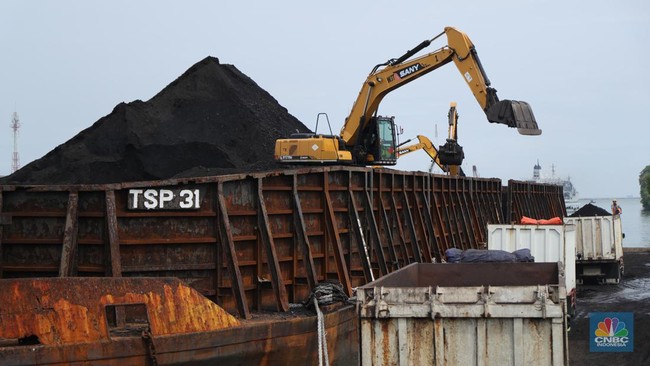
Simplification also applies to coal exports, including the elimination of cooperation agreement obligations in ET applications and minimum export realisation obligations. In addition, the government provides flexibility in raw material sources to support industrial tin downstreaming and eliminates several technical provisions such as tin solder specifications.
On the other hand, the government is also promoting the digitalisation of export services through an integrated licensing system. The issuance of PE is now carried out electronically and automatically for certain commodities such as rice and fishery products, and is connected to the Indonesia National Single Window (SINSW).
This integration enables real-time data exchange between agencies to accelerate verification processes and reduce administrative barriers.
“The new regulations also cover legal harmonisation through adjustments to nomenclature and the transfer of authority for issuing export licensing documents between agencies. This step is expected to reduce policy overlaps and increase legal certainty for exporters,” said Tommy.
One important change in these regulations is the transfer of authority for Natural Plants and Wildlife Transport Documents (TASL) for aquatic resources from the Ministry of Forestry to the Ministry of Marine Affairs and Fisheries.
In addition, exports of ilmenite and rutile concentrates can now only be carried out by holders of IUP and IUPK operation production, without requiring an industrial business licence.
Adjustments are also made to other commodities, such as changes to the sanitation certificate code for swiftlet nests and restrictions on the validity period of ET for kratom to three years.
Tommy emphasised that this policy has undergone cross-ministerial coordination and involved input from business actors. The government hopes that this deregulation will maintain export performance while supporting national economic stability.
“We hope that exporters can continue to maintain trade balance performance and become a stabiliser for the Indonesian economy,” he concluded.