
Official Mineral Reference Price Changes, This Sector Feels the Greatest Pressure
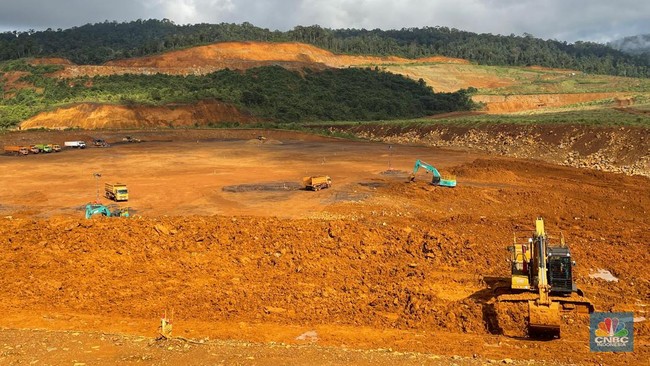
The government has officially implemented a new formula for the Mineral Reference Price (HPM) for nickel ore starting 15 April 2026. This policy is contained in Ministerial Decree No. 144.K/MB.01/MEM.B/2026, which revises Ministerial Decree No. 266 of 2025 on guidelines for setting reference prices for metallic minerals and coal.
Chairman of the Indonesian Mining Experts Association (Perhapi), Sudirman Widhy Hartono, assesses that the HPM formula change has significant impacts, particularly on nickel processing industry players.
According to him, smelters based on High Pressure Acid Leaching (HPAL) are the most pressured by this policy. This is because the price of limonite nickel ore, the main raw material for HPAL, could surge by more than 100% under the new formula.
“With the limonite price increase of more than 100%, HPAL factories will certainly face the greatest pressure,” Widhy told CNBC Indonesia on Wednesday (15/4/2026).
The increase is triggered by the inclusion of cobalt content in the HPM calculation for limonite. On the other hand, HPAL operational costs are also continuously rising, especially from the surge in sulphuric acid prices as the main leaching process material.
In the last three years, sulphuric acid prices have risen drastically from below US$100 per tonne to around US$250 per tonne. This condition further pressures the production cost structure of HPAL smelters.
Based on Perhapi’s calculations, the combination of the HPM increase and the sulphuric acid price surge could potentially drive nickel production costs in the form of MHP above US$17,000 per tonne. This figure is nearly equivalent to the current global nickel price referencing the London Metal Exchange.
His side understands the background and objectives of this nickel HPM change, one of which is to increase nickel royalties. Nevertheless, PERHAPI emphasises that the policy should also consider the sustainability of the nickel downstream industry.
“Because if the economics of nickel processing factories are no longer attractive, the dominant impact and effect will be long-term, as it will cause nickel processing factories to stop operations,” he said.