
Official! Indonesia-Japan Sign Cooperation Agreement on Critical Minerals and Nuclear Energy Development
Jakarta — Indonesia’s Ministry of Energy and Mineral Resources (ESDM) and Japan’s Ministry of Economy, Trade and Industry (METI) have officially agreed on bilateral cooperation in the critical minerals and nuclear energy sectors.
This was formalised through the signing of a Memorandum of Cooperation (MoC) as both countries move to strengthen energy supply chain resilience and support the transition towards net zero emissions in the Asia-Pacific region.
At the Indo-Pacific Energy Security Ministerial and Business Forum in Tokyo, Indonesia’s Energy Minister Bahlil Lahadalia announced that Indonesia is opening its doors to both the Japanese government and Japanese businesses to collaborate in managing strategic natural resources in the country.
“I warmly welcome the memorandum we sign today, particularly in critical minerals. We are very open and happy to invite the Japanese government and Japanese business leaders to jointly manage our critical mineral resources,” Bahlil said in Tokyo on 16 March 2026.
According to Bahlil, cooperation in the critical minerals sector could strengthen global supply chains amid current geopolitical tensions. Indonesia offers a variety of commodities that serve as primary materials for developing clean energy technology and future industries.
“We know that Indonesia holds 43% of the world’s total nickel reserves, and we are also a major player in bauxite, tin, and copper. We also have rare earth metals, so if we can implement this, I believe it is positive,” he added.
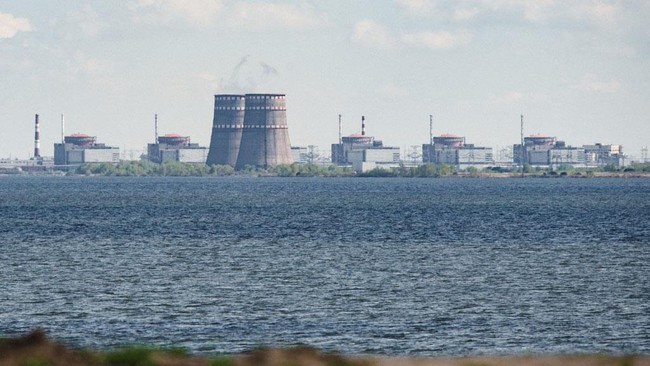
Beyond the mining sector, both nations also agreed to collaborate on nuclear energy, focusing on the utilisation of low-carbon technology with high safety standards.
Japan’s Minister of Economy, Trade and Industry Ryosei Akazawa noted that securing energy reserves through cross-country collaboration is necessary in the current global crisis situation.
“Amid the current global crisis, it is important for us to strengthen cooperation to maintain energy security. Japan has prepared strategic energy reserves as a precautionary measure,” Akazawa said.
Moving forward, both countries will continue discussions on strengthening regional energy security, including cooperation on LNG and coal supply chains, as well as accelerating energy transition projects under the Asia Zero Emission Community (AZEC) framework, such as operating the Sarulla geothermal power plant and completing the Legok Nangka waste-to-energy facility.
The cooperation between Indonesia and Japan is expected to strengthen energy security whilst supporting decarbonisation efforts in the Indo-Pacific region.