
Officers' Story of Raiding the Janitor Fish Den in Semanan River, West Jakarta, Triggering Revetment Damage
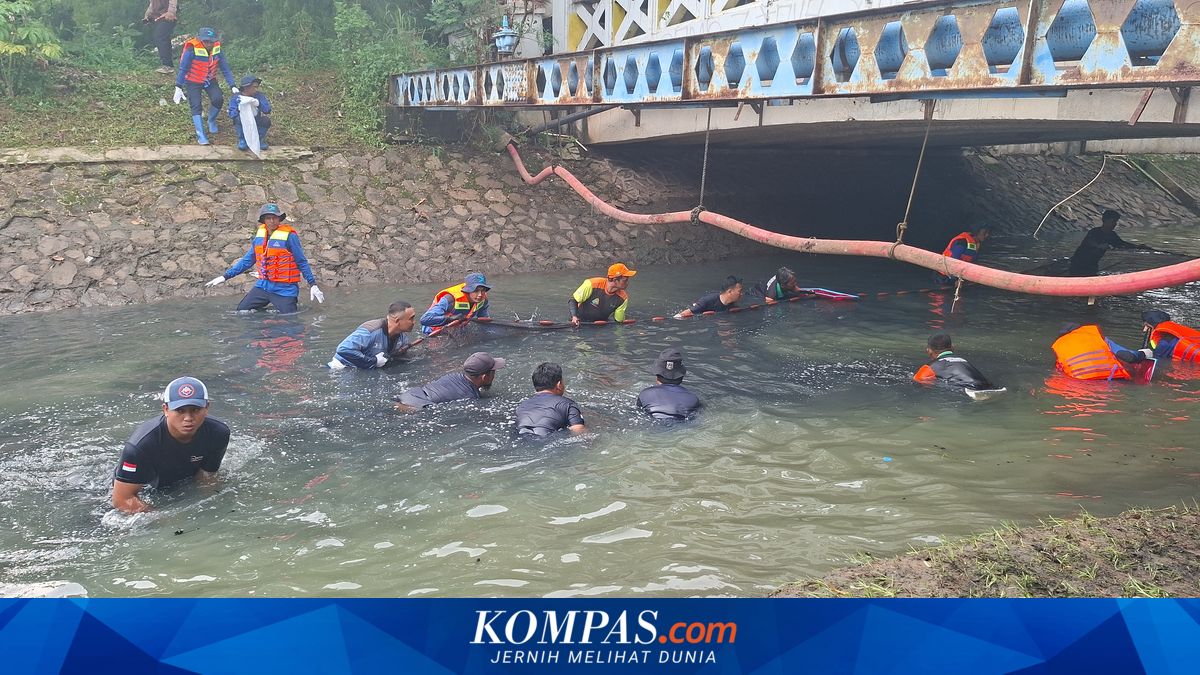
Under the scorching sun, dozens of joint officers from the West Jakarta City Government plunged into the Semanan River in Taman Semanan Indah (TSI), Kalideres, West Jakarta, on Friday morning (17/4/2026). Officers from the Centre for Production Inspection and Certification of Fishery Products (PPISHP), the Sub-Directorate of Natural Resources (Sudin SDA), to the Handling of Public Infrastructure and Facilities (PPSU), were seen rolling up their sleeves to raid the janitor fish. The invasive fish are hunted because they are deemed to damage the ecosystem and erode the river infrastructure in the Capital. Using large-sized nets, officers groped the riverbed to find the fish’s hiding spots. The nets were then cast and lifted, yielding dozens of wriggling fish inside. Other officers helped catch the fish using smaller nets before weighing them. However, not a few fish escaped and hid back in the crevices of the revetment walls. Fransiskus and Yusuf, two PPISHP officers who joined directly in the river, admitted to seeing the damage caused by the janitor fish. “The janitor fish enter the holes, right? If there are too many, they all go into the holes. Even when we put our hands in, we can’t reach them; it turns out they’ve already damaged the revetment,” said Yusuf to reporters at the location on Friday. This was confirmed by Fransiskus. He said the damage behind the revetment was far worse than he had estimated. According to Fransiskus, the depth of the holes made by the fish even exceeded 50 centimetres, making it difficult to reach by hand. “Can’t reach it, it’s already more than 50 cm. If we force our way in, our hands will get injured. Because there are rocks and all sorts of things, when pulling out again, the hand won’t come out smoothly; it’s definitely damaged,” Fransiskus explained. These holes are considered dangerous because they can erode the soil structure behind the revetment and weaken the embankment’s resilience in the long term. Yusuf revealed that the strong river current was one of the obstacles during the operation, even dragging the nets used at times. In addition, piles of rubbish at the riverbed also hindered the capture process.