
Occupational Health and Safety Programme Gains Popularity
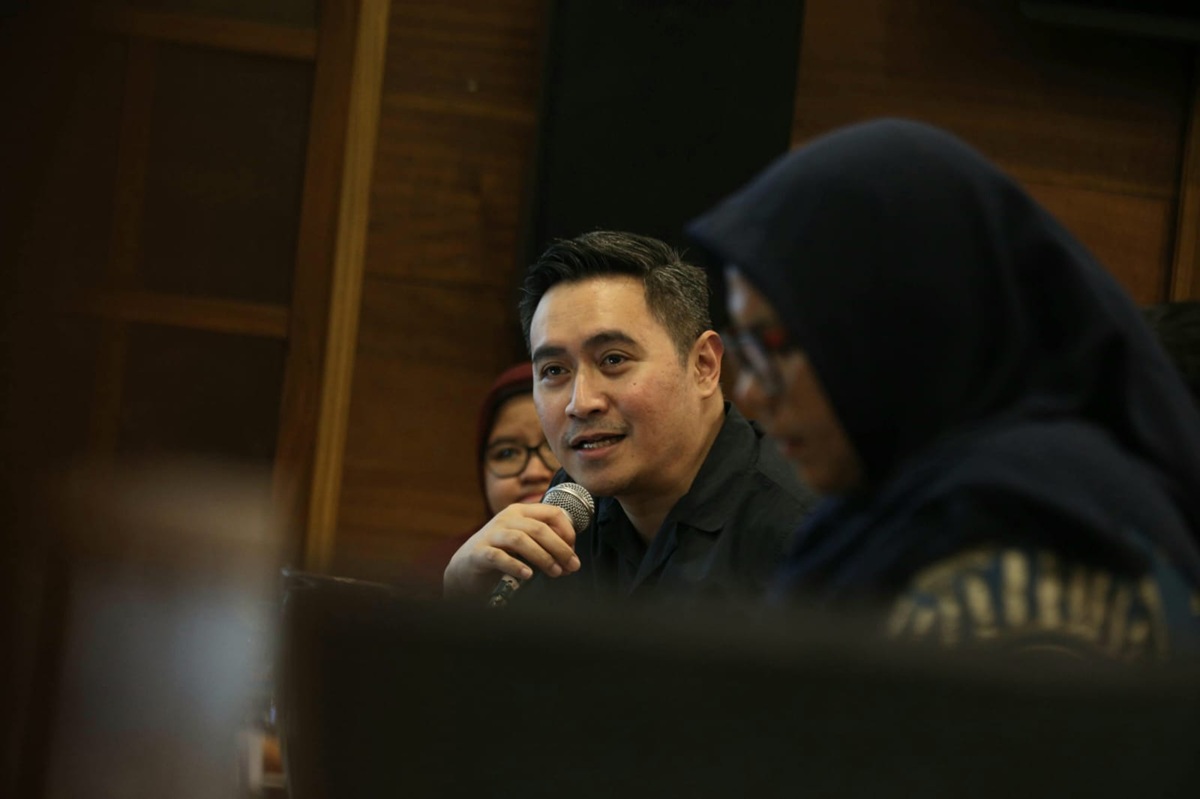
The Occupational Health and Safety (OHS) programme is increasingly popular. Data from the 2025–2026 public university selection shows striking figures, with thousands of applicants competing for dozens of seats in OHS programmes. At Universitas Sebelas Maret, the ratio is around 1:139, at Universitas Indonesia it approaches 1:48, and at Universitas Airlangga and Diponegoro, the competition is also fierce.
At first glance, the narrative that immediately emerges is straightforward: OHS is rising in prominence. However, if read more deeply, the real story may not be that simple, as the increasing interest in OHS education in Indonesia could be due to the demands of work realities that present many potential health risks.
Tracing back from the beginning, OHS has long been placed on the sidelines of priority programme discussions because it is considered technical, specific, even ‘minor’. Many view it as a discipline for heavy industry, not for everyone. This perspective has persisted for a long time because the definition of work risks has also been narrow, limited to what is visible and directly causes injury.
In reality, the world of work has long been changing quietly. Today’s risks do not always involve falls from heights or open wounds and injuries. Risks appear in more complex and almost invisible forms, such as chronic fatigue, psychosocial pressures, long-term exposure, and work systems that do not allow for recovery.
The pandemic has dramatically accelerated this awareness. For the first time, the world has seen that work risks do not only come from work activities but also from the work system conditions themselves. Safety no longer simply means no injuries, no exposure, no extreme fatigue, no living in a biologically damaging rhythm for humans. OHS has become the centre of organisational resilience, because without healthy humans, no system is truly productive.
Global data has long shown this. Nearly 3 million deaths each year are related to work, and most come from work-related illnesses, not accidents. Long working hours significantly increase the risk of stroke and heart disease. This means that the greatest risks are no longer extreme events but repetitive work patterns.
In Indonesia, the situation is even more complex. Data from BPJS Ketenagakerjaan (2021) shows a trend of increasing work accident cases to hundreds of thousands per year. However, these figures only reflect reported cases. Meanwhile, more than half of the workforce is in the informal sector, which is not fully protected and often invisible in statistics.
With the rapid proliferation of digital technology and social media, the assumption that occupational health is only about physical accidents is beginning to collapse. Research by the Caucus of Community Concerned with Mental Health on financial sector workers in 2025 found that nearly 4 out of 10 financial workers face fatigue due to work demands, risking unproductivity and even chronic illness. Similarly, research from the Occupational Medicine Master’s Programme (MKK) at FKUI during the pandemic found burnout among healthcare workers reaching tens of percent, where this is not a personal issue but a structural one. Exposure to stressors for workers certainly plays a role from work systems that do not provide adequate protection.
This is where the first possibility emerges: it is not OHS that has suddenly become important and risen in prominence, but the reality of work risks that can no longer be hidden. The increase in interest in OHS can be read as a response to workers’ and families’ anxieties that previously could not be translated concretely.
As more people feel tired without a clear cause, ill without a firm diagnosis, or work without certain boundaries, the need arises for a discipline that can explain and manage it all. OHS becomes the answer, not because it is a new science, but because the world finally needs a new way to read work productivity.
However, there is a second, more uncomfortable possibility: what is rising is not only awareness but also insecurity. Today’s generation is growing up in a far more uncertain world of work. The gig economy, flexible contracts, performance-based targets, and economic pressures make jobs no longer stable. In such conditions, study choices often become a reflection of societal discomfort.
OHS, in many ways, is in a unique position because it is cross-sectoral, needed in various industries, and connected to global standards like ISO and ESG. In other words, OHS offers something increasingly rare: relatively stable relevance amid work uncertainty. Thus, the increase in OHS applicants can also be read as a signal that not only school interests are changing, but security in the world of work is declining.
The third possibility is even deeper. The rise in OHS prominence may not be merely an economic or educational phenomenon but a moral correction, because for so long, the world of work has been built on the assumption that humans will adapt. Tiredness is considered part of the process, and illness is seen as a risk of earning a living.
OHS, in this context, changes from a technical discipline to a tool of critique, because this science not only asks ‘how to prevent accidents’ but also ‘why is the work system designed in such a way that humans must bear risks this large?’ Thus, the rise in OHS becomes something bigger than just a trend.
If OHS only rises as a momentary response to increasing risks, then its prominence could fall again. But if OHS is truly internalised as a way of thinking as the foundation in designing work, then this is not just a trend but a paradigm shift.