
Observers: Military Involvement in Combating Terrorism Should Not Be the First Option
A draft Presidential Regulation on the Indonesian National Armed Forces’ (TNI) role in combating terrorism has drawn public scrutiny over concerns it could create various legal and human rights complications.
Under Law No. 5 of 2018 on Countering Terrorism, counter-terrorism is designated as a form of military operation other than war (OMSP). Whilst the Indonesian National Police (Polri) and the National Counter-Terrorism Agency (BNPT) serve as the front line of terrorism response, in conditions of heightened threats and involvement of armed groups, military participation becomes relevant and strategically significant.
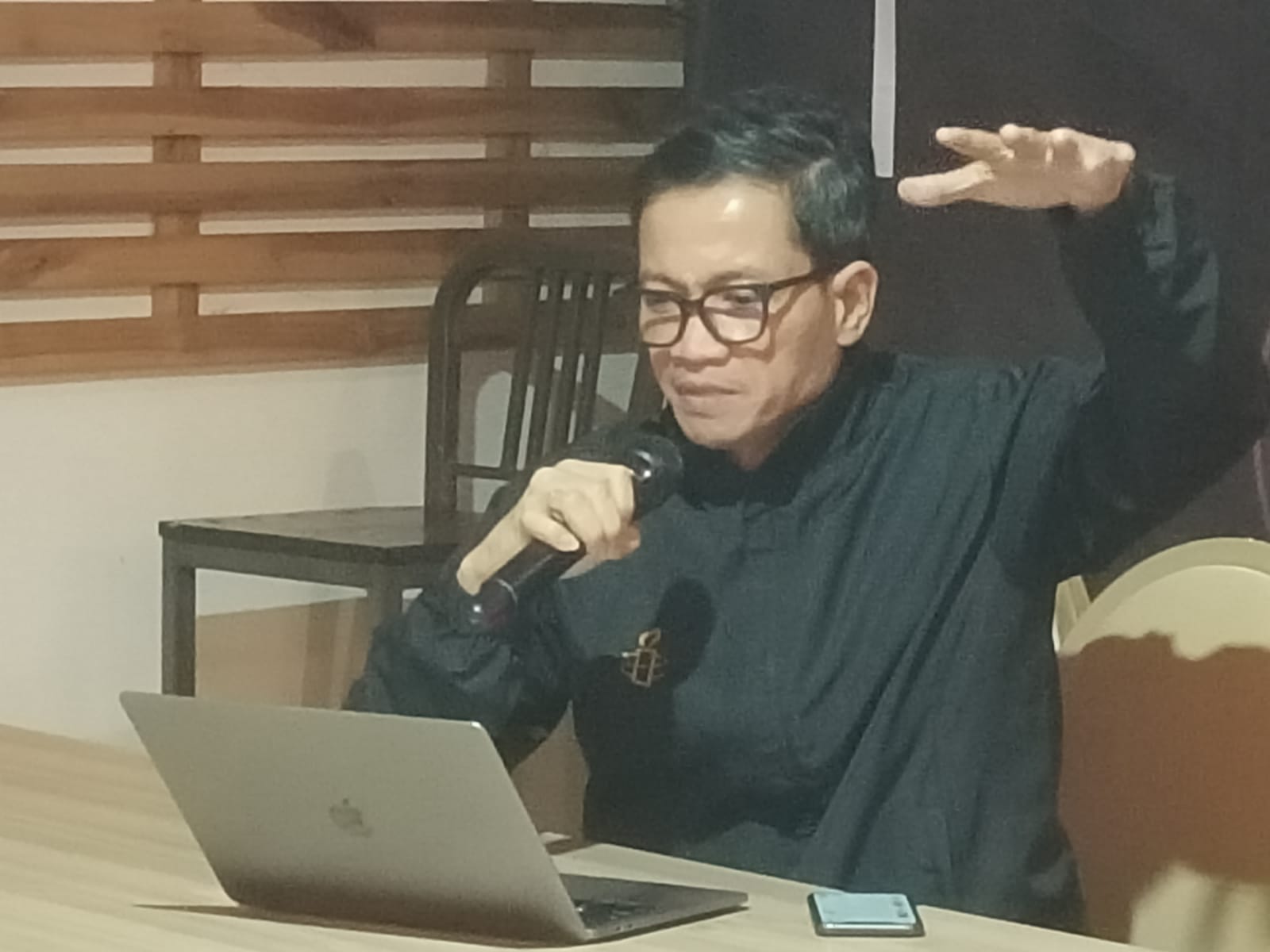
Islah Bahrawi, Executive Director of the Indonesian Moderate Network (JMI), contends that assigning counter-terrorism responsibilities to the military is inappropriate given their mandate should focus on global security matters. He observed that Detachment 88’s approach aims to apprehend perpetrators for purposes of rehabilitation rather than elimination. “I am not opposed to the military, but everything must operate within its mandate,” Bahrawi stated during a public discussion hosted by the Indonesia Civil Society Network (ICSN) on “Maintaining Civil-Military Balance in Counter-Terrorism” in Jakarta on Wednesday, 11 March 2026.
In his view, terrorism is a civilian crime that should be handled by police operating under civil law. If enforcement is conducted through military methods, the process risks abandoning rehabilitation, thereby failing to resolve the underlying problem. “Therefore, we must reject military-led counter-terrorism operations,” he stressed.
Usman Hamid, Executive Director of Amnesty International Indonesia, argued that the proposed regulation would blur the TNI’s functions and police law enforcement responsibilities, potentially creating overlapping regulations and jurisdictions. “Terrorism falls within criminal law enforcement jurisdiction, except in situations of armed conflict where the TNI might assist in protecting civilian government infrastructure. Military-led counter-terrorism could violate the law, human rights, and create institutional overlap. I therefore urge the cancellation of this proposed regulation,” he stated.
Riyadh Putuhena, researcher at Imparsial, said military involvement in counter-terrorism should be permitted only under two conditions: when the threat is genuinely imminent and civilian authorities are incapable of responding. “These two conditions must be met before involving the military in counter-terrorism operations. So it should not be the first option,” Putuhena clarified.
Amnesty International Indonesia also cited the Brimob violence case in Tual as reflecting weak accountability and oversight within Polri, and linked the death of a 14-year-old student in Taal, Maluku, to broader concerns about extrajudicial killings. The organisation has called for structural police reform and emphasised the importance of establishing an independent fact-finding team with stronger enforcement powers from the initial stage.