
Nyi Ageng Serang, National Heroine and War Adviser to Diponegoro
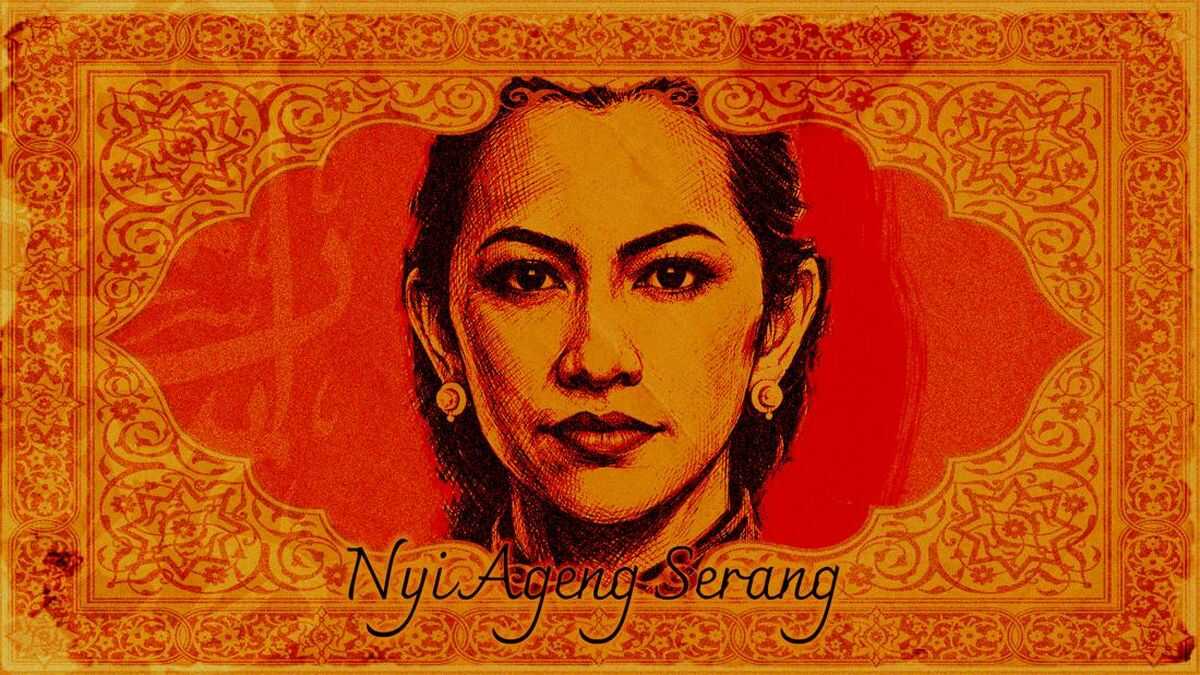
Nyi Ageng Serang (1762–1855) is one of the female figures elevated to the status of national heroine for her armed struggle against colonial forces before the twentieth century.
The noblewoman — also a female religious leader descended from Sunan Kalijaga — played a crucial role in the Java War (1825–1830) against the Dutch as a strategic adviser to Prince Diponegoro.
According to the book Kuasa Ramalan: Pangeran Diponegoro dan Akhir Tatanan Lama di Jawa 1785–1855 by historian Peter Carey, Nyi Ageng Serang wielded considerable influence in the Serang-Demak region in rallying resistance against the colonial power. Her military acumen contributed to her appointment as Diponegoro’s war adviser.
She was not merely an adviser; Prince Diponegoro also entrusted her with commanding troops during the Java War. Nyi Ageng Serang was no longer young when she took part in the conflict — she was, in fact, already elderly.
According to the National Heroes Encyclopaedia in the Ministry of Primary and Secondary Education repository, forces under Nyi Ageng Serang’s command were assigned by Diponegoro to defend the Prambanan area. By that time she was so advanced in age that she had to be carried in a litter.
In battle, Nyi Ageng Serang employed a guerrilla technique known as the benteng pendem ‘daun lumbu’ — the “taro leaf” sunken fortress. Her troops would cover themselves with green taro leaves so that from a distance they appeared to be taro plants, but when the enemy drew near they would launch a full-scale attack.
Propagation of Islam
Nyi Ageng Serang was not only a warrior; like Prince Diponegoro, she also spread the teachings of Islam. After returning to Serang — before the Diponegoro War — she practised Sufism. Towards the end of her life, she reportedly chose to live in a village in Kulon Progo, where she taught the fundamentals of Islam and Quranic recitation to the local community.
Beyond being known as a descendant of Sunan Kalijaga, Nyi Ageng Serang was also the grandmother of RM Soewardi Surjaningrat, better known as Ki Hajar Dewantara — one of the three pioneers of the national movement.
The state subsequently declared Nyi Ageng Serang a national heroine through Presidential Decree No. 084/TK/1974, issued on 13 December 1974.
The Struggle of Nyi Ageng Serang
Born Raden Ajeng (RA) Kustiyah Wulaningsih Retno Edhi, she was the daughter of Pangeran Natapraja, a ruler of the Serang district in Central Java. Her father served as Regent of Serang, located 14 kilometres north of the city of Solo, and was later appointed War Commander to Sultan Hamengku Buwono I.
Nyi Ageng Serang’s resistance against the Dutch was not confined to her later years alongside Prince Diponegoro in the Java War. When her father served as War Commander to Sultan HB I, she also fought the Dutch during the Giyanti War.
According to the Vredeburg Museum and Cultural Heritage site in Yogyakarta: “When fighting broke out between the VOC and the forces of her father Notoprojo, who rejected the Treaty of Giyanti (1755), Pangeran Notoprojo’s son fell in battle, after which Pangeran Notoprojo entrusted the leadership to his daughter, Nyi Ageng Serang.”
In one of the battles she commanded, her forces were outnumbered and outgunned, and Nyi Ageng Serang was captured by VOC soldiers.
After being released by the Dutch, Nyi Ageng Serang — who had once been married to Sultan Hamengku Buwono II — returned to Serang some time later.
When Prince Diponegoro subsequently declared war against the Dutch, Nyi Ageng Serang, together with her second husband Pangeran Kusumawijaya, answered the call and led troops into battle. On the battlefield, she suffered the bitter loss of her husband.
In her remaining years of advanced age, accompanied by her grandson Raden Mas Papak, Nyi Ageng Serang continued to fight in the Java War alongside Prince Diponegoro.
Nyi Ageng Serang passed away at the age of 76 and, in accordance with her wishes, was buried in Beku Village, Kulon Progo Regency. Today, in the centre of the town of Wates, Kulon Progo, a monument depicting Nyi Ageng Serang astride a horse with spear in hand stands as a reminder of her heroism.