
Nyepi Meets Lebaran: Lessons in Tolerance from the Calendar
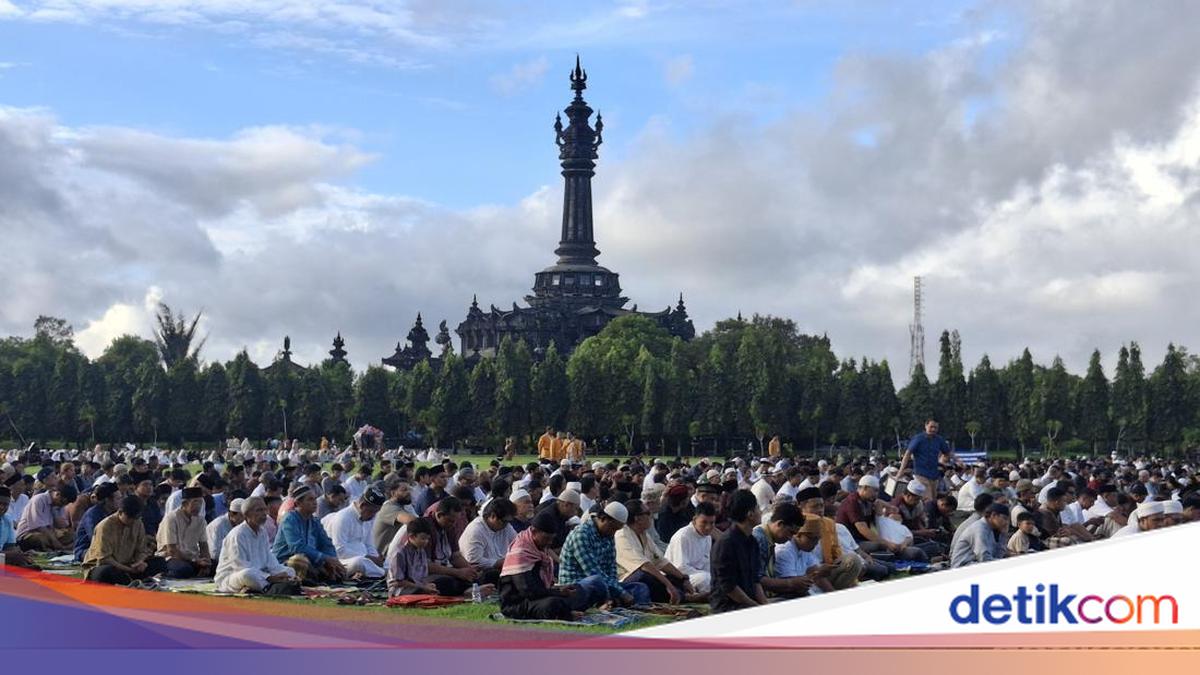
The March 2026 calendar presents a rare coincidence. Nyepi Day—the Saka New Year 1948—falls on Wednesday, 19 March, precisely when millions of Muslim travellers are heading to their hometowns to welcome Eid al-Fitr. Ngurah Rai Airport closes all flights for 24 hours. The Ketapang–Gilimanuk crossing stops operating from the previous afternoon.
Bali falls silent amid the year’s largest wave of mobility: 143.9 million people estimated to be on the move across Indonesia.
This situation is not merely a logistical issue, but a natural social experiment on how two spiritually opposing traditions—total silence and collective joy—can coexist in the same space and time.
Nyepi teaches the Catur Brata Penyepian: no lighting fires, no travelling, no working, no enjoying entertainment. Meanwhile, the night of Takbiran, for Muslims, is the peak of gratitude after a month of fasting—usually filled with echoes of Takbir from loudspeakers, processions, and fireworks.
How do these two celebrations meet? The answer is not a clash, but a mature negotiation. The Bali Interfaith Harmony Forum (FKUB) together with the Ministry of Religious Affairs, Bali Police, and local government have formulated a joint appeal. Muslims in Bali are permitted to hold Takbiran in the nearest mosque or prayer room, on foot—without vehicles—from 18:00 to 21:00 WITA. Without loudspeakers. Without firecrackers.
Without bright lighting shining outside the building. Pecalang—Bali’s traditional guards—and mosque officials work together to maintain order in their respective areas.
For some, such arrangements may feel like restrictions. However, this is where their depth lies. True tolerance is never free; it always demands a willingness to restrain oneself. The Chairman of the Parisada Hindu Dharma Indonesia (PHDI) Bali, Nyoman Kenak, reminds that Nyepi is essentially not just about turning off lights or stopping activities, but “extinguishing the ego within.”
If we reflect, is not that spirit also the essence of Ramadan fasting—holding back hunger, holding back anger, holding back desires? These two seemingly different traditions meet at the same point: self-control.
There is an important lesson behind these seemingly simple technical arrangements. The government has issued a Joint Decree from four directorates to regulate the crossing during Nyepi close to Eid homecoming. Ketapang Port closes from Wednesday afternoon, Gilimanuk from Thursday early morning, and reopens only Friday morning.
On the other hand, the Bali Governor provides a field in front of the governor’s office for Eid al-Fitr prayers for Muhammadiyah residents. The Muhammadiyah Bali Regional Leadership accepts this arrangement graciously, even postponing the Eid prayer schedule from 06:00 to 06:30 WITA to avoid clashing with the end of Nyepi.
This is what we rarely realise. In other countries, the meeting of two major religious holidays often becomes a source of tension. Yet Indonesia, with all its complexities, shows that tolerance can be managed through dialogue, not unilateral decrees. The FKUB Bali joint appeal does not stem from central orders, but from local religious leaders’ deliberations—a bottom-up mechanism, not imposed from above. The government acts as a facilitator, not a judge.
Of course, this does not mean everything runs without friction. The Ministry of Religious Affairs had to clarify a viral social media content that deliberately misled, as if the Takbiran restriction guidelines applied nationwide, when they only apply to Bali. Such provocations show that the enemy of tolerance is not only overt hatred, but also misinformation that exploits religious sentiments. Social literacy thus becomes an infrastructure of tolerance as important as toll road infrastructure.
There is a beautiful irony in this year’s Nyepi and Eid meeting. Nyepi asks humans to be silent, Eid invites humans to greet and forgive each other. One celebrates silence, the other celebrates togetherness. Yet both start from the same premise: that humans need to pause from daily hustle to reflect on who they are and how they relate to others.
For the 143.9 million homecomers this year who must adjust travel schedules due to the Bali crossing closure during Nyepi, that inconvenience is actually a form of respect. Pausing briefly at Ketapang Port, waiting for ferries to resume after Nyepi, is not wasted time. It is a break that teaches that in this country, we cannot move alone without considering others who are staying still.
The calendar never intends to teach anything. It only records time. But when Nyepi and Eid meet in the same March week, the calendar seems to remind us of something fundamental: that Indonesia is founded not on uniformity, but on the willingness to give space to each other.
This year, that space is given in the most concrete form—Takbir whispered to honour silence, and silence opened earlier to make way for Eid prayers. No one loses. Everyone wins. And that, perhaps, is the most essential meaning of victory in both Eid al-Fitr and Nyepi: victory over one’s own ego.