
Nyepi and Lebaran Coincide, Government Urged to Anticipate Closure of Gilimanuk-Ketapang Port
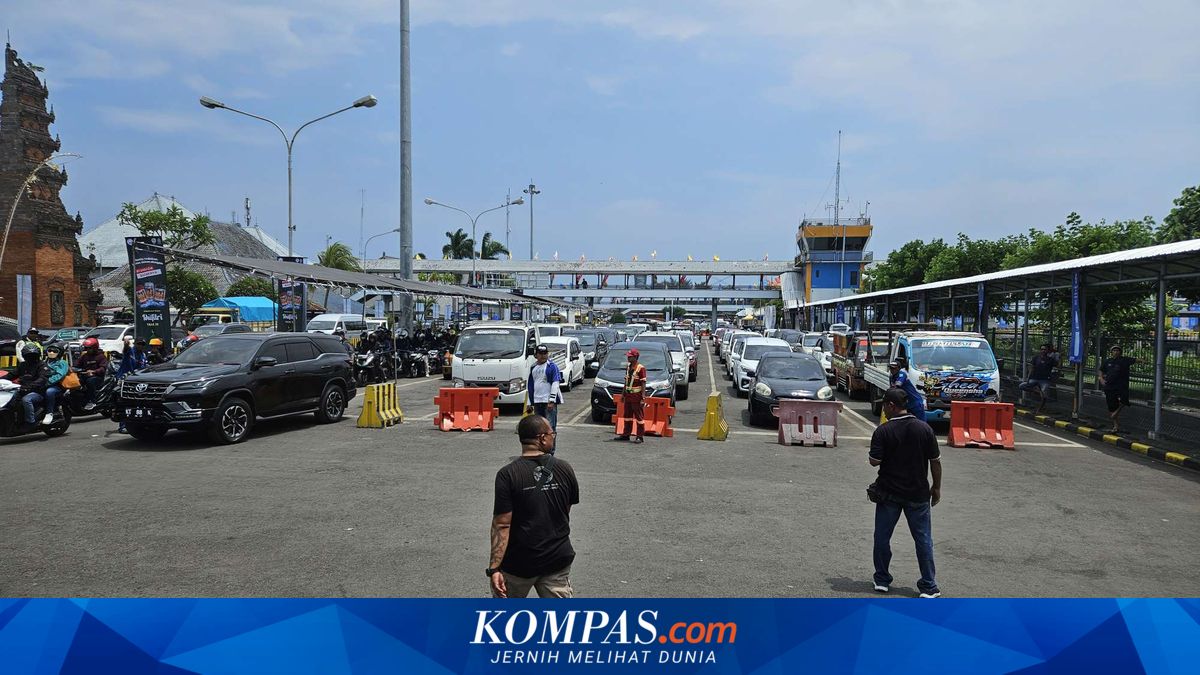
JAKARTA — The House of Representatives Commission V has asked the government to anticipate the impact of temporary suspensions of ferry services on the Java-Bali and Bali-Lombok routes, as the Nyepi celebration coincides with the 2026 Lebaran exodus period.
The request was conveyed by Commission V Chair Lasarus to the Transport Minister and the National Police Traffic Corps during a coordination meeting for the 2026 Lebaran mudik (exodus) preparations on Wednesday, 11 March 2026.
“The government must anticipate the temporary suspension of ferry operations on the Java-Bali and Bali-Lombok routes during the days coinciding with the Lebaran exodus and the Idul Fitri celebration alongside the Nyepi Hindu New Year celebration of Saka year 1948,” said Lasarus at the House of Representatives building.
He requested that inter-agency coordination be conducted effectively and strengthened, given that these two major events occur almost simultaneously.
The Nyepi celebration for Saka year 1948 will take place on 19 March 2026, whilst Idul Fitri is estimated to fall on 21 March 2026. This means the Nyepi observance occurs during the Lebaran exodus period, potentially affecting public mobility, particularly on ferry routes connecting Java and Bali.
The Coordinating Minister for Infrastructure and Regional Development, Agus Harimurti Yudhoyono (AHY), previously estimated that the 2026 Lebaran exodus will peak in two waves. “For the return journey, the peak is estimated to fall on 24-25 March, and then again on 28-29 March,” AHY said at a press conference at the Presidential Palace.
He stated that the primary mudik destinations are predicted to be Central Java, East Java, West Java, Yogyakarta, and South Sulawesi.
From a transportation perspective, private vehicles are expected to remain the dominant choice for people travelling during mudik. “This is the top ten. What remains very dominant is the use of private cars, estimated at 52 per cent alone,” said AHY.
Meanwhile, ferries, aeroplanes, intercity trains, and ships rank below private vehicles and buses in usage.
“As you can imagine, when discussing mudik, the primary burden falls on highways—both toll roads, national roads, and arterial roads that will be used to reach people’s destination regencies and cities,” AHY explained.