
Nvidia's $158.7bn CEO Brings New Catastrophe as This Profession Faces Extinction
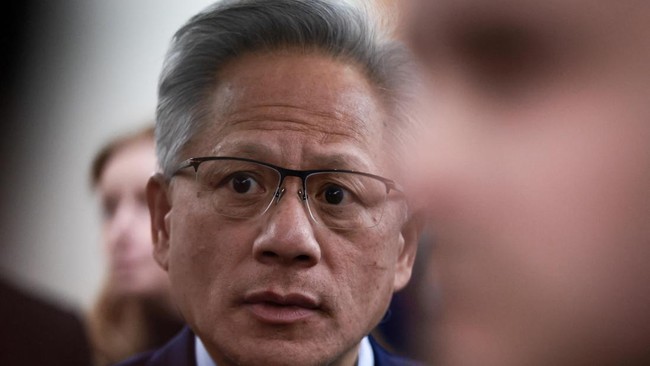
Jakarta – Nvidia CEO Jensen Huang, with a net worth reaching US$158.7 billion (Rp2.697 trillion), continues to make groundbreaking announcements that are shaking the world. He is one of the primary beneficiaries of the artificial intelligence boom.
His company, which produces the most advanced AI chips currently available, continues to report performance figures with record-breaking growth. Huang’s close relationship with US President Donald Trump has also attracted considerable attention. His negotiation skills successfully persuaded Trump to allow Nvidia’s H200 chips to be exported to China. Nvidia can be said to play a central role in the geopolitical conflict between the US and China, marked by reciprocal technology blockades.
Huang has also caused a stir with his ambitious plans to enter the autonomous vehicle (AV) industry. Nvidia has expanded agreements for its AV business development to include Hyundai Motor, Nissan Motor, and Isuzu. Beyond partnerships with Japanese automotive manufacturers, Nvidia has also signed cooperation agreements with Chinese manufacturers such as BYD and Geely.
These new partnerships are aimed at Nvidia’s Drive Hyperion platform, a specialised innovation for autonomous vehicles. This system helps companies develop and implement driver assistance capabilities and autonomous driving functions for Level 4 AVs, which can operate without human intervention in predetermined areas or conditions.
“We have long been working on autonomous vehicles. The ChatGPT moment for autonomous vehicles has arrived,” Nvidia CEO Jensen Huang said at the company’s GTC conference, as reported by CNBC International on Tuesday (17 March 2026). “Now we know that we can successfully drive cars autonomously, and today, we are announcing four new partners for Nvidia’s robotaxi platform. The number of robotaxi-ready vehicles in the future will be extraordinary,” he added.
Robotaxi refers to ride-hailing services based on autonomous vehicles. Robotaxi development has expanded across the US, China, the United Arab Emirates, and Singapore. Currently, no consumer vehicles on the mass market possess fully autonomous driving capabilities without human supervision. However, some companies offering robotaxi services, such as Waymo owned by Alphabet, already possess Level 4 autonomous driving capabilities.
Most vehicles currently sold to consumers have only reached Level 2 autonomous driving, meaning drivers must continue to monitor the system. Drive Hyperion is Nvidia’s effort to realise an “end-to-end” AV platform that encompasses data centre training, large-scale simulation, and in-vehicle computing. The company does not manufacture or sell AVs or many of the components required to operate such vehicles.
Nvidia’s current Drive Hyperion customers include numerous autonomous vehicle companies such as Aurora and Nuro, as well as consumer-oriented businesses such as Sony Group, Uber Technologies, Stellantis (the parent company of Jeep), and electric vehicle manufacturer Lucid Group.
Autonomous vehicles are important to Nvidia because driverless cars remain one of the key areas where the chip manufacturer can demonstrate growth beyond artificial intelligence alone. Many believe that AI can be the key to the proliferation of autonomous vehicles, which Wall Street analysts and automotive executives have targeted as a trillion-dollar growth industry.
These new partnerships add to Nvidia’s extensive list of collaborations as chip manufacturers and the automotive and technology industries seek to leverage and scale autonomous vehicles following years of unsuccessful robotaxi ventures. Waymo has led the autonomous vehicle industry for years, whilst others such as Tesla, Uber, and Amazon-owned Zoox are attempting to catch up.
The future development of robotaxi and autonomous vehicles will bring major catastrophe to the online driver profession. Once private cars and taxis are fully autonomous, the online driver profession will no longer be relevant and could create a new class of unemployment.