
Nusron Reveals Prabowo's View on the BoP and Indonesia's Position
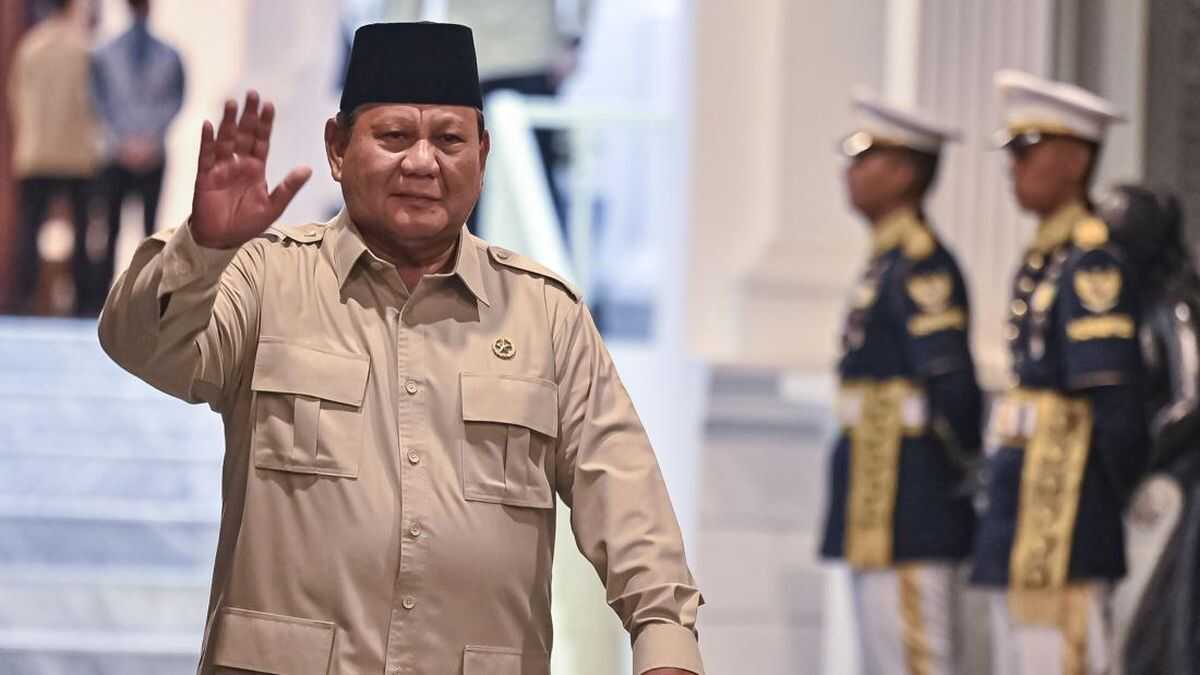
The government says President Prabowo Subianto values various inputs and criticisms regarding the proposal that Indonesia suspend or even exit membership of the Board of Peace (BoP) formed by United States President Donald Trump.
“If there are suggestions like that, the government is not anti-criticism. We listen while considering the situation,” said Minister of Agrarian Affairs and Spatial Planning/National Land Agency (ATR/BPN) Nusron Wahid when accompanying the President in a meeting with ulama figures and Islamic community organisations at the Presidential Palace, Jakarta, on Thursday night (5/3) as quoted by Antara.
He said Prabowo has an obligation to give a full explanation of Indonesia’s position on BoP membership.
According to Nusron, Prabowo has never shut himself off and listens to all inputs and criticisms conveyed by various parties, including from ulama and leaders of Islamic organisations in Indonesia. However, he emphasised, the Prabowo administration still regards forums like BoP as a potentially important means to pursue peace, particularly in the Middle East and Palestine.
The government’s current position is to make BoP part of Indonesia’s diplomatic effort to foster peace. Nusron said such an effort needs to be tried first before taking other steps. He stated that it would not be appropriate to halt membership before diplomatic efforts have been undertaken. “Indonesia has accepted BoP as a means, as an effort towards peace. At least, this effort should be tried first. Do not let the effort and its endeavours be halted before it has been pursued,” he explained.
Nusron added that during the meeting with ulama and leaders of Islamic organisations, Prabowo also questioned what alternatives would exist if Indonesia left BoP. The government says this forum is currently the only available platform to discuss peace efforts in Palestine and Gaza. He explained that Indonesia, together with eight other countries, has agreed to use this forum as a diplomatic space to encourage dialogue and a resolution to the conflict.
He also noted that the President is pursuing diplomatic steps to help ease tensions in the Middle East, including the possibility of opening lines of communication with Iran. According to Nusron, the move has also gained support from several regional and Islamic countries, such as Pakistan and the United Arab Emirates.
A day earlier, Prabowo invited presidents and vice-presidents of former administrations and the parliamentary party leaders to a gathering at the palace. After the meeting, NasDem Chairman Surya Paloh said Prabowo decided to remain in BoP amid the Middle East conflict that has heated up following the US, in collaboration with Israel, attacking Iran at the start of Ramadan. In response to those attacks that killed the top Iranian leader Ayatollah Ali Khamenei and several of his family, the so‑called “Nation of the Mullahs” retaliated with US and Israeli strikes.
Nusron explained that during the event, Prabowo also invited ulama and leaders of Islamic organisations to stand united in facing global geopolitical upheaval. Prabowo conveyed this invitation during a meeting and discussion with ulama and leaders of Islamic organisations at the Presidential Palace in Jakarta on Thursday (5/3) from 16:00 to 23:00 WIB, divided into two sessions.
Nusron said the meeting included intensive discussions on the global geopolitical situation as well as domestic economic conditions. “So, from four o’clock in the afternoon until breaking fast, the President was accompanied by the State Secretary (Prasetyo Hadi), together with the Coordinating Minister for Food (Zulkifli Hasan), and the Speaker of the MPR (Ahmad Muzani), conducting intensive discussions with three ulama figures and Islamic leaders in Indonesia,” Nusron said.
He explained that the three figures present in the first session were Rais Aam PBNU KH Miftachul Akhyar, the General Chairman of Muhammadiyah Prof KH Haedar Nashir, and the General Chairman of the Indonesian Ulema Council (MUI) KH Anwar Iskandar. The meeting then continued with a second session alongside leaders of Islamic organisations, Islamic figures, and leaders of pesantrens from various regions.
Nusron said around 86 leaders of Islamic organisations attended the meeting. The leaders of pesantrens present included K.H. Hasan Abdullah Sahal of Gontor, K.H. Nurul Huda Jazuli of Ploso, K.H. Abdul Hakim Mahfudz of Tebuireng, and representatives from Lirboyo, Darunnajah, and Al-Bahjah pesantrens. Ministers from the Red and White Cabinet who attended included Coordinating Minister for Human Development and Cultural Affairs Muhaimin Iskandar, Social Affairs Minister Saifullah Yusuf, and Religious Affairs Minister Nasaruddin Umar.
Beyond geopolitics, in the meeting the President explained to the ulama about developments in the global geo-economy. He also outlined the domestic economic and social conditions and the government’s measures to anticipate the impacts of global conflict, including potential food and energy crises. Prabowo outlined Indonesia’s trade policy with the United States, including the Agreement on Reciprocal Trade (ART). According to Nusron, this policy was aimed at maintaining the competitiveness of Indonesian products in the US market and avoiding potential high tariffs on Indonesian exports. “Then we draw the conclusion, hoping the leaders of Islamic organisations and these religious figures will stand with the President in a united front,” Nusron said.
Palestine situation: Meanwhile, in the Palestinian territories—namely the West Bank under Israeli occupation and the Gaza Strip—violence after violence resulting in deaths continues to be carried out by the Israeli military.