
Nurturing Press Freedom Amid Challenges
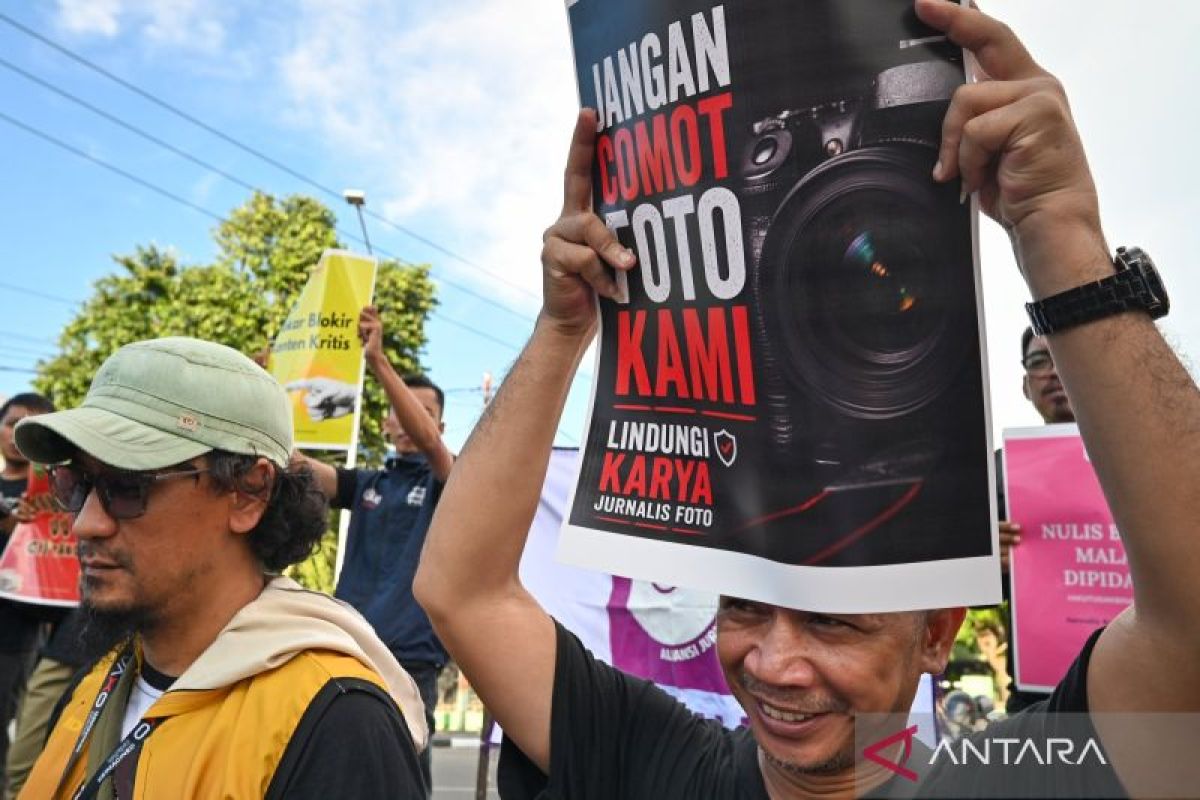
Nurturing press freedom is in essence part of efforts to maintain the quality of democracy itself.
Jakarta (ANTARA) - 3 May is commemorated as World Press Freedom Day, a moment to reaffirm the importance of a free press in democratic life.
This commemoration is not merely symbolic but also serves as a reminder for the state to respect freedom of expression as guaranteed by human rights principles. At the same time, it provides space for reflection among media practitioners on the various challenges faced, as well as honouring journalists who have lost their lives in the line of duty.
The picture of press freedom in Indonesia throughout 2025 shows that these challenges are not abstract. The Alliance of Independent Journalists (AJI) recorded 89 cases of violence against journalists, consisting of 30 physical assaults, 29 digital attacks, and 22 cases of terror and intimidation.
On the other hand, the Press Council received 1,166 public complaints regarding reporting from January to November 2025, a significant increase compared to 626 complaints in the previous year. In terms of indicators, Indonesia’s Press Freedom Index stands at 69.44, or in the “somewhat free” category, a figure that has not shown significant improvement in recent years.
Globally, this situation aligns with broader trends. The Reporters Without Borders report indicates that 52.2 percent of countries are in the “difficult” or “very serious” category for press freedom, with 110 out of 180 countries experiencing a decline in legal indicators related to press freedom.
Indonesia ranks 129th with a “difficult” status, signalling that pressure on the press remains quite significant. This data shows that press freedom issues are not just domestic concerns but part of global dynamics that affect public space and the quality of democracy.
Press Freedom as a Human Right
Press freedom does not stand alone but is rooted in human rights guarantees, particularly freedom of expression.
In the international framework, Article 19 of the Universal Declaration of Human Rights (UDHR) affirms that everyone has the right to seek, receive, and impart information and ideas through any media. This principle is reinforced in the International Covenant on Civil and Political Rights (ICCPR), which not only recognises freedom of expression but also obliges states to protect it from arbitrary restrictions.
At the national level, this guarantee is reflected in Article 28F of the 1945 Constitution of the Republic of Indonesia, which grants everyone the right to communicate and obtain information. This provision is reinforced by Law No. 40 of 1999 on the Press, which states that press freedom is one form of popular sovereignty and an essential element in democratic life.
Moreover, this law explicitly prohibits all forms of censorship, banning, and prohibition of broadcasting, while affirming the press’s right to seek and disseminate information.
However, in practice, these normative guarantees often face various forms of restrictions. Legal instruments such as the Electronic Information and Transactions Law (UU ITE) and provisions in the new Criminal Code frequently raise concerns because they have the potential to be used to ensnare journalistic work.
From a human rights perspective, restrictions on freedom of expression are indeed possible but must meet strict criteria: established by law, with a legitimate purpose, and necessary and proportional. Therefore, it is important to ensure that every regulation does not become a tool for silencing but remains aligned with the principles of a rule-of-law state that guarantees freedom and protects public space.
Strengthening a Resilient Media Ecosystem