
Nuclear Double Standards: Iran Pressured, Israel Left Alone
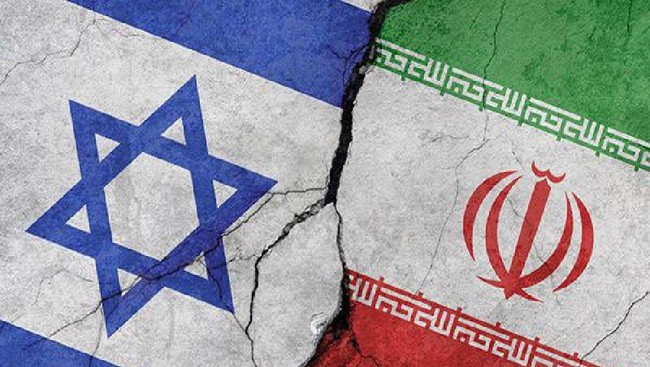
Amid escalating global conflicts and debates over nuclear weapons, the world’s attention is once again drawn to the unequal treatment of two key actors in the Middle East: Iran and Israel. For more than two decades, Iran’s nuclear programme has been the target of strict monitoring, sanctions, and lengthy negotiations, while Israel, believed to possess nuclear weapons, has faced almost no similar international pressure.
This contrast has become even more stark in the last 10 months, as Israel, alongside the United States, has launched two wars against Iran on the grounds that the country is on the verge of acquiring nuclear weapon capabilities. Those conflicts—the 12-day war in June last year and the month-long battle this year—have reportedly killed more than 2,600 Iranian civilians and triggered an unprecedented global energy crisis.
However, the claim that Iran is on the brink of possessing nuclear weapons is not backed by strong evidence. This bolsters criticism from several observers who argue that there is a double standard in the global application of nuclear non-proliferation norms.
Israel’s “Open Secret” Nuclear Programme
Among analysts, as cited in an Al Jazeera analysis on Thursday (16/4/2026), Israel’s possession of nuclear weapons is often referred to as an “open secret”. Although it has never officially confirmed or denied it, the country is believed to be the only one in the Middle East with nuclear armaments.
Israeli Prime Minister Benjamin Netanyahu once gave an ambiguous response when asked about his country’s nuclear capabilities in 2018.
“We have always said that we will not be the first to introduce them, and we haven’t introduced them… That’s the best answer you’re going to get.”
Israel’s nuclear programme is estimated to have begun in the 1950s under the first Prime Minister David Ben-Gurion, with foreign assistance, particularly from France. The nuclear facility in Dimona, in the Negev Desert, has long been suspected to be the centre of plutonium production for weapons.
Experts estimate that Israel possesses around 80 to 200 nuclear warheads, though the exact number is unknown due to the strict secrecy policy in place.
This framework of secrecy was once shaken in 1986 when Mordechai Vanunu leaked information and photos of the Dimona facility to the British media. He was subsequently kidnapped by Israeli agents, tried in secret, and served 18 years in prison.
Israel also has not signed the Treaty on the Non-Proliferation of Nuclear Weapons (NPT), the global agreement aimed at limiting the spread of nuclear weapons. As a result, Israel is not bound by the international inspection obligations that apply to other member states.
Analyst Shawn Rostker explains that this policy of ambiguity is a deliberate strategy.
“The logic is quite simple: ambiguity is intended to maintain a deterrent effect while avoiding some of the diplomatic, legal, and political costs that would arise from an open declaration.”
He assesses that it is unlikely Israel will join the NPT anytime soon.
“Israel’s position over the decades has been closely tied to its regional security environment, and there are no signs that Israel sees strategic benefits in relinquishing ambiguity or joining the NPT,” he said.
Iran’s Nuclear Programme
In contrast to Israel, Iran’s nuclear programme is under intense international supervision. The programme began in the 1950s with US support during the era of Shah Reza Shah Pahlavi and developed further after the 1979 Islamic Revolution.
As a signatory to the NPT, Iran has consistently stated that its nuclear programme is for civilian purposes, such as energy and medicine. The country also signed a supervision agreement with the International Atomic Energy Agency (IAEA) in 1974, which allows routine inspections of its nuclear facilities.
A key agreement was reached in 2015 through the JCPOA, in which Iran agreed to limit uranium enrichment to 3.67%, reduce the number of centrifuges, and open broad access for international inspections.
IAEA inspectors even conducted daily checks to ensure Iran’s compliance—and they found that Iran was adhering to the agreement.
However, in 2018, then-US President Donald Trump withdrew his country from the agreement, despite the IAEA stating that Iran had complied with its commitments. Iran held out for a year before resuming increased enrichment activities.
The US argument that Iran poses a nuclear threat is based on a 2025 IAEA report stating that Iran possesses 400 kg of uranium enriched to 60%. However, that level is still below the 90% threshold required for nuclear weapons.
Claims Without Strong Evidence
Although Israel and the US have repeatedly stated that Iran is close to having a nuclear bomb, no concrete evidence has ever been published.
In March 2025, US Director of National Intelligence Tulsi Gabbard told Congress that the US “continues to assess that Iran is not currently undertaking the key nuclear weapons-development activities necessary to produce a testable nuclear device and that Supreme Leader Khamenei has not authorised the nuclear weapons programme that he suspended in 2003”.
Iran itself has long asserted that it has no intention of developing nuclear weapons. In 2003, Iran’s then-Supreme Leader Ali Khamenei even stated that developing nuclear weapons is contrary to Islamic law.
After the latest attack in February, Gabbard reiterated that the US intelligence community sees no signs that Iran is pursuing its nuclear weapons programme.
Accusations of Double Standards
Several analysts argue that the differing treatment of Iran and Israel reflects double standards in the international system.
Palestinian analyst Ahmed Najar addresses this bluntly. “In this case, international norms are applied selectively, enforced strictly in some instances and quietly ignored in others.”
He assesses that geopolitical position is the main factor. Israel, as a Western ally, is considered m