
NU East Java to Monitor Idulfitri Crescent in 42 Locations, Eid Predicted for Saturday
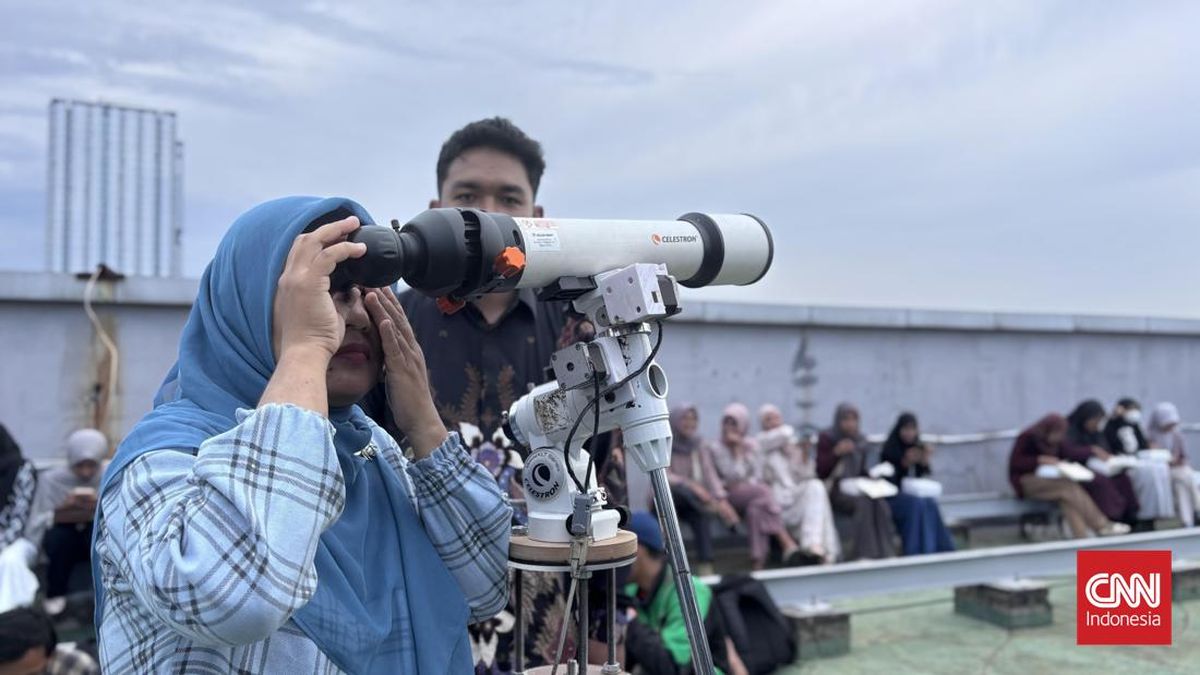
The Falakiyah Institute of Nahdlatul Ulama (LFNU) of the East Java Regional Board of Nahdlatul Ulama (PWNU) will perform rukyatul hilal to determine 1 Shawwal or Eid al-Fitr 1447 Hijriah this Thursday afternoon (19/3). The monitoring will be carried out at 42 points throughout East Java.
LFNU East Java Chairman, Syamsul Ma’arif, stated that this rukyat coincides with 29 Ramadan 1447 H. This determination is based on the previous announcement of 1 Ramadan, where the month of Sha’ban was completed to 30 days or istikmal.
“Based on the announcement of 1 Ramadan last time, the month of Sha’ban was istikmal, so this Thursday coincides with 29 Ramadan 1447 or 19 March 2026, thus the rukyat is always carried out at the end of the month on 29 Ramadan,” said Syamsul to CNNIndonesia.com.
Syamsul said that this early Shawwal crescent monitoring will be conducted at 42 points in various regions of East Java, from the westernmost to the easternmost tip, including Madura Island.
“In East Java, the latest detected data shows 42 location points across East Java, both from the easternmost, central, western tips, and Madura Island,” he said.
Syamsul explained that astronomically, the crescent moon is temporarily predicted to be in a very low position. The height of the crescent in the East Java region is only around 1 degree 20 minutes, far below the MABIMS (Ministers of Religious Affairs of Brunei, Indonesia, Malaysia, and Singapore) criteria threshold, which requires a minimum height of 3 degrees and elongation of 6.4 degrees.
“Because our position in Java, mainly in East Java, is still around 1 degree 20 minutes. Whereas the highest crescent is in Aceh, but it is still below the imkanur rukyat criteria of under 3 degrees. Meanwhile, the elongation is also still below 6.4. It has not yet met the imkanur rukyat criteria of 3 degrees and 6.4 for elongation,” he said.
In addition to astronomical technical factors, weather conditions are also a serious concern. Based on BMKG reports, said Syamsul, most areas of East Java are currently experiencing extreme weather in the form of rain and clouds. This has the potential to obstruct the view of the rukyat observers in the field.
If during the evening monitoring the crescent position does not change, then according to Syamsul, this strengthens the potential for istikmal or completing the age of the Ramadan month to 30 days. In other words, 1 Shawwal 1447 H or Eid al-Fitr is predicted to fall on Saturday (21/3).
“Istikmal, completing to 30 days for the Ramadan month, so 1 Shawwal falls on Saturday. Only NU is waiting for the rukyat results because according to our fiqh principles, we wait for the field rukyat results,” he said.
Syamsul said that the crescent monitoring results from 42 points in East Java will be reported in stages to the Central Board of Nahdlatul Ulama (PBNU) to then become material for consideration in the Ministry of Religious Affairs’ Isbat Session.
PWNU East Java emphasises that the rukyatul hilal process must still be carried out as part of fulfilling fardu kifayah and to test the accuracy of hisab data factually in the field.
This also implements the mandate of the 27th NU Congress in Situbondo in 1984. He stated that if the government sidelines the rukyatul hilal results in determining Ramadan and Shawwal, then NU is not obliged to follow that decision.
“Based on the 27th NU Congress in Situbondo on 8-12 December 1984 M / 15-19 Rabi’ul Awal 1405 H, it was decided that if the government determines the start of Ramadan and Shawwal based on hisab, then that determination is not obligatory to follow,” he said.
In response to the potential differences in Eid al-Fitr implementation with other religious organisations, Syamsul asked Nahdliyin society and all Muslims to prioritise tolerance. He emphasised that differences in ijtihad are common and the government plays an important role in maintaining interfaith harmony.
“Our appeal is because there is potential for differences between organisations, whether Muhammadiyah or Persis, so NU hopes that organisations mutually maintain tolerance according to each ijtihad. And the government is present as a policy holder to maintain the unity and integrity of the Unitary Republic of Indonesia within the framework of harmony in worship,” said Syamsul.