
NTB Provincial Hospital Successfully Performs First Brain Neurosurgery
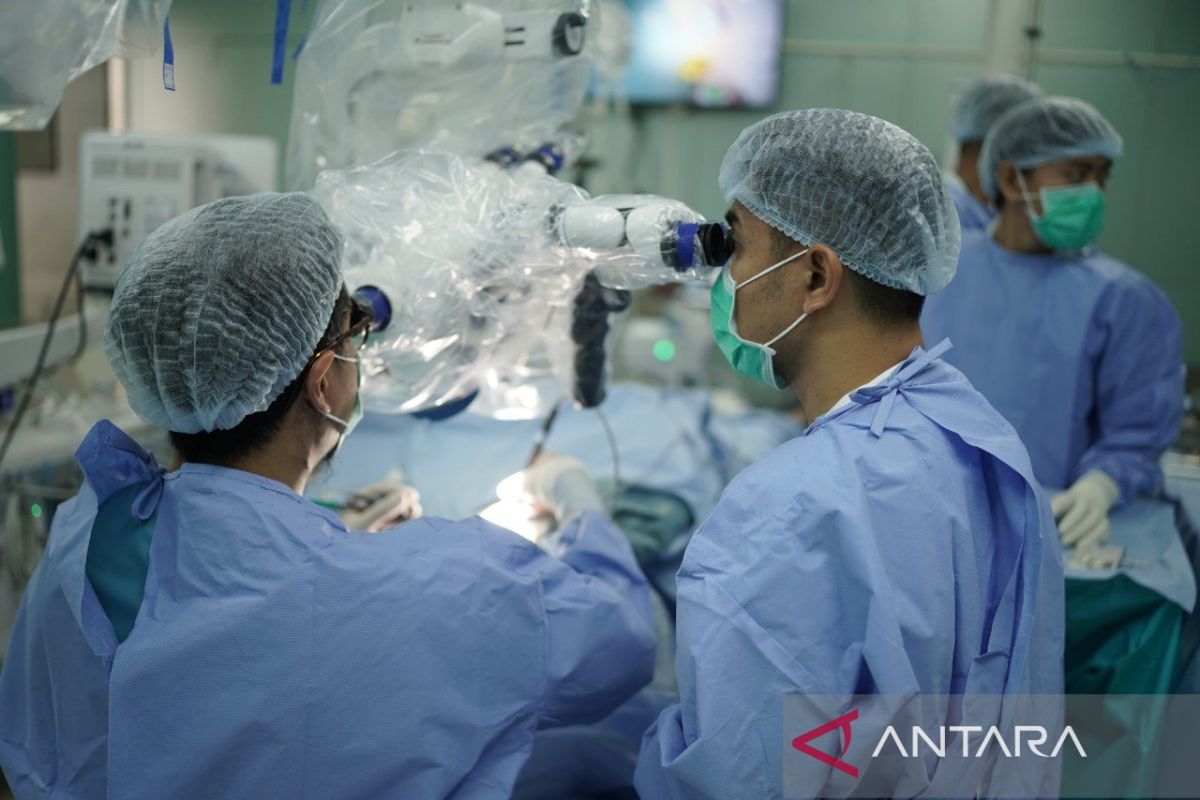
Mataram (ANTARA) - The Nusa Tenggara Barat (NTB) Provincial General Hospital (RSUD) has successfully performed a complex neurosurgical operation, adding to the growing list of regions in Indonesia capable of handling such advanced medical procedures.
Dr Obrin Parulability, Director of Clinical Services at the Directorate General of Advanced Health of the Ministry of Health, stated that the procedure was a Superficial Temporal Artery to Middle Cerebral Artery (STA-MCA) bypass. This is a microsurgical procedure designed to connect blood vessels outside the skull with blood vessels inside the brain to improve blood flow.
“Out of 38 provinces, only 11 provinces currently provide this STA-MCA bypass service. If this continues and the hospital becomes self-sufficient, it will be on par with lead referral hospitals,” he said in a statement received in Mataram on Sunday.
He noted that the Ministry of Health is encouraging the equitable distribution of priority healthcare services. Every province is expected to have a government hospital capable of providing such specialised care.
He added that Ministry of Health support is also directed towards the readiness of facilities and equipment, including the need for microscopes and microsurgical devices, while competency enhancement continues through a network of lead referral hospitals.
The NTB Regional Secretary, Abul Chair, stated that the STA-MCA bypass service is part of an effort to ensure that medical technology advances alongside human resource capabilities.
A series of Brain Bypass Proctorships took place on 11-12 September 2024, involving the NTB Provincial Hospital team alongside lead hospitals, including RS PON Prof. Dr. Mahar Mardjono Jakarta and RS Prof. Dr. I.G.N.G. Ngoerah Bali.
The mentorship covered not only the execution of the procedure but also preparation, clinical decision-making, and post-operative monitoring.
The newly developed capability was tested through the treatment of two patients. The first patient was a 12-year-old child who had experienced symptoms since approximately one year of age, including weakness on one side of the body as well as speech and cognitive impairments.
Digital Subtraction Angiography (DSA) examinations revealed narrowing of the brain’s blood vessels, and the patient was diagnosed with Moyamoya disease. The bypass procedure was performed to help create new blood flow pathways to the brain and reduce the risk of insufficient blood supply and recurrent strokes.
The second patient, aged 42, had a history of ischaemic stroke with speech impairment and limb weakness. Examinations showed disrupted blood supply to the brain, so the bypass procedure was chosen to help improve blood flow and suppress the risk of recurrence.