
NTB Provincial Government Urged to Form Independent Team to Monitor Shrimp Pond Waste
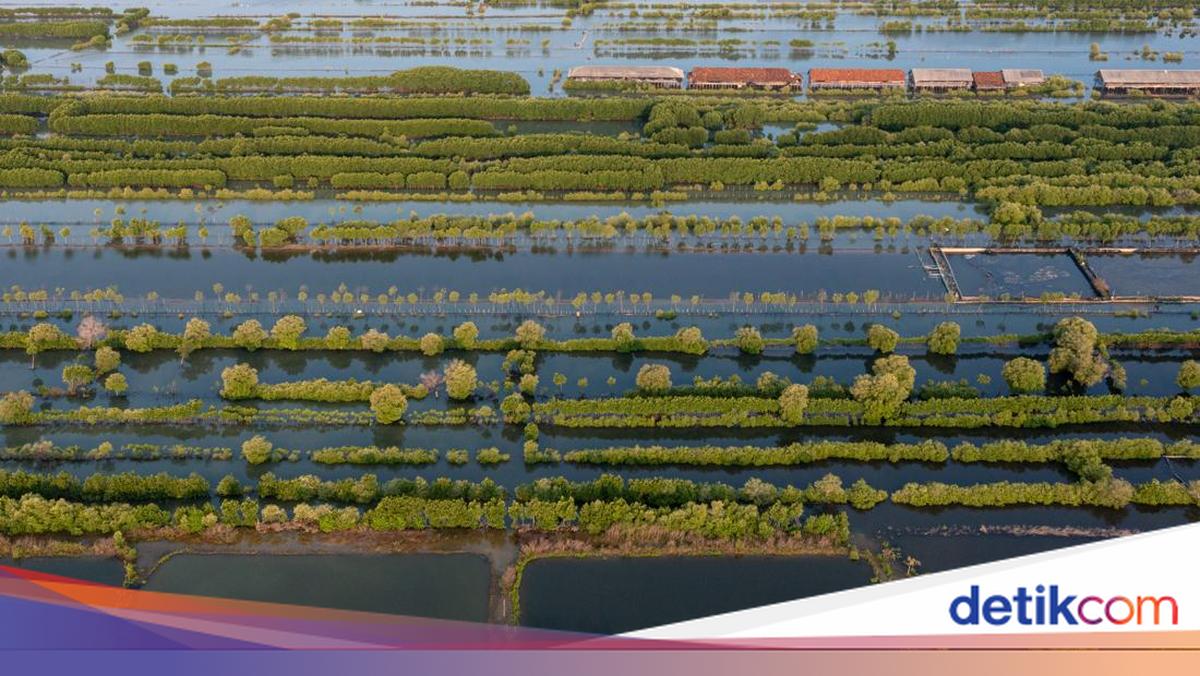
Commission II of the West Nusa Tenggara (NTB) Provincial Legislative Council has spotlighted the weak supervision of shrimp pond activities in the Bumi Gora region. To address this, the council is urging the NTB Provincial Government to promptly form an independent team to monitor shrimp pond operations on Lombok and Sumbawa islands.
Deputy Chair of Commission II of the NTB DPRD, Megawati Lestari, stated that achievements in the marine and fisheries sector appear positive on paper. Fisheries production in 2025 reached 1.25 million tonnes, surpassing the 1.23 million tonne target. Meanwhile, the fisheries exchange rate (NTP) has risen to 106.82.
“The quality of the marine ecosystem is maintained, with 14,528 hectares of waters in good condition. However, high figures do not always align with the strength of the economic structure,” said Megawati, commenting on the NTB Governor’s 2026 Accountability Report on Thursday (23/4/2026).
She emphasised that the NTB fisheries sector remains dominated by the sale of raw commodities, meaning much of the economic value is enjoyed outside the region. Commodities such as shrimp, salt, seaweed, tuna, and octopus have not fully transformed into a basis for processing industries and exports.
In practice, Megawati noted that shrimp commodities face environmental issues. The root cause is the suboptimal management of pond wastewater disposal.
“We see that uncontrolled waste disposal practices have the potential to degrade water quality, damage coastal ecosystems, and ultimately threaten production sustainability,” stressed the wife of the NTB Ministry of Religious Affairs Regional Office Head.
According to her, the NTB DPRD has not observed any environmental supervision in shrimp pond areas on Lombok and Sumbawa. The reason is suboptimal coordination between the Marine and Fisheries Office, Licensing Office, and Environment and Forestry Office.
“We urge the NTB Provincial Government to develop an agromaritime development roadmap that integrates production, processing industries, investment, exports, and waste supervision,” she asserted.
She added that cross-sectoral coordination is needed between the Environment Office to form an independent team tasked with periodically monitoring the quality of pond wastewater discharge. “Thus, the issue of shrimp pond waste pollution requires the formation of an independent waste monitoring team,” she stressed.
Separately, the Indonesian Forum for Environment West Nusa Tenggara (WALHI NTB) stated that NTB is a region with high ecological wealth but currently faces serious pressures from various natural resource exploitation activities.
“From environmental degradation, land conversion, to threats against the living spaces of indigenous and local communities,” revealed WALHI NTB Executive Director Amri Nuryadin at the 12th Regional Environment Meeting (PDLH) in Mataram City.
WALHI NTB emphasised that environmental struggles cannot be separated from social justice issues and people’s sovereignty over sources of livelihood.
He also stressed the importance of cadre development and knowledge transformation as the main foundation for the sustainability of the environmental movement. According to Amri, without strong regeneration, the environmental struggle risks losing momentum in the future.
“We assess that the current ecological crisis is not only related to natural damage but is also closely linked to policies, governance, and biases in development,” he asserted.
Based on WALHI NTB’s investigative data, the forest damage rate in NTB has now reached a critical level of 60% of the total 1.1 million hectares of forest areas. This massive damage is triggered by mining activities, forest encroachment, and extensive land conversion for maize planting.
The impacts of this loss of environmental carrying capacity are directly felt by communities in the form of increased frequency of natural disasters. From 2022 to 2024, 518 ecological disasters were recorded, dominated by floods and landslides, affecting various points in NTB.
This environmental degradation not only threatens lives but also disrupts the stability of communities’ living spaces. Besides physical disasters, the ecological crisis also extends to the availability of essential resources.
In tourist areas like Gili Trawangan and Meno, communities now face a serious clean water crisis. This condition is exacerbated by damage to around 1,600 m² of coral reefs due to seawater drilling activities by industries, further worsening coastal ecosystem damage.
“In urban areas like Mataram, communities are also haunted by a waste management crisis that has not been handled optimally,” Amri concluded.