
NTB Partners with APIEM to Raise Standards in the Events Industry
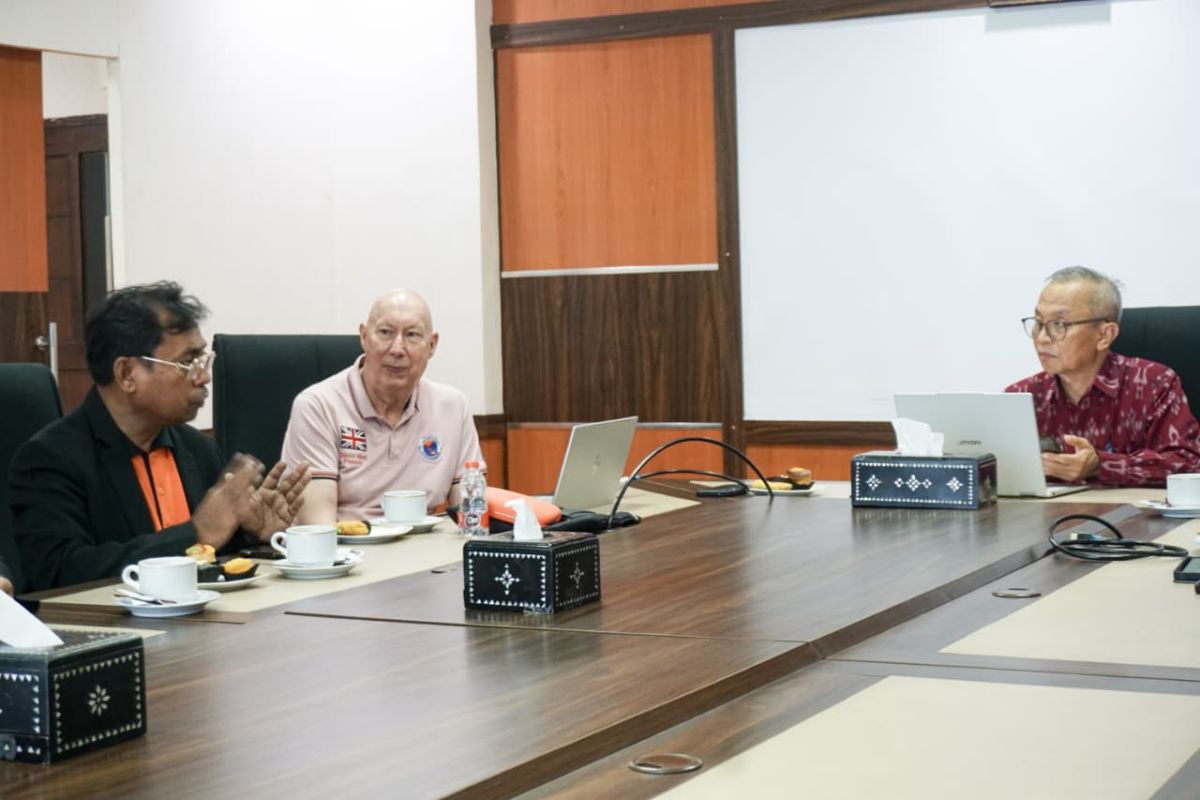
Mataram (ANTARA) – The West Nusa Tenggara (NTB) provincial government is exploring a strategic partnership with the UK-based Asia Pacific Institute for Events Management (APIEM) to improve the quality and standards of the events industry in Lombok.
The meeting, held at the NTB governor’s office on Thursday, was attended by APIEM UK President Professor David Hind and Mandalika International Festival (MIF) Director Sirajuddin. They were received by NTB Regional Secretary Abul Chair and NTB Tourism Agency head Ahmad Nur Aulia.
APIEM UK President David Hind said he was honoured to meet directly with provincial government officials to introduce his organisation’s role and mission.
“It is a great honour to be here at the wonderful government office of West Nusa Tenggara and to share information about the Asia Pacific Institute for Events Management with the Regional Secretary. Today’s meeting is an introduction to explain APIEM and open the door to future collaboration and partnerships between our respective organisations,” he said.
Hind said APIEM was committed to helping align event management in West Nusa Tenggara with international standards, working with industry practitioners and local educational institutions.
He stressed the importance of establishing a strong foundation of international standards for every event held in NTB.
“Our mission is to contribute to the professionalisation of the events industry across the Asia-Pacific, and we are very pleased to work with the government, the events industry and event educators to embed international standards in the DNA of Lombok’s events industry,” he said.
To support the NTB governor’s programmes, APIEM has offered UK-standard professional certification for local event practitioners.
The certification is considered vital to providing an assurance of the quality and professionalism of event managers to an international audience.
Hind said the skills and years of experience held by local practitioners needed to be complemented by recognition against international standards.
“Many event practitioners have experience—perhaps two, five or 10 years. But do they know how to manage events to international standards? That is very important if you want to attract large-scale international events to Lombok,” he said.
The international accreditation is expected not only to support existing events such as MotoGP, but also to create greater opportunities for global arts festivals, music concerts and cultural events in Lombok. Proven qualifications among local management teams could become a key draw for international investors and clients.
Hind added that having certified professionals would increase the confidence of international organisers in choosing NTB.
“International clients will be very interested to know what certifications the event professionals organising their events hold. That is what we want to share: helping build an understanding of international standards and providing UK accreditation for those event professionals,” he said.
NTB Regional Secretary Abul Chair welcomed the partnership initiative proposed by APIEM UK.
He said the provincial government viewed the partnership as an important way to educate and train local human resources so they could promote and market NTB’s potential effectively on the international stage.
The Regional Secretary stressed that the region’s rich tourism potential needed to be matched by effective marketing strategies that met global standards.
“NTB has extraordinary potential that must be marketed well, and we need partners like this who can teach us how to market NTB properly,” he said.
He added that successfully holding events to international standards would generate broad economic multiplier effects, from boosting activity among micro, small and medium-sized enterprises (MSMEs) and hotel occupancy to supporting the provincial government’s priorities for poverty reduction and community empowerment.
On developing skills among event-sector workers, Abul Chair said certification had become an essential requirement in the professional world.
“Certificates are the minimum standard for someone to manage [events]. These days, it is no longer about academic titles, but certified qualifications,” he said.
He added that the government would continue to promote standardisation to advance the regional tourism sector.
“Going forward, business operators, tourism-sector workers and others will absolutely need certification,” the Regional Secretary concluded.