
Novelist Ahmad Tohari Urges Emulation of the Prophet's Leadership at UHN Tegal
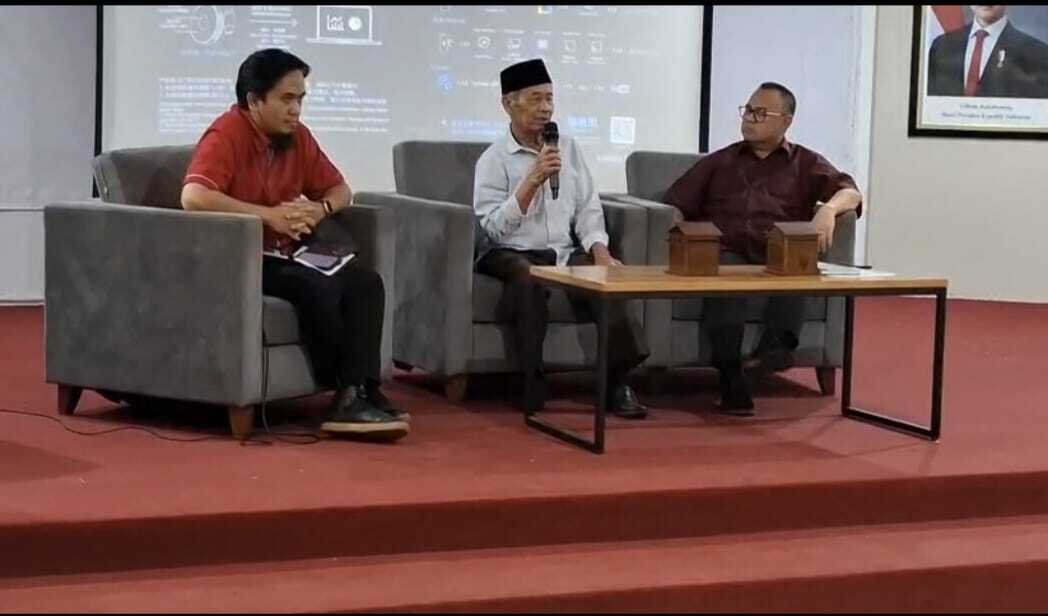
Renowned novelist Ahmad Tohari urged leaders and the public to emulate the leadership of Prophet Muhammad, emphasizing the importance of prioritizing the well-being of the people. He stated that by doing so, oppressive leadership could be avoided.
Ahmad Tohari made these remarks while speaking at the University of Harkat Negeri (UHN) Tegal, Central Java, during an Islamic forum titled “Strengthening Public Leadership: Learning from the Prophets.” The event, part of the “Ramadan on Campus” series, took place on Wednesday, February 25, 2026, at the Mataram Campus Auditorium of UHN Tegal, followed by a joint iftar meal. Similar events will be held three times throughout Ramadan, once a week.
“The question is, are there still leaders today who truly love their people? A leader must be a role model. Love your neighbor more than you love yourself,” said Ahmad Tohari.
Ahmad Tohari also highlighted the phenomena of feudalism and political money, which he believes are challenges in realizing a healthy democracy. He emphasized that a healthy democracy grows from the grassroots level.
“We must free ourselves from feudalism. I hope that young people will enter the political arena and bring new perspectives, creating a vibrant democracy, not a sense of monarchy,” said the author of “Ronggeng Dukuh Paruk,” who is affectionately known as Kang Tohari.
Another speaker, Rector of UHN Tegal, Sudirman Said, stated that this forum serves as a space for collective reflection on addressing the crisis of public leadership through the perspective of prophetic values. Sudirman Said emphasized the importance of understanding leadership realistically, as advised by classical political thinker Niccolo Machiavelli. He explained that choosing and shaping leaders cannot be separated from the awareness that humans are not angels, so the main thing is to choose those who have the “least sin” and possess strong leadership values.
“Citizens must not be detached from public affairs. We must be involved in governing the country and choose leaders rationally, looking at their work and behavior, not just their image. Humans are not angels, so choose those who have the least harm and the strongest leadership values,” said Sudirman Said.
Sudirman Said also mentioned the existence of a leadership crisis, which is characterized by a decline in quality over time, but he remains optimistic about the future of the nation.
“I am optimistic that things will change. Life is a cycle. Comfortable times often give rise to an untested generation, but difficult times give rise to tough future leaders because they are forced to find solutions by circumstances. I believe that this nation will find its momentum for revival,” said the former Minister of Energy and Mineral Resources.
Previously, Chairman of the Islamic Student Forum (Formasi), Alif Avicena, in his speech, expressed his appreciation for the participants and reaffirmed his hope that this forum would be a space for the formation of a complete leadership character.
“We hope that the Reboan Forum can be a forum to realize and prepare ourselves to become leaders who are not only oriented towards power, but also able to carry out moral, social, and spiritual responsibilities,” said Alif.
The discussion was moderated by M. Fikri Hidayatullah, who is the Director of Administration and Academic Development at UHN, and focused on how Islamic values can be introduced through the perspective of education and the role models of scholars. Also present at the event was a cultural figure from the Pantura region, Atmo Tan Sidik. (H-2)