
Note! WFH Does Not Reduce Annual Leave or Employee Wages
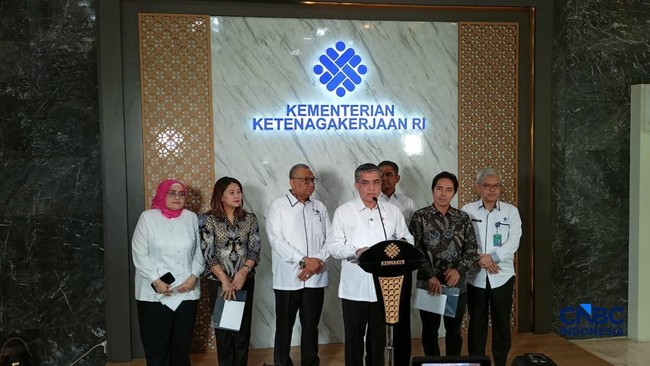
The government is promoting changes in work patterns amid rising pressures on national energy resilience. Through the latest policy, the business world is urged to adapt without sacrificing productivity. This step is outlined in a circular from the Minister of Manpower regulating the implementation of Work From Home (WFH) alongside the optimisation of energy use in the workplace. Minister of Manpower Yassierli stressed that this policy is part of the national strategy to address future energy challenges. “In order to strengthen national energy resilience, while promoting productive, adaptive, and sustainable work patterns, systematic steps are needed in the utilisation of energy in the workplace,” he said at the Ministry of Manpower office on Wednesday (1/4/2026). The policy encourages private companies, state-owned enterprises (BUMN), and regional owned enterprises (BUMD) to begin implementing limited remote work schemes. “Company leaders are urged to implement Work From Home for workers or labourers for one working day per week according to the company’s conditions,” he said. Nevertheless, the government assures that workers’ rights remain fully protected during the implementation of this policy. This means employers must not cut wages or annual leave. “Wages or salaries and other rights must still be paid according to regulations, and the implementation of WFH does not reduce annual leave,” he emphasised. In addition, workers are still required to maintain performance even when working from home. The government also reminds companies not to use WFH as a reason for declining business performance. On the other hand, this policy does not stop at work patterns but also directly targets energy efficiency in the workplace. “Implementing an energy utilisation optimisation programme in the workplace, including through the use of energy-saving technology and strengthening the culture of wise energy use.” The government hopes this step can serve as a medium-term solution to curb energy consumption without hindering economic activities. “Control and monitoring of electricity consumption, fuel oil, and other energy sources are carried out through measured operational policies,” said Yassierli.