
Note! These Are the Requirements for Faster EV Transition in the Mining Industry
Opportunities for accelerating the transition to electric vehicles (EV) in Indonesia are wide open, including in the mining sector. This is especially true given that Indonesia holds the world’s largest nickel reserves, and the European Union will implement the EU Battery Passport starting in February 2027.
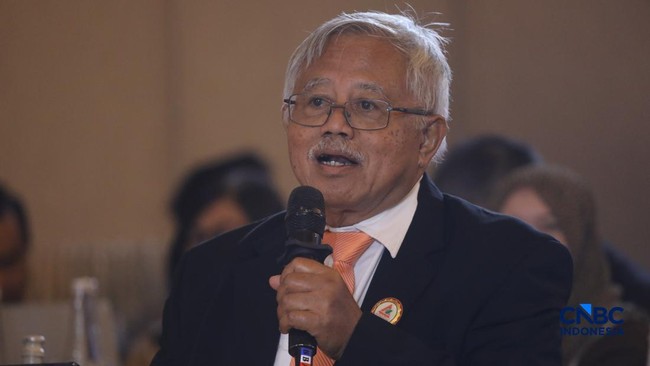
“We are nickel producers, this should be an opportunity we can capture. So, while coal and other minerals started in the 1970s, nickel only began in 2017, so the infrastructure is still being developed under very difficult conditions. Why? The most important thing is energy, second is water, third is road infrastructure and so on,” said Djoko Widajatno, Supervisor of the Indonesian Nickel Miners Association (APNI), at the EV Transition in Mining Industry Outlook 2026 “The Future of EVs in Mining Industry: Between Efficiency and High Investment” event on Wednesday (29/4/2026).
Djoko stated that areas considered ready and more established for adopting EVs are typically in Special Economic Zones (SEZs), such as the Indonesia Morowali Industrial Park (IMIP). However, mining areas around those regions have not yet been able to adopt electrification.
“Electricity is still supplied by captive power plants, and some use PLN,” he explained.
In addition, the next challenge is the availability of competent human resources (HR). This is because mining HR in eastern Indonesia are usually junior high or high school graduates.
Given this situation, Djoko emphasised the importance of building quality HR so they can operate electric-based vehicles or heavy equipment. On the other hand, he also reminded that safety aspects are very important in adopting electrification in mining areas. This is because electric vehicles or heavy equipment are generally more prone to fire and have more complex component arrangements.
Therefore, mining business actors are actively holding regular education sessions through various meetings and training involving employees who serve as operators of electric mining vehicles or heavy equipment.
“So, in APBI, we are trying to introduce this EV transition through education, there is training for trainers, there is cooperation with foreign parties, we bring in people to discuss and teach our colleagues,” he said.
An equally important aspect to accelerate the adoption of electrification in the mining sector is regulatory certainty. Djoko hopes the government can create consistent regulations regarding investment and the use of EVs, including in the mining sector. Regulatory certainty will certainly make it easier for mining business actors to undergo the transition process towards electrification.
“Because without consistent regulations and no business guarantees, we are afraid to invest,” he stressed.