
Not Victims, This Industry Reaps Profits from the Israel-Iran War
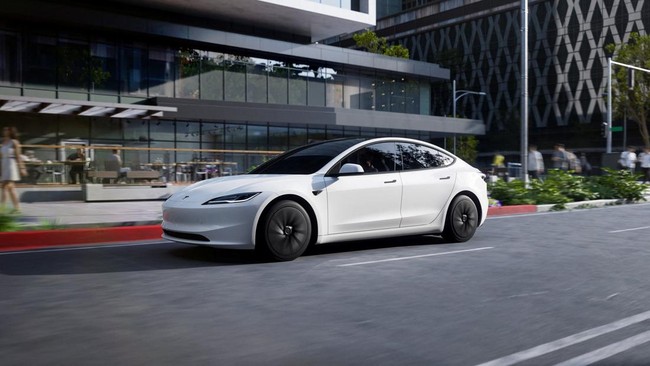
The surge in fuel prices triggered by the Israel-Iran war has not only sparked global concerns but also created opportunities for certain industries. One beneficiary is the electric vehicle business, particularly in the segment of used electric cars.
In the UK, businessman Martin Miller has recorded a significant spike in sales at his used electric car dealership in southwest London. Saturday even became the busiest day on record, just a week after the conflict erupted on 28 February 2026.
The war involving Iran has disrupted oil shipping routes in the Strait of Hormuz, a vital passage through which around 20% of global oil supplies flow.
Miller is now racing to increase his stock of electric vehicles.
“We are selling cars very quickly. Our staff have been buying more electric vehicles at auctions like crazy, because we believe this will continue,” he said, quoted from Reuters on Wednesday (18/3/2026).
UK government data shows that as of 16 March, the average petrol price per litre in the UK has jumped 7% since the war began. In the European Union, petrol prices have risen 8%. Meanwhile, the average petrol price in the US has also increased 27% since the end of February, reaching $3.72 per gallon.
History has shown that oil price shocks can lead to structural changes in consumer car-buying habits. The 1970s energy crisis prompted US car buyers to opt for smaller vehicles, benefiting Japanese manufacturers and eroding the market share of their US rivals.
Analysts say the recent sharp rise in fuel prices is unlikely to significantly alter new car buying patterns in the near term.
According to industry observers, it often takes a period of sustained high prices, or prices exceeding certain psychological thresholds, before car buyers shift their focus to more fuel-efficient options.
“Consumers are very reactive to petrol prices, but they tend to need prices to hit certain round numbers,” said Kevin Roberts, director of economic and market intelligence at online marketplace CarGurus.
“The $4 (per gallon) threshold might be the one to watch,” he added, noting that it was a tipping point for interest in electric vehicles during the last oil shock in 2022, following Russia’s invasion of Ukraine.
Zach Xavier, a customer in the US, did not want to wait. He visited Recharged, a used electric vehicle dealership in Richmond, Virginia, with his wife on Friday to trade in their internal combustion engine SUV for an electric SUV, and also purchased a second, smaller electric vehicle.
“I am trying to get in before everyone panics,” he said.
So far, the price increase appears not to have affected new car buyers in the US, according to activity on several vehicle research sites. CarGurus said last weekend that they had not seen major changes in EV searches.
Another site, Edmunds, said that the share of buyers viewing electric vehicles in the first week after the war began slightly increased, to 22.4% from 20.7% the previous week.
On the other hand, increased interest in EVs is more likely in Europe, where fully electric cars accounted for 19.5% of sales last year, and where government tax incentives for electric vehicle purchases are being reintroduced.