
Not Via the Strait of Hormuz, Indonesia's Rice Export Route to Saudi Arabia
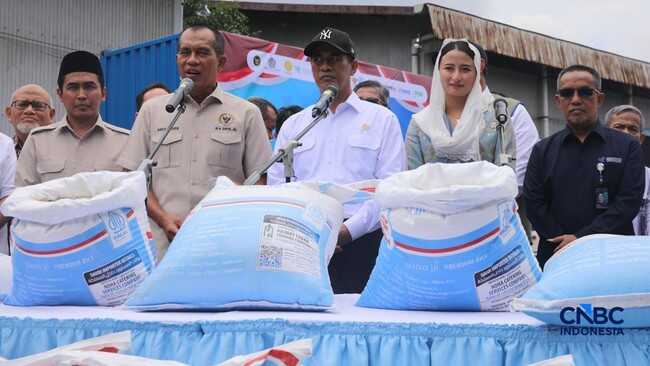
Jakarta, CNBC Indonesia - The government has confirmed that rice shipments from Indonesia for the consumption of the hajj pilgrims in Saudi Arabia will continue, even as geopolitical tensions in the Middle East escalate and raise concerns about the possible closure of the Strait of Hormuz. Agriculture Minister Amran Sulaiman said the rice exported from Indonesia will dock at Jeddah Islamic Port in Saudi Arabia, and is expected to arrive safely, Insha’Allah. “It will dock in Jeddah, and arrive safely, God willing,” he said at Bulog’s Kelapa Gading warehouse, Jakarta, on Wednesday 4 March 2026.
Thus, shipments of rice from Indonesia to Saudi Arabia for the needs of the Hajj pilgrims are confirmed not to pass through the Strait of Hormuz. The sea route to Jeddah on the west coast of Saudi Arabia generally traverses the Indian Ocean and enters the Red Sea via Bab el-Mandeb, before eventually anchoring at Jeddah.
He is also optimistic that shipments can still arrive on time, even as geopolitical dynamics are underway in the Middle East. “Insha’Allah safe. Safe to Jeddah,” he said.
In response to concerns that several trade routes to the Middle East have opened and closed due to security situations, Amran said shipments can still be carried out by adjusting to on-the-ground conditions. “We enter when opened,” he said. The route changes could also cause travel time to be longer than under normal conditions.
Meanwhile, Bulog’s President Director Ahmad Rizal Ramdhani explained that the rice shipments for Indonesian Hajj pilgrims are still awaiting the vessel departure schedule. “Insha’Allah, the plan is that it will start to sail on March 7, with shipping to follow if the schedule holds. We are following the geopolitical developments there,” Rizal said.
He stressed that the government is striving to prepare the export process as much as possible in line with the directives of the limited coordination meeting (Rakortas). “The point here is that the government is preparing as fully as possible in accordance with Rakortas’ instructions, particularly that we are preparing and pushing as hard as possible to enable exports. And for the subsequent process, we will follow the developments on the ground,” he added.
Bulog has also sought assessments from several intelligence agencies and relevant ministries to ensure the security of the rice shipments. “But we have also written to BAIS (Indonesian Strategic Intelligence Agency), to BIN (State Intelligence Agency), and then the Ministry of Foreign Affairs, requesting assessments related to the departure of Indonesia’s hajj rice,” Rizal said.
Regarding potential delays due to increased geopolitical tensions in the Middle East, Rizal said they are awaiting assessments from those agencies. “We are waiting for further information from the assessments from those three institutions,” he concluded.