
Not US-Israel Military Attacks, Iran Could "Collapse" Because of This
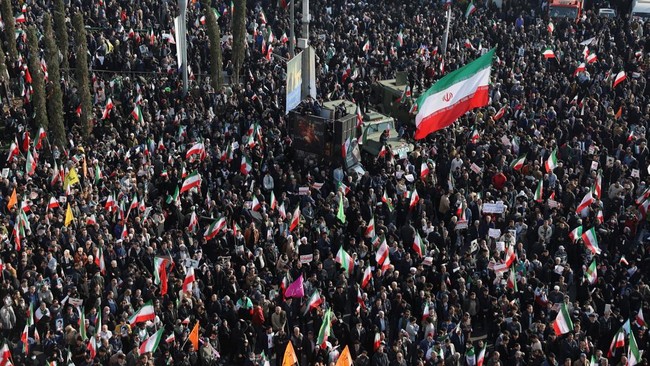
Jakarta, CNBC Indonesia - The Iranian government is now working hard to contain potential domestic turmoil predicted to erupt due to the collapse of the country’s economic foundation after one month of war against the United States (US) and Israel. Based on observations on Monday (30/03/2026), Tehran authorities have begun deploying large-scale security forces on the streets to prevent sparks of riots from frustrated citizens.
This drastic step is taken because Iranian officials fear that the already battered economic damage will trigger stronger opposition to Tehran’s ruling system immediately after the conflict ends. Although there are no signs of mass defiance amid stern warnings from the government, the domestic situation is reported to be highly tense, with the involvement of Basij militias even recruiting 12-year-old children to guard checkpoints.
Professor of modern history at the University of St Andrews, Ali Ansari, assesses that the economic pressure, which was already very heavy before the war, is now at a nadir that is far more dangerous for the government’s survival.
“The Iranian regime was already in big trouble before the war, and now they are receiving a severe blow. The political and economic crisis they faced previously will become much worse. All the old problems will return more severely when peace arrives. The regime is paranoid, wounded, and bitter, so they want to crush any problems before they start, but that could turn more people against them,” Ansari told Reuters on Tuesday (31/3/2026).
Although Iran’s leaders appear confident in enduring by closing the Strait of Hormuz energy route to trigger a global oil shock, the most real threat emerges from within the country once the bombings stop. Iranian society is predicted to begin demanding accountability when they see the economic ruins and bleak future prospects without international sanctions relief.
A senior source in Iran revealed that the government’s current focus is on keeping supply chains running during the war, but anxiety about what happens after the war is increasing.
“Economic pressures may become more apparent now as businesses start reopening after Iran’s long holiday,” the source stated.
This economic impact is directly felt by civilians like Mohammad, a 38-year-old man from Tehran who works at a trading company now threatened with mass layoffs.
“Our main business is with countries in this region, and it’s clearly uncertain whether that can continue after the war,” Mohammad said.
On the other hand, international human rights organisations report that the government’s crackdown not only targets activists but also minority groups and ordinary citizens caught sharing footage of airstrikes on social media.
Director of Human Rights Watch, Louis Charbonneau, stated that waves of arrests continue with very broad targets, from outright rebels to merely suspected individuals, ethnic and religious minorities in Iran including Baha’is, and people sharing reports or clips of attacks.
“Iranian authorities continue to carry out waves of arrests targeting both real and merely suspected dissidents, members of ethnic and religious minorities in Iran including Baha’is, and people who share reports or footage of attacks,” Charbonneau said.
In addition to physical actions, the government is using psychological intimidation tactics by mobilising supporters to fill the streets every night for pro-government demonstrations. This step is seen as an effort to occupy public spaces so they cannot be used by protesters wanting to criticise the government.
Head of the Center for Human Rights in Iran, Hadi Ghaemi, explained that security forces even enter residential areas to spread fear among residents so they dare not resist.
“They even target neighbourhoods where they patrol with vehicles and intimidate people in their homes by shouting pro-regime slogans and firing guns into the air,” Ghaemi concluded.
To date, official economic data on war losses has not been published by Tehran, but damage to vital energy infrastructure is certain to have shut down the country’s revenue sources. This situation leaves the exchange rate and domestic stability on the brink, where losses of billions of US dollars or trillions of rupiah now loom over Iran’s future.