
Not Trump, This Figure is the Culprit Behind the US's Habit of Interfering in Other Countries
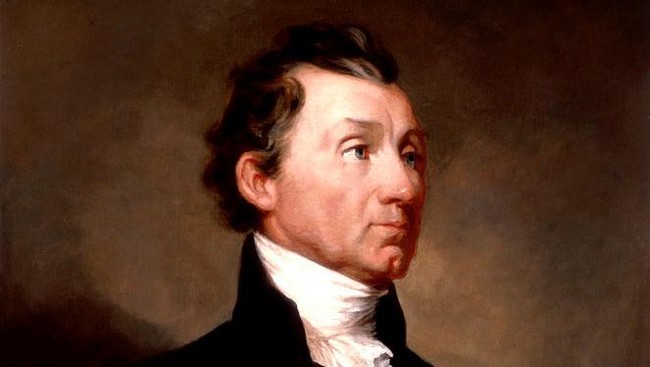
The role of the United States (US) in numerous international conflicts, including tensions with Iran, often draws attention. However, the US tendency to interfere in the affairs of other countries is not a new phenomenon in the era of US President Donald Trump, but rather rooted in an old idea proposed by the fifth US President, James Monroe.
In 1823, Monroe delivered a speech before Congress that later became known as the Monroe Doctrine.
According to Britannica, this doctrine asserted rejection of interference by European countries in the American continent, while viewing any new colonisation efforts as a threat to US security.
From there, Monroe instilled the important belief that the US has the moral and political right to regulate its external environment. If there is European intervention, the US could respond with counter-intervention.
At that time, the doctrine was considered an empty boast because the US was still relatively small and did not yet possess adequate military or naval power. However, Monroe’s conviction became the foundation of US foreign policy in the subsequent decades.
In 1901, this principle was realised by President Theodore Roosevelt through the Roosevelt Corollary. Based on Monroe’s idea, the US declared the right to conduct military interventions in Latin American countries if those countries failed to maintain stability or potentially triggered European interference. Roosevelt emphasised that the US had a moral responsibility to act as the “international police” in that region.
After the Second World War (1939-1945), the justification for US interventions shifted from colonial reasons to ideology, namely containing communism during the Cold War (1945-1991). It then gradually changed to issues of democracy, global stability, and human rights. The most significant change occurred after the 11 September 2001 attacks (9/11), when terrorism became the main pillar of US foreign policy.
According to the research How The United States Justified Its War on Terrorism (2004), the US launched a “4-D” strategy—Defeat, Deny, Diminish, and Defend—that opened up broader scope for military interventions, from Afghanistan to Iraq. Moreover, without a rival superpower, Washington seemingly feels it has a moral responsibility to maintain global security, under the guise of protecting human rights.
It is recorded, citing the research Introducing the Military Intervention Project (2024), that since 1776 the US has conducted around 400 interventions in various countries. Nearly a quarter occurred after 1991 or in the post-Cold War era and the collapse of the Soviet Union.