
Not Prophet Ibrahim: The First Human to Perform Sacrifice Revealed
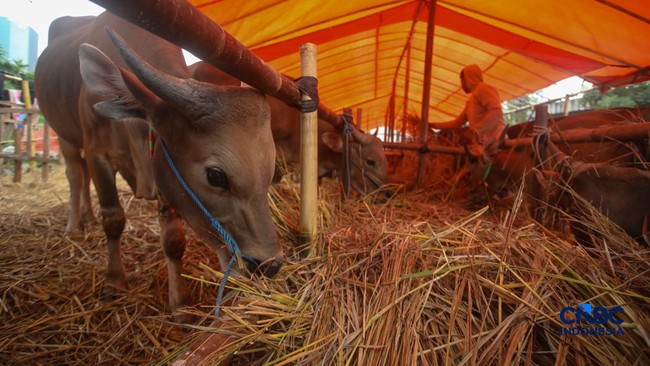
Jakarta, CNBC Indonesia - Iduladha is one of Islam’s major annual religious observances worldwide, marked by the sacrifice of four-legged animals such as goats, sheep, cattle, or camels.
In Indonesia, the tradition of qurban typically references the story of Prophet Ibrahim and his son Prophet Ismail, as detailed in the Quran, Surah As-Saffat verses 102-107. The holy scripture recounts how Ibrahim was commanded by Allah in a dream to sacrifice Ismail, who showed obedience and sincerity upon being informed. Ultimately, Allah replaced Ismail with a large ram just as Ibrahim was about to proceed.
However, according to an article published by the National Zakat Agency (Baznas) titled “Kurban Pertama Kali Dilakukan oleh Siapa, Ini Kisah Lengkapnya”, the first sacrifice was performed by Adam’s two sons, Qabil and Habil. This is mentioned in the Quran, Surah Al-Ma’idah verse 27.
“The verse clearly states that the first to perform sacrifice were Habil and Qabil, sons of Prophet Adam AS. They were commanded to offer sacrifices as a means of drawing closer to Allah SWT,” the Baznas article states, cited on Wednesday, 27 May 2026.
In the story, Allah accepted Habil’s sacrifice because he offered it sincerely and chose the best animal he had, while Qabil’s offering was rejected due to lack of sincerity and presenting inferior crops.
“Therefore, when tracing the origin of sacrifice, we conclude that this worship has existed since the dawn of humanity, as part of Allah’s command emphasizing the importance of intention and obedience,” Baznas wrote in its May 2025 article.
Baznas notes that scholars agree the story of Habil and Qabil marks the beginning of sacrifice history, showing that the practice is deeply rooted in human faith traditions even before other major prophets.
Meanwhile, the sacrifice story involving Prophet Ibrahim and Ismail, according to Baznas, affirms the true meaning of sacrifice. Allah replaced Ismail with a ram to demonstrate that He does not require blood or material offerings, but rather sincerity.
“From this story, we learn that sacrifice is not merely a ritual of animal slaughter. The tale of Prophet Ibrahim and Ismail teaches that sacrifice is about complete submission to Allah’s will,” Baznas stated.
The practice was later continued in the teachings of Prophet Muhammad, who designated qurban as a highly recommended (sunnah muakkadah) act during Eid al-Adha and as part of the Hajj pilgrimage.