
Not Just the Creative Industry: Drone Skills Now Required Across Many Sectors
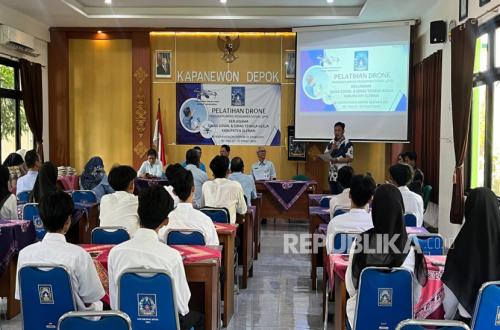
Drone technology is no longer used solely for photography or creative content production. This technology continues to expand and has become essential across various industrial sectors, ranging from tourism, agriculture, to mining. Recognising this opportunity, the Indonesian Drone Training Centre and the Sleman Regency Government have organised drone training for young people to enhance their skills and create new employment opportunities.
The Head of the Indonesian Drone Training Centre, Franko Nero, stated that this activity is part of the Social Safety Net Programme (JPS) organised through collaboration between the Sleman Regency Department of Labour and the Sleman Regency Social Services Department. The drone training programme is designed to run for 12 days with a total of 100 hours of instruction. It is planned in two phases: the first phase from 10 to 14 March 2026, followed after Eid on 23 to 30 March 2026.
“This activity is attended by 16 participants, namely Sleman residents who hold Poor Family Cards and Near-Poor Family Cards. We prioritise those who are job seekers or unemployed. The instructors consist of four professionals in the field of drones and digital marketing who are certified by BNSP and have other competency certifications,” he said when met during the drone training event in Kapanewon Depok on Tuesday (10 March 2026).
He explained that the training materials provided are not limited to basic drone operation but also include various advanced capabilities, such as basic drone operation, advanced photo and video drone operation, advanced drone mapping, and content creation from drone photos and videos.
Additionally, participants are also equipped with digital marketing capabilities so they can market the visual products they produce. The training is also supplemented with an introduction to artificial intelligence (AI) technology.
“The tools to be used include Canva, CapCut, and various AI and other digital marketing tools. So after they create drone photo and video content, they also know how to sell the product, acquire clients, or apply for jobs that require these skills,” said Franko.
When asked about job opportunities in the drone field, he said the prospects remain very wide because the technology is now used in many industrial sectors. He gave examples: in the property sector, drones are used to monitor construction progress and create visual promotions for house sales. Meanwhile, in the mining sector, drones are utilised for area mapping and surveys.
“Drones are not only used as a photo and video medium as we often see on social media, but are also used in various other fields such as agriculture, drone mapping for mining, property, and tourism,” he said.
Because of this, the need for professional drone pilots continues to grow across various industries. Besides technical skills, Franko said, participants will also receive a competency certificate that can serve as preparation for applying for jobs or building their own business.
“So not just in the creative field, but also in other industrial sectors. Opportunities for drone pilots remain very wide open,” he said.
The Head of the Sleman Regency Department of Labour, Epiphana Kristiyani, said that drone training within the JPS programme is a government step to provide skills enhancement programmes for disadvantaged communities. The government hopes this training can be a concrete effort in reducing unemployment and poverty rates.
“This JPS programme means the government is present among the people. We take participants from those who have poor family cards. With the added skill of operating drones, we hope they can find employment more quickly,” she said.
Epiphana did not dismiss that drone technology is now widely used across various sectors and therefore has promising employment prospects. She urged participants to maximise the 12-day training period because the materials studied relate to technology that is not always easy to understand.
“We hope that with this additional skill they can be absorbed into the job market,” she said.
Similar sentiments were also expressed by the Acting Head of the Sleman Regency Social Services Department, Sigit Indarto. According to him, the training is part of the implementation of the regional government’s vision and mission in poverty alleviation efforts. He explained that the Social Safety Net programme includes non-formal education for children from low-income families who do not continue formal education but wish to acquire work skills.
“We provide training to children from poor families so they have skills that can be used for work,” he said.
Sigit hopes that participants genuinely have an interest in pursuing these skills so they can become a pathway to improve their family’s economic situation. The certificate obtained will also add value when applying for jobs at various agencies.
“You are not mistaken in attending this training, but truly because you have the interest, the interest to become part of a way out to break the cycle of poverty in your families. One of the outputs will be that you obtain a certificate which can formally be used in applying for jobs in the future,” said Sigit.
Meanwhile, Panewu Depok Joko Mulyanto expressed appreciation for the initiative. “This is an opportunity we have been waiting for. Hopefully this training will provide many benefits including economic impact,” he said.
Deputy Regent of Sleman, Danang Maharsa, who directly opened the drone training, also expressed his hope that participants would make the best use of the training.