
Not Just Oil: Plastic Now a Victim of the Iran War
Not Just Oil: Plastic Now a Victim of the Iran War
Jakarta, CNBC Indonesia - The war in Iran is not only triggering a surge in global oil and gas prices. Behind that energy volatility, another impact is growing: disruptions to the plastic supply chain that risk pushing up prices for various consumer goods.
Since the war broke out at the end of February, oil prices are said to have risen more than 40%, even surging from US$67 per barrel to above US$100 per barrel.
This price increase may not be immediately apparent to the public. However, cost pressures are actually forming from upstream, namely from raw materials and energy that form the foundation of the plastic and glass industries.
When US-Israel attacks on Iran cause disruptions in the Strait of Hormuz, markets are not only worried about oil supplies but also about the smoothness of the global petrochemical supply chain.
Moreover, this strait is the route for about one-fifth of the world’s oil and liquefied natural gas supplies.
Plastic: A Hidden Cost of War
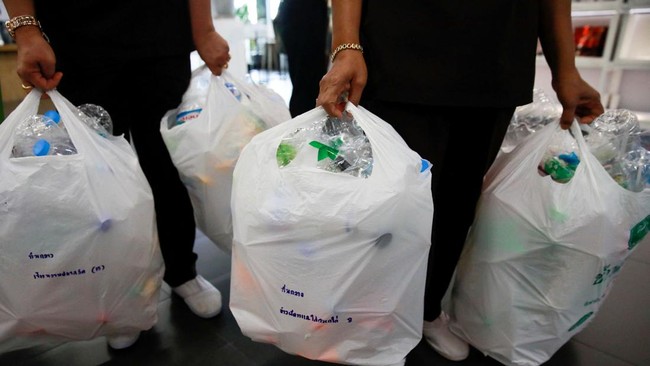
Plastic can be said to be one of the hidden costs of war. This is because the material is used in almost the entire supply chain, from food and beverage packaging, household appliances, to manufacturing needs.
The problem is that plastic cost increases do not always appear directly on product price tags. Consumers may only feel that prices in shops are getting more expensive, without knowing that one of the causes comes from the rise in plastic material costs behind the scenes.
Products that are largely made of plastic are expected to be the first affected. Items such as disposable cutlery, packaged drinks, and rubbish bags are said to potentially experience price increases first in the coming weeks.
Causes of Rising Plastic Prices
Pressure on plastic stems from the surge in oil and natural gas prices since the war broke out at the end of February. Iran’s threats to shipping routes in the Strait of Hormuz have become one factor causing energy market volatility. In the same period, benchmark gas prices in Asia and Europe are even said to have jumped more than 60%.
This condition has a significant impact on the plastic industry because more than 99% of global plastic comes from fossil fuels. This means that rising energy prices not only raise factory production costs but also increase the price of plastic raw materials themselves.
Materials like polyethylene and polypropylene, which are the two most widely used types of plastic in the world, are also under pressure. Moreover, the Middle East is a major supplier of global plastic raw materials, contributing about a quarter of world exports for polyethylene and polypropylene.
In fact, around 84% of the Middle East’s seaborne polyethylene export capacity depends on the Strait of Hormuz. Therefore, when distribution chains in the region are disrupted, the impact is immediately felt in the market. In the last 30 days, plastic resin prices are even said to have surged double digits in various manufacturing categories.
Glass Also Affected
Not only plastic, the glass industry is also in a vulnerable position. Unlike plastic, which is highly linked to petrochemical raw materials, pressure on glass mainly comes from the energy side.
Glass production requires furnaces at very high temperatures that must remain lit continuously. This means the industry is highly dependent on stable and cheap gas supplies. When gas prices surge, glass production costs rise accordingly.
This is what makes the war in the energy-producing region not only hit the oil market but also spread to industrial sectors that seem far from the conflict zone. Ultimately, that pressure can lead to higher production costs and selling prices for goods.
Plastic Still Difficult to Replace
Another issue is that it is not easy to replace plastic with other materials in the short term. Plastic is already embedded in many sectors, from packaging, construction, automotive, to healthcare services.
Switching to paper or glass is not a simple matter. Producers must change designs, adjust production lines, and bear additional costs. Therefore, in the short term, replacement options are very limited.
As a result, many companies are likely to prefer adjusting sizes, specifications, or selling prices of products rather than completely changing raw materials.
Ultimately Reaching Everyday Goods Prices
The impact of this war could ultimately reach consumers. Rising packaging costs could drive up food prices in 2-4 months, as companies deplete existing stocks.
For sectors like automotive, the impact may come more slowly because prices are usually tied to contracts and cost structures are more complex. However, if oil prices remain high for 3-4 months, cost pressures could continue to spread and last longer, even potentially felt for 1-2 years.
Even if the war stops soon, normalisation of the plastic supply chain will not happen immediately. This means the effects of the conflict could still be felt in goods prices long after the war situation calms down.