
Not Just Laziness: 'Eternal' Students Fall Victim to Life Pressures and Wrong Course Choices
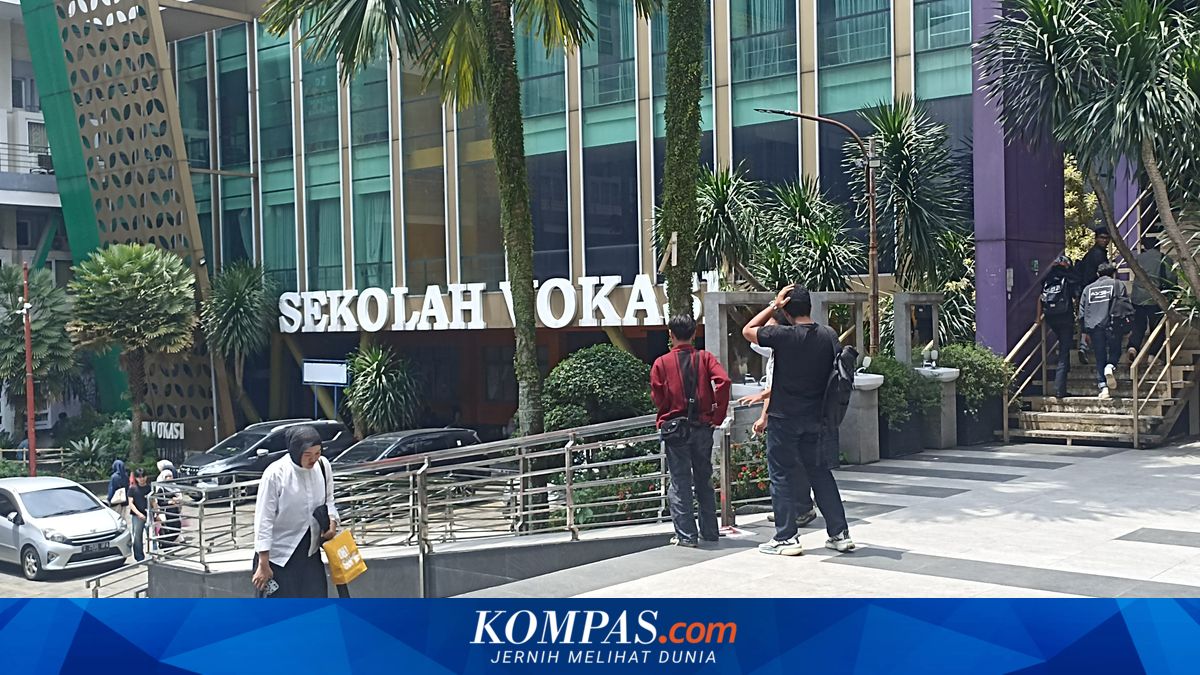
BOGOR, KOMPAS.com - The phenomenon of students taking longer than the ideal time to complete their studies is no longer an uncommon story in university environments.
From one cohort to the next, there are always students left behind in the final phase, struggling to finish their theses amid academic pressures, economic demands, and a succession of personal issues.
Behind the label of ‘eternal student’ often attached to them lies a variety of backgrounds that are far from as simple as laziness or lack of discipline.
Education observer Ina Liem assesses that study delays are triggered by several interrelated factors.
She emphasises that there is no single cause that can explain this phenomenon.
‘First, economic factors. Many students have to study while working. Second, wrong major. Third, their profile might not suit university; they might be better off in vocational education. Fourth, in today’s era, there are also many mental health issues,’ said Ina when contacted on Thursday (2/4/2026).
According to her, economic factors are one of the most evident, especially for students who must divide their time between studies and work.
On the other hand, mistakes in choosing a major also cause students to lose direction and motivation midway.
In addition, she highlights the mismatch between an individual’s character and the education system they pursue.
Not all students have the same academic inclinations, so a uniform learning approach can actually become a barrier.
There are students who are stronger in conceptual areas, but there are also those who excel in practice.
‘There are conceptual types and executor types. Conceptual types suit theses, but executor types are better with project-based tasks,’ she said.
In this regard, the higher education system, which still heavily relies on theses as a graduation requirement, is seen as not fully accommodating this diversity.
Students with executor tendencies can face difficulties when confronted with theoretical academic demands.
Although there are many external factors, Ina stresses that at the higher education level, students are still required to be more independent in managing their studies.
‘It is not the primary responsibility of the campus to monitor each individual,’ she said.
Students are expected to actively seek help when facing difficulties, while the campus plays a role in providing access and support facilities.
‘If experiencing difficulties, they need to be more proactive in seeking help. The campus’s task is to provide the necessary support channels,’ she said.
She gives examples of various pathways that allow students to adapt education to their conditions.
One example is the exit point system, which allows students to take a break without losing academic progress.
‘For instance, in Australia, there is an exit point system. They can take a two-year diploma, work first, then continue to a bachelor’s degree with an additional 1.5-2 years,’ she said.
In addition, part-time study options and no age limits also provide broader space for students to complete their education according to their respective conditions.
She also assesses that systemic improvements are key to addressing this issue more structurally.
On the other hand, universities are urged to design more adaptive systems.
‘Vocational education also needs to be enhanced in our country, considering that most profiles are executors. The mindset of society, especially parents, needs to be changed to be more open-minded,’ she explained.
Now, she has been studying for nearly seven years, a phase that brings her closer to the campus-determined study limit.
She is aware of the significant consequences if she does not complete her studies soon.
‘Tomorrow is the final year, so if I don’t graduate tomorrow, then that’s it,’ said Jian while talking to Kompas.com in the Tanah Sareal area of Bogor on Monday (5/4/2026).
At the beginning of her studies, she did not face significant obstacles. Most courses were completed well, and the number of credit units taken already met the requirements to proceed to the thesis stage.
However, challenges arose when entering the transition phase to the final project.
The process, which should have been the final stage, was delayed because there were still other academic obligations that had not been completed.
She explained that she still had to complete several stages before she could truly focus on working on her thesis.