
Not Just e-KTP: Photocopies of Family Cards Become Administrative Requirements at Community Health Centres
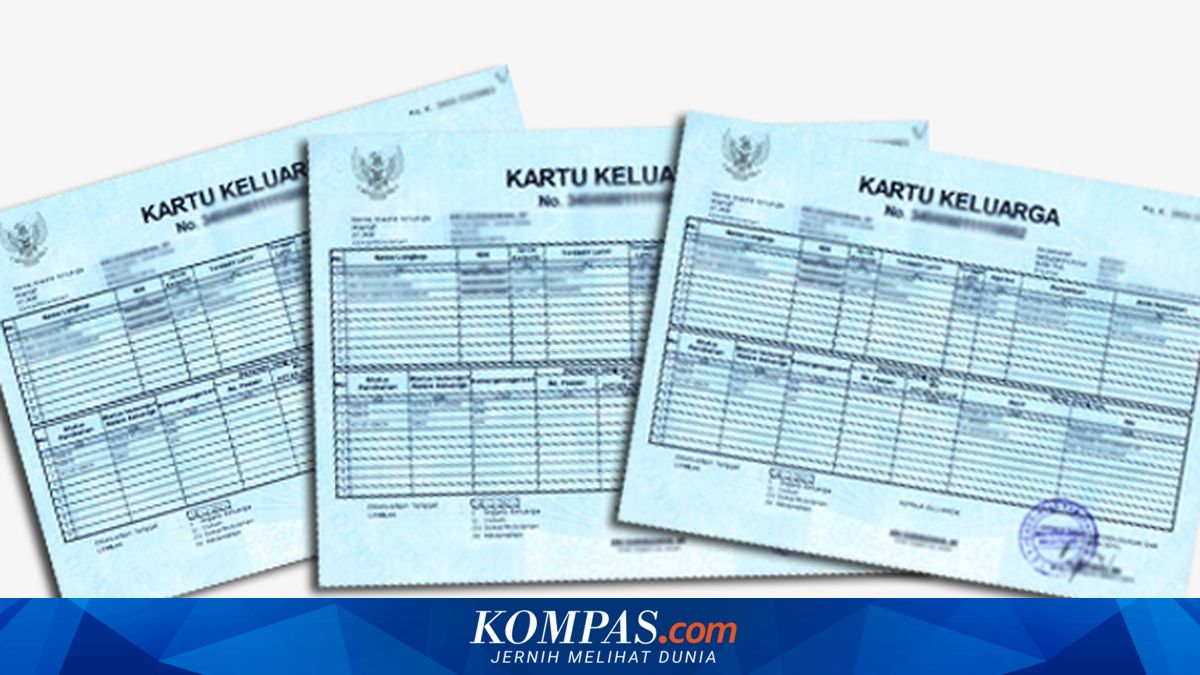
JAKARTA, KOMPAS.com - The government’s efforts to reduce the use of physical documents in public services appear not yet fully implemented in practice.
At several community health centres (puskesmas) in Central Jakarta, residents seeking healthcare services are still frequently asked to bring and attach photocopies of population documents, not just e-KTP, but also Family Cards (KK) and birth certificates.
This practice is evident from the service standards displayed in the puskesmas areas and from the habits of residents who come for treatment carrying folders filled with various identity copies.
Even though some services are starting to rely on online registration applications, physical documents remain a “safeguard” to ensure the service process does not encounter obstacles.
For certain types of services, photocopies of documents are even clearly listed on the service standard boards displayed in waiting rooms.
At the Menteng Sub-District Puskesmas, Kompas.com found several information boards and service bulletin boards installed in the front area of the service unit.
Among the list of service standards, photocopies of e-KTP are still listed as one of the requirements for several types of services.
One of them is visible in the Death Reporting Certificate (SKMK) service. In the displayed requirements information, applicants are asked to attach photocopies of the deceased’s KTP, the reporter’s KTP, and the witness’s KTP.
In addition, for pre-marital examination (catin) services, residents are also asked to prepare photocopies of the prospective bride’s and groom’s KTPs.
“If it’s a health certificate for marriage, the requirements are a referral letter from the RT/RW, then KTP. At minimum, one must be a KTP from the working area,” said a staff member at the Menteng Puskesmas counter when met by Kompas.com.
The staff explained that the documents submitted for administration are photocopies, not original documents. The original KTP is still brought to be shown, but what is left as a file is the copy.
“If what’s left is a photocopy. The original is just to be shown,” he said.
According to him, health certificates at puskesmas are divided into two: health certificates for employment purposes and health certificates for marriage purposes. The procedures for both differ, including the document requirements that residents must bring.
For employment needs, for example, patients must undergo examinations such as colour blindness and blood type checks.
Whereas for marriage needs, residents are asked to bring additional files such as a certificate from the RT/RW.
Although photocopies are still listed as requirements, the Menteng Puskesmas counter staff said there are services that already utilise population data in the system.
For long-term patients, residents who do not bring their original KTP can still be served by stating their National ID Number (NIK).
The staff then matches that data with the data already recorded in the system.
“For long-term patients, sometimes just stating the NIK is enough. The data is already there,” said the staff.
This shows that digitalisation is indeed starting to take place, but it still depends on the completeness of physical documents, especially when patient data is not yet stored in the system.
On the other hand, information on service requirements at Menteng Puskesmas is quite easy to find because it is clearly displayed on the bulletin board.
Staff said that at auxiliary health centres (pustu) at the kelurahan level, requirements information is usually not displayed as clearly as at sub-district puskesmas.
Unlike Menteng Puskesmas, at Kenari Puskesmas, Kompas.com did not find a bulletin board containing service requirements information.
However, the practice of bringing physical documents is still evident from the habits of patients who come.
The Kenari Puskesmas counter staff said that residents registering manually can bring identification in the form of original KTP or photocopies.
Staff only need to verify the identity so that patient data in the system is not mixed up.
“If registering manually, you can use original or photocopy, because it’s just for verification,” said the counter staff.
According to him, the photocopies submitted are generally returned to the patients. This means the puskesmas does not always store copies of residents’ documents for routine treatment services.
Staff said that some elderly people who come are accustomed to bringing photocopies of KTP, KK, and birth certificates.
“Many already bring complete ones, KTP, KK, birth certificate. Especially the elderly, they usually prepare everything,” he said.
That habit arises because residents do not want to go back and forth if at any time staff request additional documents.