
Not Just DME, Bahlil to Accelerate CNG Gas Projects as LPG Replacement
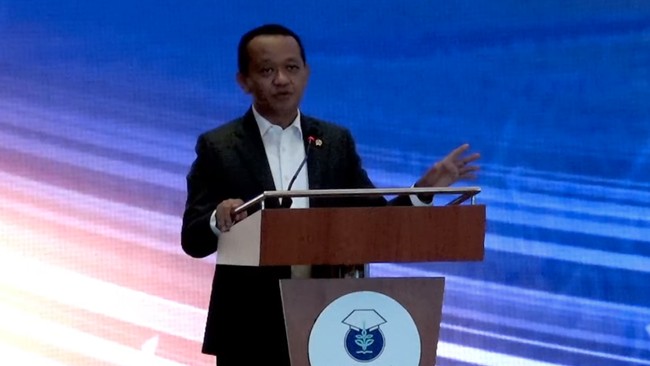
Jakarta, CNBC Indonesia - The Minister of Energy and Mineral Resources (ESDM), Bahlil Lahadalia, has emphasised that the government is not solely focused on developing downstream coal processing into Dimethyl Ether (DME) as a substitute for Liquefied Petroleum Gas (LPG). According to him, the government is now also beginning to promote the use of Compressed Natural Gas (CNG) as an alternative household energy source. “We are now starting to produce DME; the foundation stone was laid yesterday. We are building it in Muara Enim. But after that, I think in two years, the idea emerged to produce CNG,” Bahlil stated at the IPB Alumni Synergy for the Nation event on Saturday (2/5/2026). Bahlil explained that CNG is a gas different from LPG but serves a similar function as an energy source. Currently, CNG is already being used in the commercial sector, such as hotels and restaurants. “CNG is also gas, but it is not LPG, and it is now used for hotels, restaurants, and some MBGs. But for the 3-kilogram version, we are just about to make it. Yes, we want to, and its cost is 30 to 40 percent cheaper, Mr Rector,” he said. As is known, President Prabowo Subianto officiated the groundbreaking of 13 phase II downstream projects with a total investment value of Rp 116 trillion in Cilacap, Central Java, on Wednesday, 29 April 2026. One of the projects inaugurated was the coal downstreaming into Dimethyl Ether (DME) in Tanjung Enim, South Sumatra. This DME project is being undertaken jointly by three State-Owned Enterprises (BUMNs): the Mining SOE Holding MIND ID, PT Bukit Asam Tbk (PTBA), and PT Pertamina (Persero). The project will process 7 million tons of coal into 1.4 million tons of DME, equivalent to 1 million tons of LPG per year. This means the coal downstreaming project into DME will contribute to reducing LPG imports by around 1 million tons per year. As is known, Indonesia has been importing around 1 million tons of LPG annually. The DME product will be absorbed by Pertamina through Pertamina Patra Niaga. This facility will utilise low-rank coal that has not been optimally utilised so far, while its availability in Indonesia is quite abundant.