
Not Just a Thesis: Campus Research Can Transform Industries!
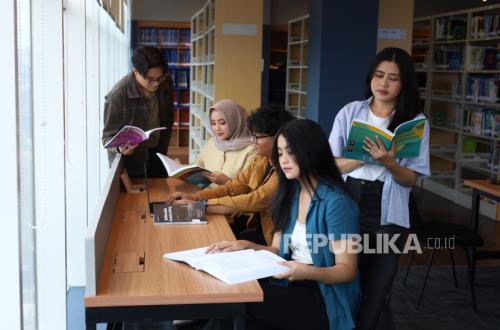
Many people still view university research as confined to libraries or merely a graduation requirement. However, if developed seriously, campus research can give birth to new technologies that help solve various problems in the industrial world. From the health sector, agriculture, manufacturing, to the digital economy, all can benefit from innovations born in universities. Amid the rapid global technological developments, higher education institutions play a crucial role as the birthplace of new ideas and innovations. Not only as a place to learn theory, campuses can also serve as experimental spaces for lecturers and students to create technological solutions relevant to societal and industrial needs. The problem is that not a few research outcomes stop at scientific publications. Many researches that actually have great potential do not reach the application stage in the industrial world. This often happens due to the gap between academic research and real field needs. This is where the concept of research downstreaming becomes very important. Downstreaming is the process of turning research results into products, technologies, or systems that can truly be used by industry or society. This process usually starts from prototype development, technology testing, design refinement, to the commercialisation stage. If this process runs well, research that initially was just an idea in the laboratory can develop into innovations that have real impact. Even, not a few technological innovations that originally came from campus research then develop into industrial products or technology startups. To make this process run maximally, collaboration between campuses and industries becomes the main key. Industries need applicable technological solutions, while campuses have research resources and continuously developing new ideas. When both work together, research results can be more easily implemented in the real world. Forms of this collaboration can vary, from joint research, student internship programmes, technology-based startup development, to business incubators in the campus environment. With this approach, research no longer runs independently but becomes part of a broader innovation ecosystem. If local technological innovations succeed in being developed and utilised by industry, the impact is certainly very significant. Besides increasing the competitiveness of the national industry, these innovations can also open new job opportunities and encourage the birth of more technology-based companies in Indonesia. This also becomes part of the commitment of Universitas Siber Indonesia or better known as Cyber University as The First Fintech University in Indonesia in promoting the development of technological innovations relevant to industrial needs. Through the Information Technology Study Programme, students not only learn technology theory but are also encouraged to develop various projects based on real solutions. With a project-based curriculum, collaboration with industry partners, and strengthening competencies in software development, data science, artificial intelligence, and information systems, students are trained to create technologies that can truly be applied in the workplace. With this approach, campus research is no longer just an academic task. On the contrary, research can become the beginning of the birth of innovations that help the development of industry and technology in Indonesia. Therefore, theses or campus research are actually not just about graduating from college, but also about how ideas and knowledge can turn into real solutions for the future.