
Not Iran, Trump Claims Communist Nation Willing to "Surrender" After Pressure
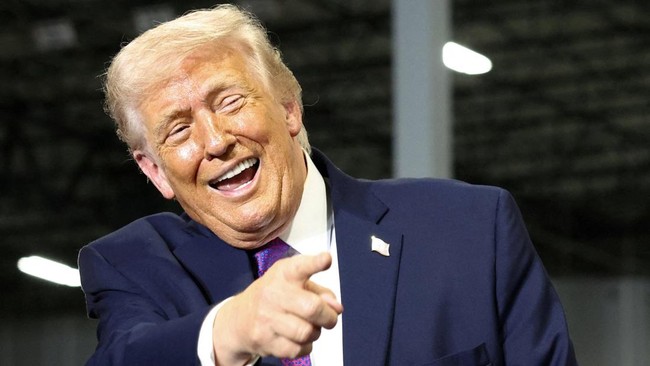
US President Donald Trump has stated that the Cuban government is attempting to reach an agreement with Washington after months of political and economic pressure from the United States against the communist Caribbean nation.
Trump said discussions with Havana are ongoing and have the potential to yield an agreement in the near future. “Cuba also wants to make a deal, and I think in the near future we will make a deal or do whatever we need to do,” he said, according to AFP on Monday, 16 March 2026.
He added that the current US administration is communicating with Cuba, although Washington’s focus remains on other, more pressing conflicts. “So we’re talking with Cuba, but we will settle the Iran issue first before Cuba… So I think something will happen with Cuba quite quickly.”
Trump’s statement came after Cuban President Miguel Díaz-Canel confirmed on Friday that his government has held discussions with the United States. According to Reuters, Díaz-Canel said the dialogue concerns “bilateral differences” between the two nations, but he provided no details regarding the content or direction of the talks.
Havana’s acknowledgement represents a rare signal of direct communication amid the historically tense relationship between Washington and the communist nation.
The talks occur after the Trump administration has intensified pressure on Cuba in recent months. In January, Washington placed the island under an American oil blockade, which effectively limits Cuba’s already-restricted fuel supply. Trump described the policy as necessary because of what he characterised as an extraordinary threat posed by Cuba to the United States.
This policy adds to a lengthy list of economic sanctions that Washington has imposed on Havana over many decades.
Cuba has increasingly faced pressure following the fall of its key regional ally, Venezuelan President Nicolás Maduro, in January. Maduro had served as Cuba’s principal supplier of cheap oil, and the island is heavily dependent on energy imports to maintain economic operations and its power grid.
After Venezuela’s leader was ousted by Washington, the oil supplies that previously sustained Cuba’s economy ceased. This situation has left Havana’s government facing an increasingly severe energy crisis.
Since then, the Trump administration has increasingly targeted Cuba as part of Washington’s foreign policy agenda in the Caribbean region.
Despite Trump’s assertion that an agreement could be reached quickly, he has not provided detailed explanation of what form such an agreement would take. What is certain is that relations between the United States and Cuba have long been fraught with tension since the Cuban Revolution in 1959, which brought communist rule to Havana.